 Save to Pinterest
 There's something about the sizzle of fish hitting hot oil that makes me feel like I'm cooking in a beachside restaurant instead of my own kitchen. Years ago, I tasted a version of this dish at a tiny Thai place wedged between a laundry and a flower shop, and it completely rewired what I thought dinner could be in thirty minutes. The brightness of lime, the heat that builds slowly, the way crispy shallots add that crucial textural surprise—it all felt impossibly sophisticated yet approachable. Now whenever I make it, I'm chasing that same magic: a plate that tastes like you've been working on it all day, when really you've barely broken a sweat.
I made this for my partner last Tuesday after a long day where we'd both been too tired to think about dinner, and watching their face light up the moment they tasted it reminded me why I love cooking. The cilantro was still on my counter from a failed salad attempt earlier in the week, and somehow everything just worked. It's those unexpected wins—when you're not trying to impress and something turns out beautifully anyway—that make cooking feel less like a chore and more like a small act of magic.
Ingredients
- Skinless white fish fillets (cod, snapper, or tilapia, about 150 g each): Look for fillets that are roughly the same thickness so they cook evenly; ask your fishmonger to help if you're unsure, and cook them the same day if possible.
- Salt and freshly ground black pepper: Season generously right before cooking—this is your foundation for flavor.
- Rice flour or cornstarch: Optional but worth it for a delicate, golden crust that stays crispy even after the sauce hits it.
- Vegetable oil: Use something neutral like canola or grapeseed so the fish and sauce flavors stay center stage.
- Fresh lime juice: Never use bottled; one fresh lime gives you about 2 tablespoons of juice and makes an enormous difference in brightness.
- Fish sauce: This is the umami anchor; don't skip it, and yes, the smell is strong, but it mellows completely and becomes absolutely essential once cooked.
- Soy sauce: Check the label for gluten-free versions if that matters to you; standard soy contains wheat.
- Honey or palm sugar: A small spoonful balances the heat and saltiness without making the dish sweet.
- Garlic and fresh ginger: Mince them finely so they distribute evenly through the sauce and don't create pockets of intensity.
- Red bird's eye chillies: These little peppers pack serious heat; start with one and add the second only if you like things fiery.
- Fresh cilantro: Buy a full bunch even though you'll only use about a third; the extra keeps well and you'll find reasons to use it.
- Crispy fried shallots: Store-bought ones save time and honestly work beautifully, but making your own is easier than you'd think and tastes fresher.
Tired of Takeout? 🥡
Get 10 meals you can make faster than delivery arrives. Seriously.
One email. No spam. Unsubscribe anytime.
Instructions
- Dry and season the fish:
- Pat each fillet thoroughly with paper towels—moisture is the enemy of a good crust. Season both sides with salt and pepper, then dust lightly with rice flour if using, tapping off any excess so it looks like a whisper of coating rather than a heavy layer.
- Get the pan screaming hot:
- Pour oil into your skillet and let it heat over medium-high for a solid minute; you want it shimmering and almost smoking. The fish should sizzle dramatically the moment it hits the pan, which is how you know you're about to get something golden and delicious.
- Sear the fish:
- Lay the fillets away from you (to avoid splatter) and resist the urge to move them for at least three minutes; let them develop that gorgeous golden crust. Flip gently and cook the second side for another three to four minutes until the flesh is opaque and flakes easily when nudged with a fork.
- Build the sauce:
- While the fish rests on your serving platter, whisk lime juice, fish sauce, soy sauce, honey, garlic, chillies, and ginger in a small bowl until the honey dissolves completely. Taste it straight from the whisk—it should be salty, sour, slightly sweet, and have a creeping heat that builds gradually.
- Warm and finish:
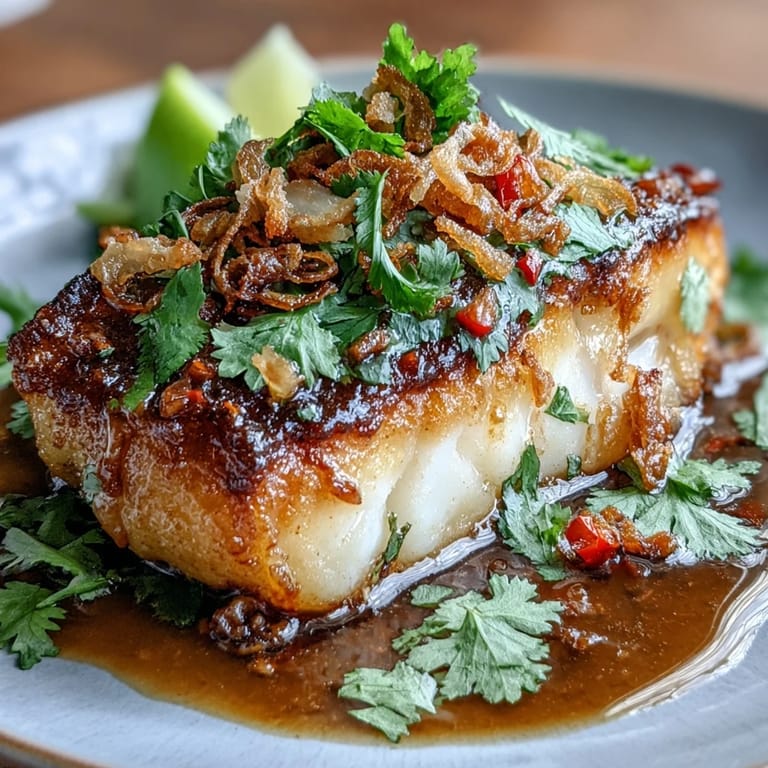
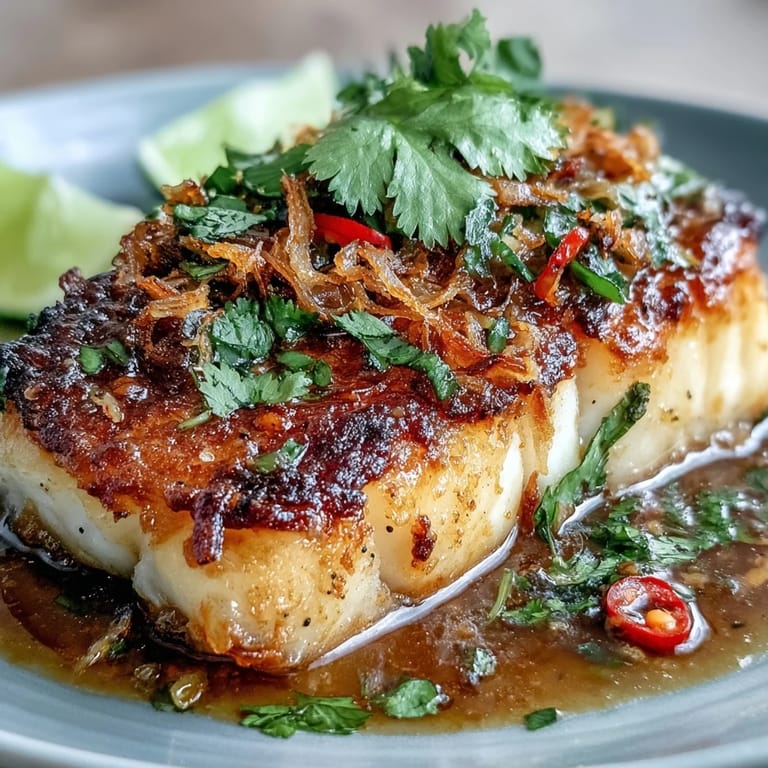
- Give your skillet a quick wipe and pour in the sauce, letting it bubble for about a minute so the flavors meld and the raw garlic loses its sharp edge. Spoon the hot sauce directly over the fish, then scatter cilantro and crispy shallots on top with the kind of abandon that makes the plate look generous.
 Save to Pinterest
 My nephew came over for dinner last month and declared he hated cilantro with the kind of certainty only an eight-year-old can muster, so I left it off his plate entirely. He still went back for seconds, which proved to me that the soul of this dish really lives in that sauce—the cilantro is just the encore that makes everyone feel like they're sitting somewhere sophisticated. It's a useful reminder that cooking isn't about forcing people to like what you like; it's about creating something flexible enough to work for whoever's at your table.
The Science of Searing
The golden crust that forms on your fish is called the Maillard reaction, which happens when protein and sugars hit high heat and create new flavors that taste infinitely better than anything you could build slowly. This is why the pan temperature matters so much—if your oil isn't hot enough, the fish will steam instead of sear, and you'll end up with something pale and sad instead of something that makes people lean in and inhale before taking a bite. The rice flour isn't essential, but it helps this reaction happen faster and creates an extra delicate barrier that keeps the fish moist inside while the outside gets crispy.
Timing and Temperature
One of the most honest things I've learned about cooking fish is that a few seconds matter more than they do with almost any other protein. Fish continues cooking from residual heat even after you remove it from the pan, so if you're cooking a thicker fillet, you can pull it off the heat just before it looks completely done and let carryover cooking finish the job. Thin fillets like tilapia need less time than thicker snapper, so if you're mixing types, cut thicker fillets in half or cook them in stages to avoid one piece being rubbery while another is still translucent.
Serving Suggestions and Storage
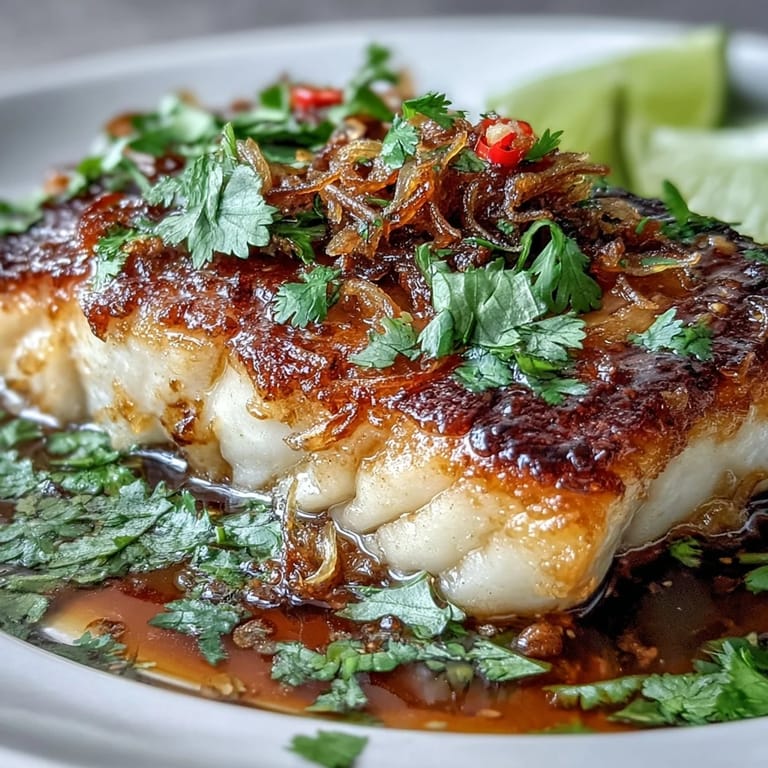
This dish feels elegant on its own, but it sings alongside jasmine rice that soaks up the sauce, or with a light slaw that adds crunch and freshness to cut through the richness of the oil. Leftovers stay good for a day or two in an airtight container, though the shallots will lose their crispness, so if you're planning ahead, garnish just before eating and store the components separately.
- Serve with jasmine rice or steamed bok choy for a complete meal that feels restaurant-quality.
- You can substitute shrimp or chicken breast if fish isn't available, using the same cooking time and technique.
- Make the sauce up to an hour ahead and let it sit at room temperature so the flavors have time to get to know each other.
 Save to Pinterest
 This recipe proves that elegant food doesn't require hours or a long ingredient list—just good timing, hot oil, and the confidence to trust your instincts. It's the kind of dinner that makes you feel proud to feed people, which is exactly when cooking becomes something you genuinely look forward to.
Recipe Questions & Answers
- → What type of fish works best for this dish?
Skinless white fish like cod, snapper, or tilapia provide a flaky texture and mild flavor that complements the tangy sauce.
- → How can the heat level be adjusted?
Adjust the quantity of red birds eye chillies or remove seeds to reduce spiciness without losing flavor.
- → Can the crispy shallots be made at home?
Yes, thinly sliced shallots fried in oil until golden and drained create homemade crispy shallots with rich crunch.
- → What sides pair well with this dish?
Jasmine rice, steamed vegetables, or a light slaw perfectly complement the tangy and spicy fish.
- → Are there any allergen considerations?
Contains fish and soy; use gluten-free soy sauce if needed and check store-bought shallots for allergens.