 Save to Pinterest
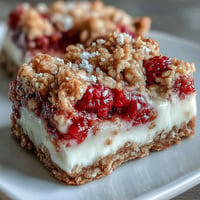
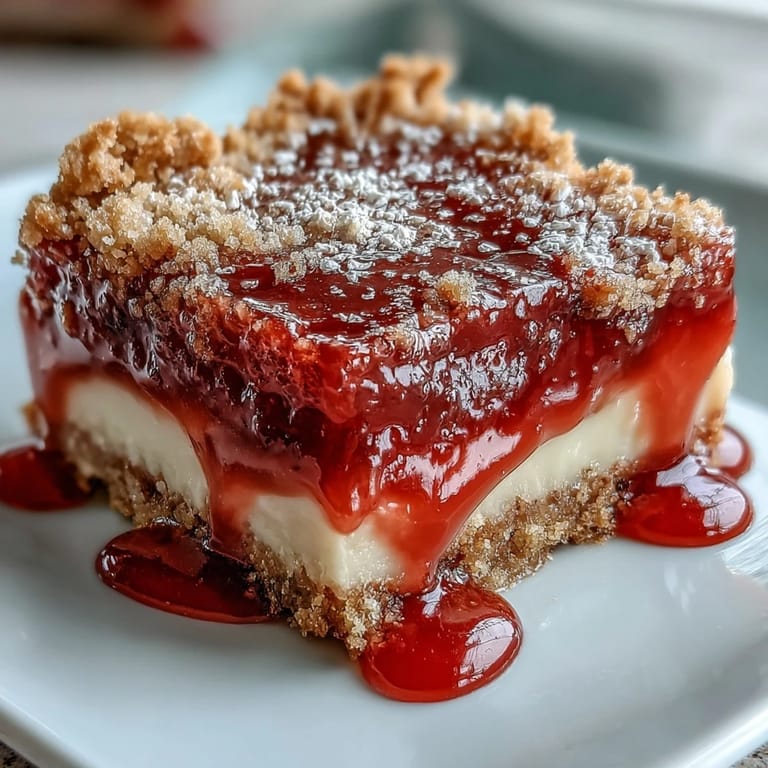
 The zip of rhubarb in this dessert always reminds me of the first warm days after a stubborn winter, when that flash of pink starts peeking through the garden beds. One spring, while the neighborhood air buzzed with the sharp scent of cut grass, I ended up with a generous armful of rhubarb from a friend who grew too much. I found myself searching for a way to let its bold flavor really sing, but in something more comforting than a pie. These custard bars, with their buttery shortbread base, came together out of sheer curiosity and a love of tangy treats. Just watching the colors in the oven was half the fun.
Last spring, I brought a tray of these bars to our first sunny Saturday picnic, and by the time I sat down someone had already swiped two squares for a "quality check". My friends argued over whether they belonged at brunch or dessert, and someone always requested the recipe by the end. Even the person convinced they hated rhubarb asked for seconds. There’s something about a simple pan of these on a picnic blanket that turns everyone into a fan. I never mind the crumbs left behind—they’re proof no one could resist.
Ingredients
- Unsalted butter: Using softened butter is the key to that bakery-style shortbread texture—it creams best when left out for about 30 minutes.
- Granulated sugar: No need for superfine sugar; regular works perfectly for both the crust and the filling, ensuring each layer is distinct.
- All-purpose flour: Measure carefully and level off—too much and the bars get dry, too little and they don’t hold together.
- Salt: Just a pinch in the crust and custard really balances the flavors, don’t skip it.
- Fresh rhubarb: The brighter pink, the more tender; chop it evenly so every bite gets some tang.
- Eggs: Room temperature eggs blend into the custard more smoothly and help it set right.
- Heavy cream: The richness here is non-negotiable; don’t swap for milk if you want that perfect silkiness.
- Pure vanilla extract: Just a splash transforms the custard from basic to bakery-worthy.
- Powdered sugar (optional): If you’re feeling fancy, a gentle shower of this before serving adds a lovely contrast and flair.
Tired of Takeout? 🥡
Get 10 meals you can make faster than delivery arrives. Seriously.
One email. No spam. Unsubscribe anytime.
Instructions
- Prep your pan:
- Turn your oven to 350F (175C) and line a 9x13-inch pan with parchment, edges hanging over to make lifting easier.
- Cream the crust ingredients:
- Mix the butter and sugar in a bowl until pale and fluffy—this is when your kitchen smells like a bakery in the making.
- Build the base:
- Add flour and salt, mixing just until you get a soft dough, then press it evenly into your pan with lightly floured fingers.
- Bake the crust:
- Slide into the oven for about 18–20 minutes, just until you see the edges go golden and fragrant.
- Toss the rhubarb:
- While the crust bakes, combine chopped rhubarb and sugar so the tart chunks start to glisten with syrupy shine.
- Mix the custard:
- In a clean bowl, whisk eggs, sugar, flour, cream, vanilla, and a pinch of salt until you have a silky, lump-free batter.
- Layer it all together:
- Shower the hot crust with rhubarb, then carefully pour over the custard, tilting the pan gently to coat every inch.
- Final bake:
- Bake 35–40 minutes, peeking until the custard loses its jiggle and gains a gentle golden hue on top.
- Cool and serve:
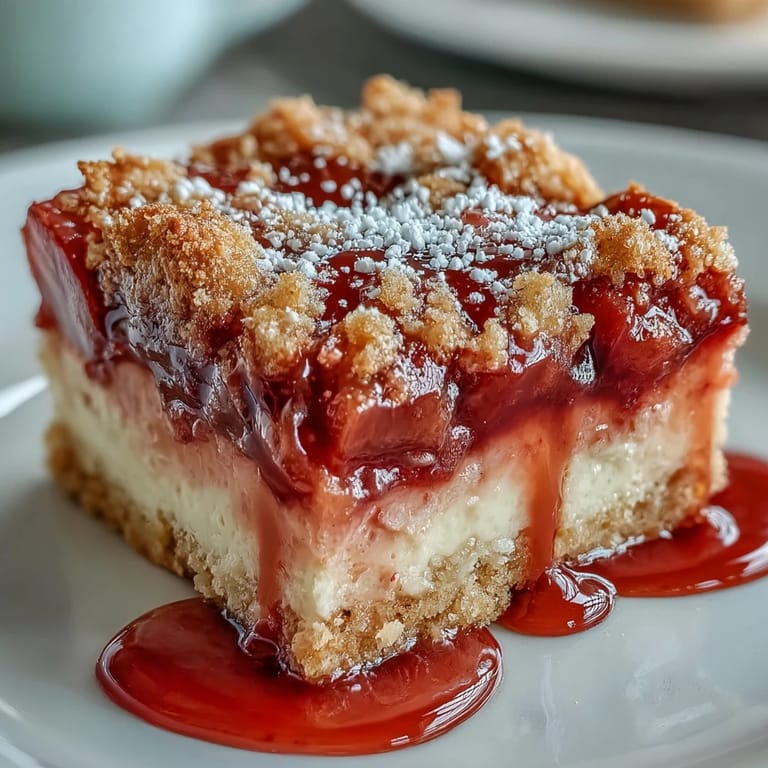
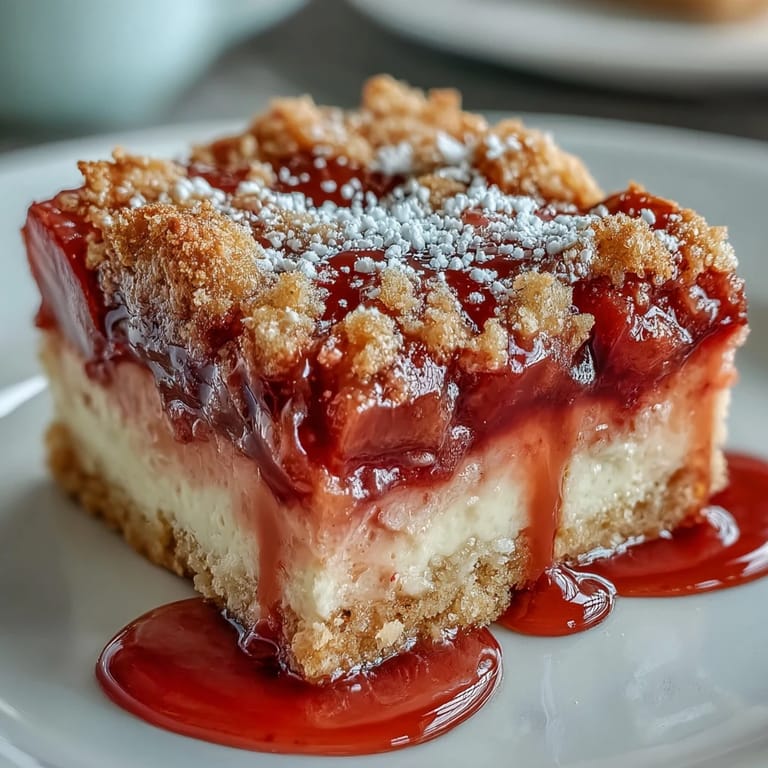
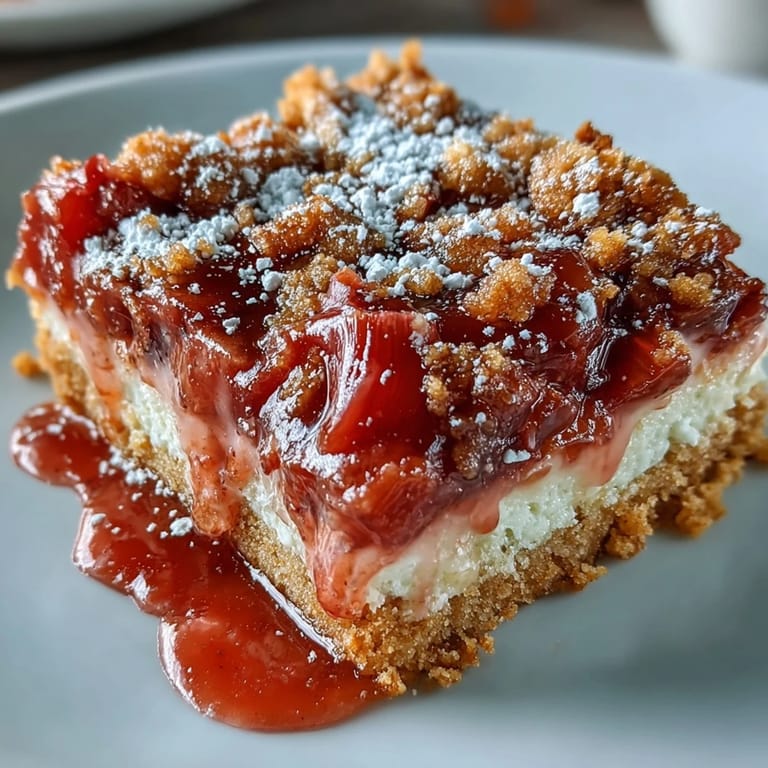
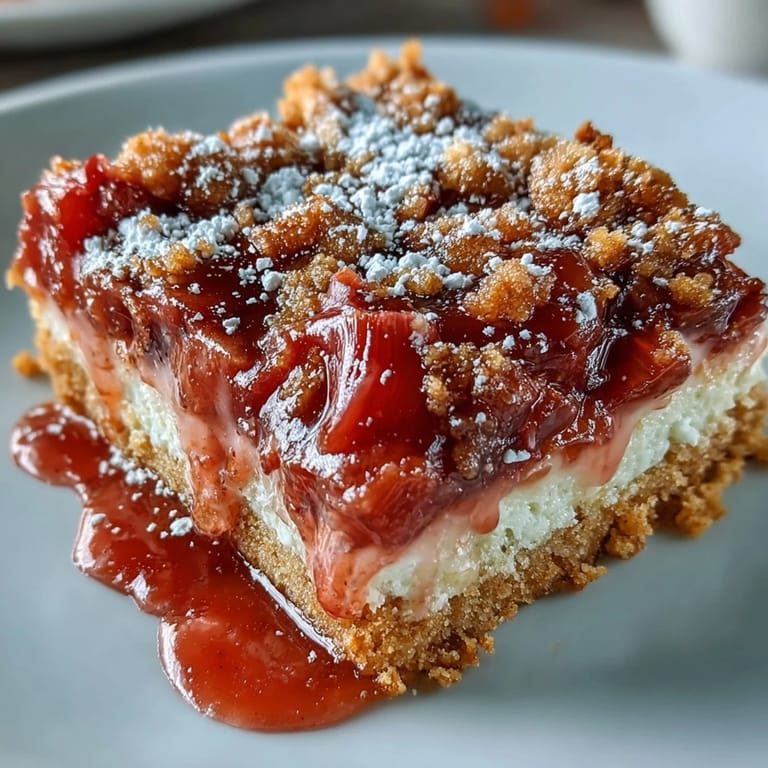
- Let the bars cool completely in the pan before lifting and dusting with powdered sugar—patience gives you clean, beautiful slices.
 Save to Pinterest
  Save to Pinterest
 The day these bars disappeared before coffee had even brewed, I realized they had quietly turned into my signature treat. Watching friends reach for seconds with powdered sugar still on their fingers felt like the best compliment a baker can get.
Shortbread That Never Lets You Down
The secret to a crust that snaps but doesn’t crumble all over is pressing the dough gently—don’t pack it too tightly, just coax it flat and even. I always give the edges an extra little press with my knuckles so they don’t rise too much while baking. You know it’s right when the kitchen smells rich and toasty about halfway through the first bake. If the crust ever pulls away from the pan a bit, don’t worry—it’s just making room for all that gooey goodness on top. Once I learned to trust the process, the base came out perfect every time.
Working With Rhubarb (And When to Add Strawberries)
Some people are nervous about rhubarb, but with enough sugar and just the right bake time, its sharp bite turns deliciously mellow. If you like a gentler flavor, swapping in some strawberries (as the notes suggest) gives you that classic pink lemonade vibe in dessert form. I always check the rhubarb for strings, especially on thicker stalks—they peel off easily with a paring knife. Bright colors mean it’s fresh, and even frozen can work if it’s thawed and patted dry. The moment the fruit bubbles up during baking is always the cue it’s doing exactly what it should.
Custard Lessons From Many Batches
Whisking the custard until smooth is crucial—any lumps of flour will show up as surprise bites later, so I give it an extra twenty seconds. Cream really is worth using here for that plush texture, and a good stir before pouring helps prevent separating. I once accidentally left out the salt and the difference amazed me—never again. Don’t worry if the top lightly browns, it just means richer flavor. Slice with a hot, damp knife for impossibly clean edges and admiring glances at the table.
- Keep bars refrigerated for the best set and flavor.
- Try a pinch of ground cardamom in the custard for a twist.
- Only dust with powdered sugar after they’ve cooled or it will melt away.
 Save to Pinterest
  Save to Pinterest
 If you bring these to any gathering, don’t expect leftovers—just lots of requests for the recipe. That balance of buttery crust, tart fruit, and creamy custard is a kitchen victory you’ll want to repeat.
Recipe Questions & Answers
- → How can I tell when the custard is done?
The custard should be set at the center with a slight jiggle; a thin knife inserted near the middle should come out mostly clean with only a glossy film. Edges will be lightly golden.
- → Can I use frozen rhubarb?
Yes. Thaw and drain excess liquid, then toss with sugar before adding to the crust to avoid excess moisture. You may need a brief extra bake if the filling is very wet.
- → How do I prevent a soggy shortbread crust?
Parbake the crust until the edges are just golden, spread the hot crust with the sugared rhubarb so it starts steaming off moisture, and avoid overly wet fruit. Chilling the cut bars helps the crust stay firm.
- → Can these be made ahead and stored?
Yes. After baking and cooling, store covered in the refrigerator for up to 3–4 days. For cleaner slices, chill thoroughly before cutting and bring to room temperature briefly before serving if desired.
- → Any tips for egg-free or dairy-free adaptations?
For dairy-free, use a non-dairy cream and a plant-based butter for the crust. For an egg-free set, consider a cornstarch-thickened custard using plant milk and coconut cream, or a silken tofu blend with a thickener; expect a slightly different texture.
- → What's the best way to slice neat bars?
Cool completely, then chill for at least an hour. Use a sharp knife warmed under hot water and wiped dry between cuts for clean edges; a metal spatula helps lift bars from the pan.