 Save to Pinterest
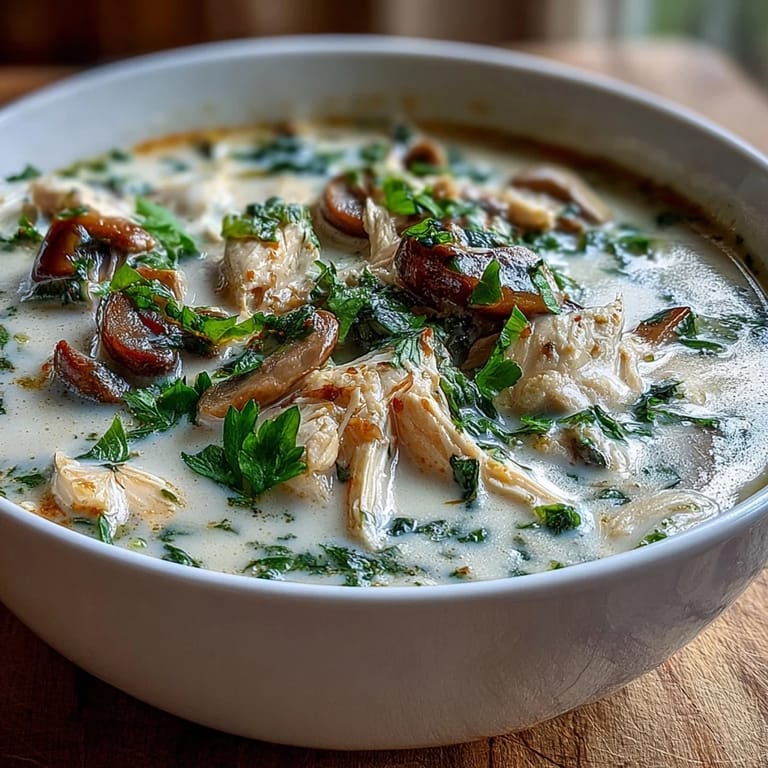
 My first bowl of Tom Kha arrived at a tiny Bangkok night market stall where an elderly woman was ladling soup into ceramic cups with the kind of practiced grace that comes from decades of repetition. The steam rose and hit my face with such intensity—coconut, lemongrass, something floral and citrusy all at once—that I nearly stepped backward. I watched her hands move, noted where she reached for ingredients, and tasted something that felt simultaneously exotic and somehow like home. Years later, recreating it in my own kitchen, I realized the magic wasn't in following a formula but in understanding why each element belonged.
I made this for my partner on a rainy Tuesday when neither of us had energy for anything elaborate, yet we both craved something that tasted intentional. The kitchen filled with that unmistakable aroma within minutes, and by the time we sat down, the whole mood had shifted—suddenly the weather outside didn't matter anymore. That's when I understood Tom Kha isn't just dinner; it's a small act of care that transforms an ordinary evening.
Ingredients
- Chicken breast or thighs (300g): Thighs stay more forgiving and tender, but breasts work if you slice thin and don't oversimmer—I learned this by ruining my first batch with impatience.
- Coconut cream (400ml): This is your richness; don't skip it or substitute with light versions—full-fat is what creates that velvety texture that clings to your palate.
- Chicken stock (500ml): Good stock makes the difference between a dish that tastes Thai and one that tastes like you're approximating Thai; homemade is ideal if you have it.
- Lemongrass (2 stalks): Bruise them gently by smashing with the flat of your knife—this releases oils without shredding the stalk itself, which you'll remove later.
- Galangal (4 slices): Fresh is irreplaceable; the peppery, slightly medicinal warmth it adds is foundational, though ginger works in a pinch with less complexity.
- Kaffir lime leaves (4 leaves): Tearing them slightly helps them infuse faster; their citrus notes are what prevent the soup from tasting one-dimensional.
- Button mushrooms (200g): Slice them evenly so they cook at the same rate; I prefer them slightly al dente rather than falling apart.
- Shallots and garlic: These build the aromatic foundation—don't skip the smashing step, as it opens their flavors into the broth.
- Thai bird's eye chilies (optional): A little goes a long way; smash them rather than slice to control heat distribution throughout the pot.
- Fish sauce (2 tbsp): This seems intense on its own, but it anchors every flavor when added at the end; it's the secret ingredient people taste without naming.
- Lime juice and sugar: These balance the richness and heat—lime especially should be added slowly, tasting as you go.
Tired of Takeout? 🥡
Get 10 meals you can make faster than delivery arrives. Seriously.
One email. No spam. Unsubscribe anytime.
Instructions
- Build your aromatic base:
- Pour coconut cream into a large saucepan and let it warm through gently before adding stock—this prevents the cream from breaking and keeps the soup silky. Toss in your bruised lemongrass, galangal slices, torn lime leaves, shallots, garlic, and chilies all at once; they'll start perfuming the liquid immediately.
- Infuse and let the aromas meld:
- Keep the heat at a gentle simmer for about 10 minutes—you'll see tiny bubbles around the edges but nothing aggressive. The longer you simmer these aromatics, the deeper the flavor becomes, though 10 minutes is usually the sweet spot before it becomes overpowering.
- Add protein and vegetables:
- Slide in your thinly sliced chicken and mushrooms; the broth temperature will drop slightly, so give it a moment to return to a simmer. Check the chicken after 8 minutes—it should be opaque throughout with mushrooms just tender but not falling apart.
- Strain out solids:
- Fish out the lemongrass stalks, galangal pieces, and lime leaves with a slotted spoon or fork—they've given their flavor and now just take up space. Your broth should be clear and silky, ready for its final seasoning.
- Season with intention:
- Add fish sauce first, which sounds counterintuitive but it needs to disperse through the hot broth properly. Follow with lime juice, sugar, and salt; taste after each addition and adjust—you're looking for that bright, slightly salty, faintly sweet note that doesn't have sharp edges.
- Serve with ceremony:
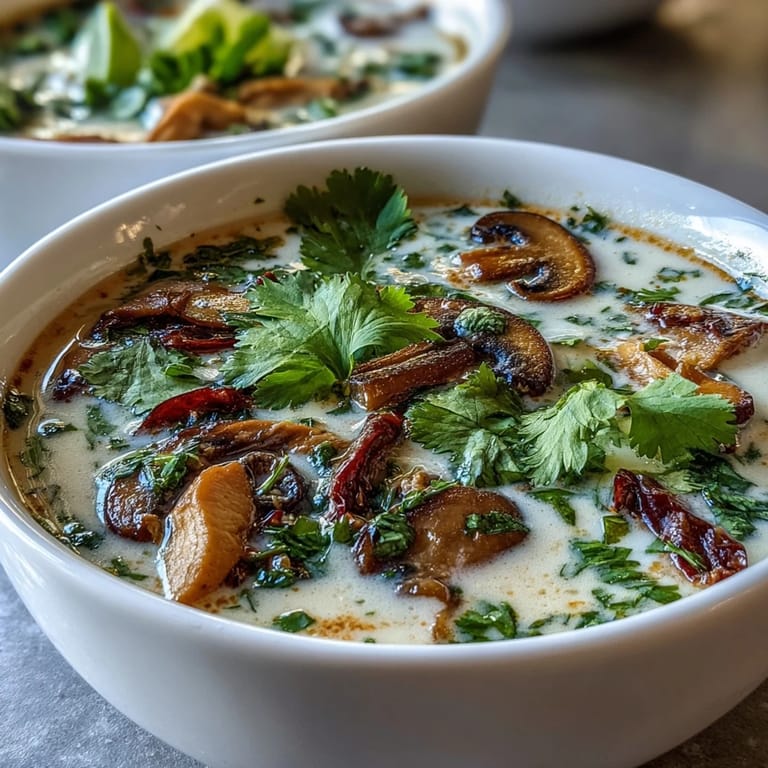
- Ladle into bowls and crown each with fresh cilantro and a lime wedge; let people squeeze lime at the table so they control the final brightness. The soup is best eaten immediately while steam is still rising.
 Save to Pinterest
 There was a moment in my kitchen when a friend visiting from Thailand tasted my version and nodded without speaking, then asked for seconds. That silent nod meant more than any compliment because it meant I'd crossed from following a recipe into understanding a dish. That's when cooking Tom Kha stopped being about technique and became about respect for tradition mixed with personal rhythm.
The Magic of Coconut Cream
The first time I used coconut milk instead of cream, I wondered why the soup tasted thin and one-dimensional. Coconut cream has that weight and richness that makes every spoonful feel substantial without being heavy—it's the difference between tasting curry and being wrapped in it. The fat content also helps carry the volatile aromatics from the lemongrass and lime leaves throughout the broth, making sure no sip tastes flat.
Why Lemongrass Matters More Than You Think
Lemongrass is often treated as optional by recipes that should know better, but I've learned it's non-negotiable—it's the backbone that separates Thai soup from generic coconut broth. When you bruise and simmer it properly, it releases a bright, slightly grassy sweetness that balances the richness of cream and the heat of chilies. Without it, you're missing the whole personality of the dish.
Customizing Without Losing the Soul
I've made this soup in a dozen different ways for a dozen different people, and it's taught me that flexibility doesn't mean compromising the core. The beauty of Tom Kha is that its structure is so sound that you can swap proteins, adjust heat, or stretch it with rice without breaking it.
- For vegetarian versions, use firm tofu cubed instead of chicken and swap fish sauce for soy sauce with an extra squeeze of lime.
- If you can't find galangal, ginger works but use less since it's spicier—start with a teaspoon of ground ginger if fresh isn't available.
- Leftovers reheat beautifully; the flavors actually deepen overnight, making this perfect for cooking ahead before a busy evening.
 Save to Pinterest
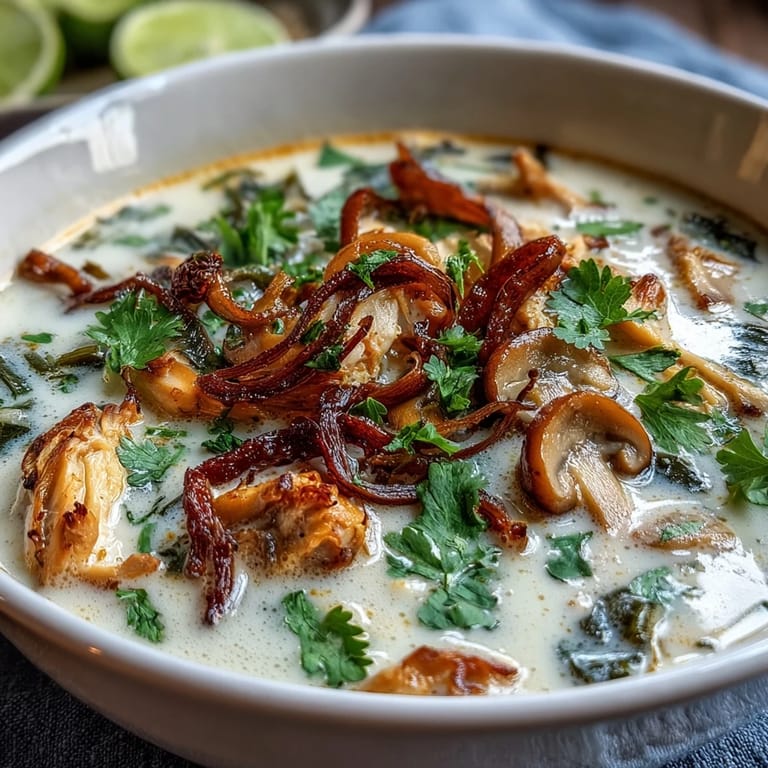
 This soup has a way of becoming part of your rotation without you quite realizing when that happened. Once you've made it a few times and stopped thinking about the steps, you'll find yourself reaching for those ingredients on ordinary days, turning a simple dinner into something worth savoring.
Recipe Questions & Answers
- → What makes Tom Kha different from Tom Yum?
Tom Kha features coconut cream for a rich, velvety texture, while Tom Yum is a clear, tart broth without coconut. The galangal and lemongrass base remains similar, but Tom Kha is creamier and milder.
- → Can I use galangal substitute?
Fresh ginger works as a substitute if galangal is unavailable. Use slightly more ginger since galangal has a piney, citrusy kick that's milder than ginger's heat.
- → How do I adjust the spice level?
Start with one smashed chili and taste before adding more. Removing seeds reduces heat significantly. For no spice, omit chilies entirely—the broth remains flavorful through aromatics.
- → What's the best way to bruise lemongrass?
Use the back of your knife or a heavy pan to smash the stalks, which releases the essential oils. Trim the root end and woody top, using only the tender white and light green portions.
- → Can I make this vegetarian?
Substitute chicken with firm tofu and replace fish sauce with soy sauce or a vegetarian alternative. Use vegetable stock instead of chicken stock for fully plant-based version.
- → Why remove the aromatics before serving?
Lemongrass, galangal, and lime leaves are tough and woody—their job is flavor infusion. Removing them prevents accidentally biting into hard, inedible pieces while keeping all the taste.