 Save to Pinterest
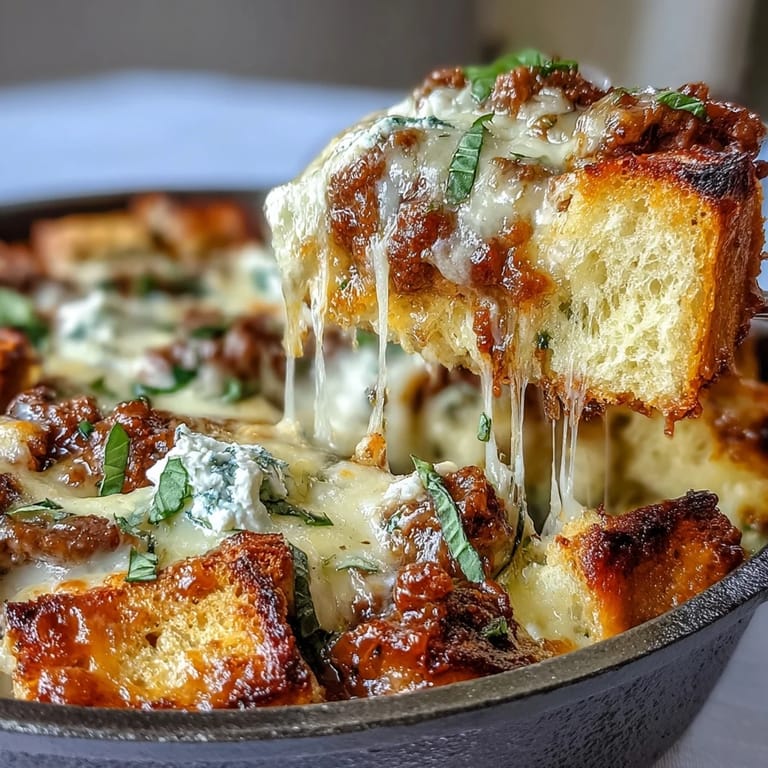
 There's something magical about the moment a cast-iron skillet comes out of the oven with that golden, bubbling cheese crust and the smell of garlic bread mingling with rich tomato sauce. My neighbor showed up one evening with the chaos of three hungry kids in tow, and I had about twenty minutes to pull together something that felt special but wouldn't demand hours at the stove. That's when I started layering garlic bread cubes into a skillet of meat sauce like I was building something that shouldn't work but absolutely does. The genius part? Everything happens in one pan, and somehow it tastes like you've been cooking all day.
Last winter, I made this on a Sunday afternoon when the kitchen was cold and my hands needed warming from the inside out. My daughter stood on her stool beside me, and we tossed the bread cubes in that buttery garlic mixture like we were conducting some kind of edible orchestra. When it came out of the oven, still crackling slightly from the heat, she pointed at the golden mozzarella and said it looked like treasure. It was the first time she asked me to make something twice.
Ingredients
- Italian bread, cut into 1-inch cubes: The foundation of everything—using a sturdy loaf that's not too soft prevents your bread from turning to mush in the sauce, and cutting them yourself means you get those perfect-sized pieces that crisp up exactly right.
- Unsalted butter: Letting you control the salt level is the whole point here, and melted butter coats those bread cubes evenly so they toast beautifully instead of staying pale.
- Fresh garlic and parsley: These aren't just flavor—they're a reminder that fresh ingredients make the difference between good and the kind of dinner people actually remember.
- Ground beef: Italian sausage works beautifully too if you want something richer; I've used ground turkey when feeding health-conscious friends and nobody's complained.
- Crushed tomatoes and tomato paste: The paste adds depth that canned sauce alone can't deliver, creating a sauce that tastes like it simmered for hours in about ten minutes.
- Ricotta cheese: This is your moisture insurance, keeping everything creamy even as it bakes; don't skip it or swap it for cottage cheese, because the texture really matters here.
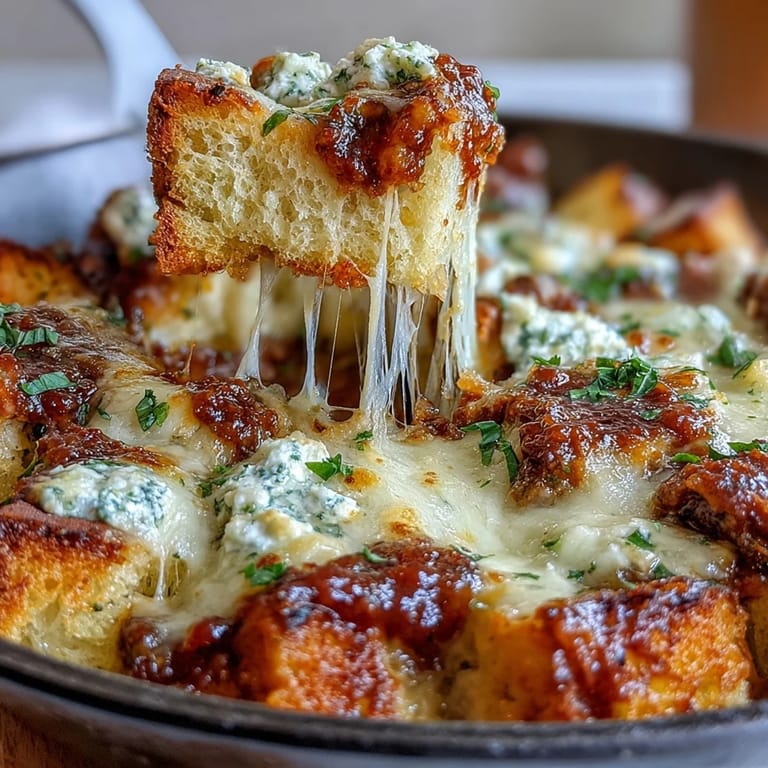
- Mozzarella cheese: Two cups might sound like a lot, but shredded mozzarella melts into all those layers and creates that stringy, gooey experience that makes people close their eyes when they take a bite.
Tired of Takeout? 🥡
Get 10 meals you can make faster than delivery arrives. Seriously.
One email. No spam. Unsubscribe anytime.
Instructions
- Prep and preheat:
- Get your oven warming to 375°F while you gather everything—there's nothing worse than standing around waiting for a cold oven. Having all your ingredients prepped and ready means you can move through this without that frantic scrambling feeling.
- Coat the bread cubes:
- Toss those bread pieces in the melted butter and garlic mixture like you're getting them ready for a party, making sure every piece gets a light coating. The parsley isn't just decoration; it adds color and freshness that you'll taste in every bite.
- Build your meat sauce:
- Brown the beef in your skillet first, breaking it up as it cooks so you get those little caramelized bits instead of large chunks. The onions and garlic that follow are where the real flavor develops—don't rush them, let them soften and sweeten in that beef fat.
- Simmer and season:
- Pour in your tomatoes and paste, then let everything bubble gently while the flavors get to know each other. This isn't the time to be aggressive with heat; low and slow here creates a sauce that tastes balanced rather than raw or acidic.
- Make the ricotta mixture:
- Combine ricotta, Parmesan, an egg, and some basil in a separate bowl—the egg is what binds everything together and keeps it from separating as it bakes. A grinding of black pepper is essential here.
- Layer like you mean it:
- Start with half your garlic bread cubes directly into that meat sauce, then dollop half the ricotta mixture over top, then sprinkle with half the mozzarella. Repeat the whole thing so you end with cheese on top—this is where the magic happens.
- Bake covered then uncovered:
- The foil keeps everything from drying out during the first twenty minutes, then comes off so the top can turn golden and bubbly. You'll know it's ready when the cheese is melted and starting to brown at the edges.
- Rest before serving:
- Ten minutes might feel impossible when everyone's hovering nearby, but this resting time lets everything set so each spoonful holds together instead of falling apart. That's when you know you've made something real.
 Save to Pinterest
 There was a moment, about halfway through baking, when the smell coming from that skillet shifted from just-cooking to something almost transcendent. My husband stuck his head into the kitchen and asked what restaurant I'd ordered from, then realized I was actually standing there making it. That might have been the proudest I've ever felt about a one-pan dinner.
Why Cast Iron Matters Here
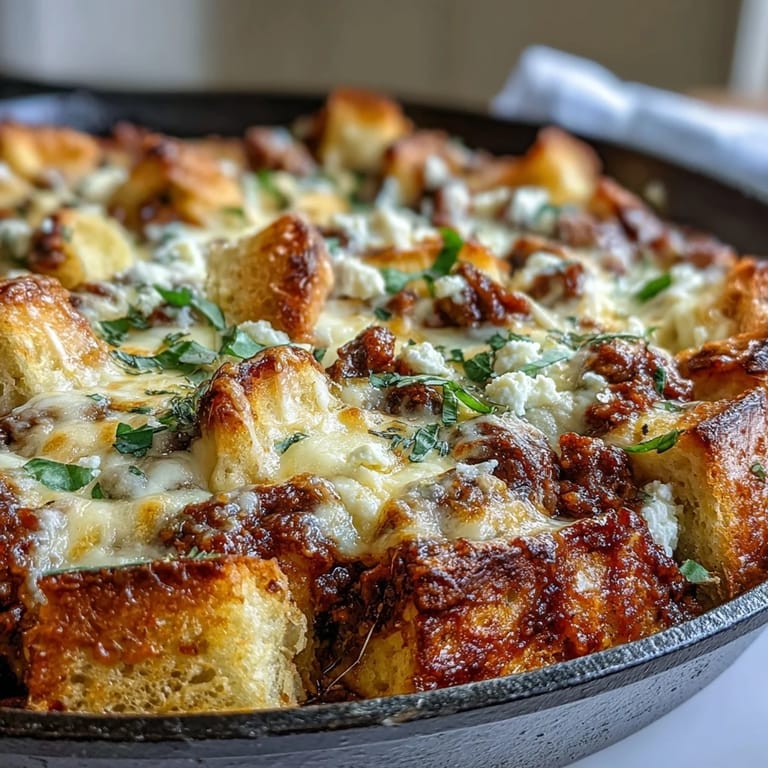
A cast-iron skillet does something that regular baking dishes simply can't replicate—it heats evenly from every direction, creating those caramelized, crispy edges on your bread cubes while the center stays creamy and tender. The heavy material also conducts heat so efficiently that you get a more stable bake overall, meaning no soggy bottoms or unevenly cooked sections. Plus, there's something deeply satisfying about bringing a skillet straight from oven to table; it keeps everything warmer longer and somehow makes the whole meal feel more intentional.
Variations That Work
I've made this with Italian sausage instead of beef on nights when I wanted something richer and spicier, and I've used ground turkey for friends watching their fat intake—both versions disappear just as quickly. Adding a pinch of red pepper flakes to the meat sauce turns up the heat without overwhelming the other flavors, and I've experimented with mixing some spinach into the ricotta layer for color and nutrition without changing the essential character of the dish. The beauty here is that this recipe is flexible enough to work with what you have on hand, whether that's different cheeses, fresh herbs from your garden, or proteins you prefer.
Serving Suggestions and Pairings
This skillet is hearty enough to stand entirely on its own, but pairing it with something bright and fresh keeps the meal from feeling heavy—a simple green salad with a lemon vinaigrette cuts right through all that richness. A glass of Chianti brings out the tomato flavors and somehow makes everything taste more intentional, or you can go with a simple red wine from your budget if that's what you have. Garlic bread is already built into this dish, so you won't need another starch unless you're serving truly hungry people; otherwise, let the skillet be the main event and build around it.
- Fresh basil or parsley scattered over the top just before serving adds a final bright note that feels almost fancy.
- A small bowl of extra Parmesan on the side lets people customize their portions without you having to guess how much cheese is enough.
- Let this cool for exactly ten minutes before serving so you can actually scoop it without making a mess.
 Save to Pinterest
 This recipe taught me that sometimes the best meals come from taking things you already love and stacking them together in ways that shouldn't work but absolutely do. Every time I make it, it feels a little bit like discovering it for the first time all over again.
Recipe Questions & Answers
- → Can I make this skillet ahead of time?
Yes, assemble everything up to 24 hours in advance and store covered in the refrigerator. Bake when ready, adding 5-10 minutes to the covered baking time if cooking from cold.
- → What type of bread works best?
A sturdy Italian or French loaf with a tight crumb works best. Avoid very soft bread that will become mushy, or overly crusty artisan bread that won't absorb the sauce properly.
- → Can I use Italian sausage instead of ground beef?
Absolutely. Italian sausage (mild or hot) adds excellent flavor and complements the traditional lasagna profile. Just remove the casings before cooking and brown as directed.
- → How do I know when it's done baking?
The dish is ready when the cheese is fully melted, bubbly, and golden brown on top. You should see the sauce bubbling up around the edges, and a knife inserted in the center should come out hot.
- → Can I freeze leftovers?
Yes, cool completely and store in airtight containers for up to 3 months. Thaw overnight in the refrigerator and reheat in a 350°F oven until hot throughout, about 20-25 minutes.
- → What can I serve with this skillet?
A simple green salad with vinaigrette balances the richness. Roasted vegetables like broccoli or zucchini work well. For a classic Italian-American meal, serve with garlic knots or a side of pasta.