 Save to Pinterest
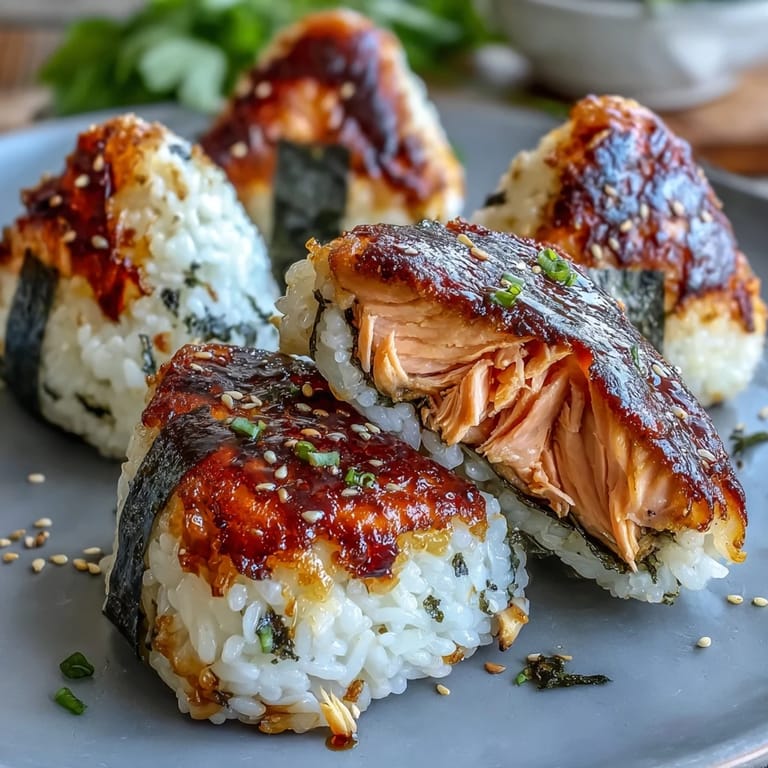
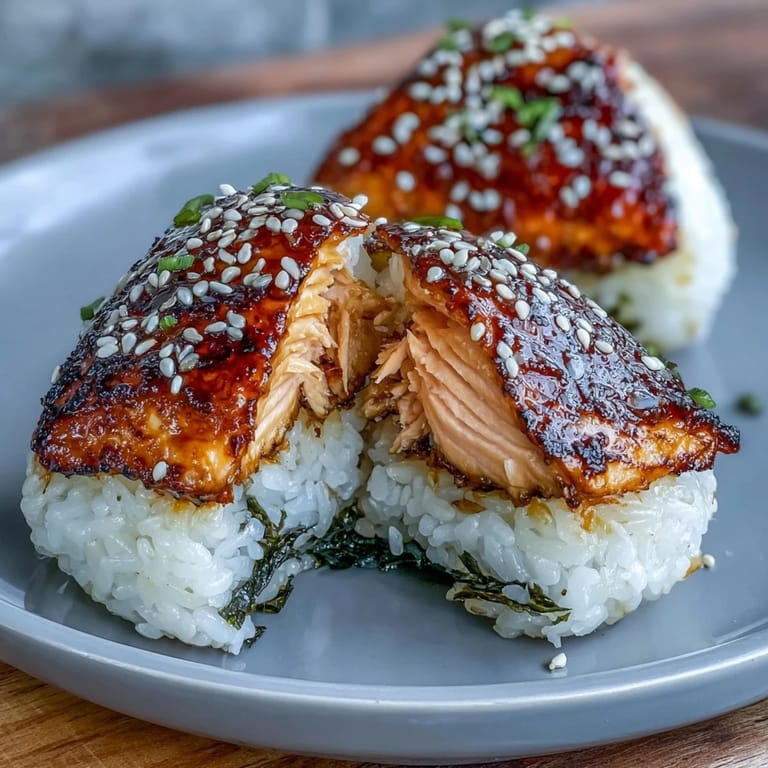
 The first time I made grilled salmon onigiri, the kitchen was filled with the comforting warmth of steaming rice, while the savory aroma of salmon sizzling on the grill felt like an invitation to pause and savor. The whole process felt hands-on in the most satisfying way—molding sticky rice with my palms, stealing a taste of the salmon flake as it cooled, and anticipating the final bite wrapped in nori. There was a kind of meditative rhythm to it that made the world slip away for a moment. Ever since, this recipe has been my go-to for when I crave something both soothing to make and deeply flavorful to eat.
I remember making these on a rainy afternoon, listening to the gentle patter on the windows as my friend recounted stories from her last trip to Japan. We took turns shaping the little rice triangles, laughing when one onigiri ended up with a lopsided corner, yet each one tasted better for the company and relaxed effort put in.
Ingredients
- Salmon fillet: Fresh salmon makes for moist, tender flakes the star in each bite use a fork to break it up evenly for easier spreading.
- Soy sauce: Adds just the right touch of umami to the grilled salmon brushing it on before grilling deepens the flavor.
- Mirin: This gentle sweetness rounds out the saltiness—a little goes a long way for balancing tastes.
- Toasted sesame oil: A drizzle brings a subtle nuttiness, but be careful not to overpower the fish.
- Salt and black pepper: Season with a light hand to let the salmon and rice shine.
- Japanese short-grain rice: Sticky yet springy, this rice is essential for onigiri that hold together and feel pillowy to bite into—rinse well for the best texture.
- Water: The precise amount ensures the rice comes out just right, so measure carefully.
- Rice vinegar (optional): For a touch of complexity and brightness, stir in after cooking.
- Nori sheets: Wrapping each onigiri locks in moisture and adds a hint of sea flavor—cutting into strips helps keep hands clean while eating.
- Toasted white sesame seeds (optional): A quick sprinkle on top brings crunch and a toasty layer to each bite.
- Water & salt for shaping: Wet hands prevent sticking and a bit of salt seasons the outside just enough.
Tired of Takeout? 🥡
Get 10 meals you can make faster than delivery arrives. Seriously.
One email. No spam. Unsubscribe anytime.
Instructions
- Cook the rice:
- Gather the rice in a sieve and rinse under cold water with your fingers until the water turns clear. Cook with measured water in your rice cooker or saucepan and, once perfectly sticky and steamy, let it rest covered—then gently season with salt and, if you like, a splash of rice vinegar.
- Grill the salmon:
- Pat dry your salmon and brush it with soy sauce, mirin, sesame oil, and just enough salt and pepper to bring out its natural flavor. Grill or bake until it flakes easily and fills the air with its savory perfume, then let it cool so you can flake it without burning your fingers.
- Shape the onigiri:
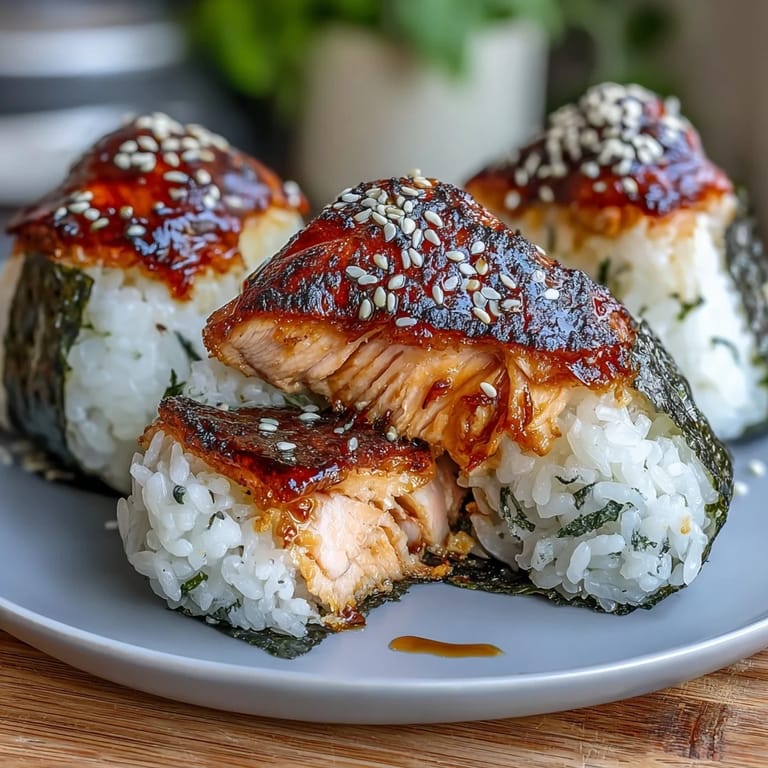
- Set up bowls of water and salt for your hands. Work with warm rice: pat a small mound in your wet, salted hand, nestle a spoonful of salmon in the middle, and cup the rice gently but firmly to seal it into a neat triangle or oval, feeling the grains squish together.
- Grill the onigiri:
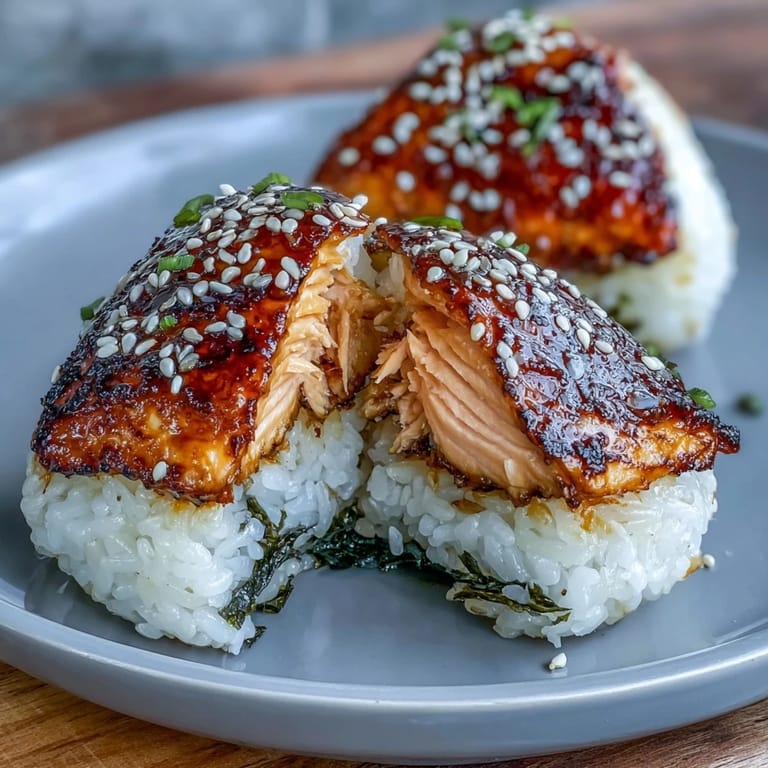
- Heat a lightly oiled nonstick pan until shimmering, then place the onigiri gently and listen for a soft sizzle. Cook a few minutes per side until golden and crisp, brushing a little soy sauce on one side before flipping if you want extra flavor.
- Wrap and finish:
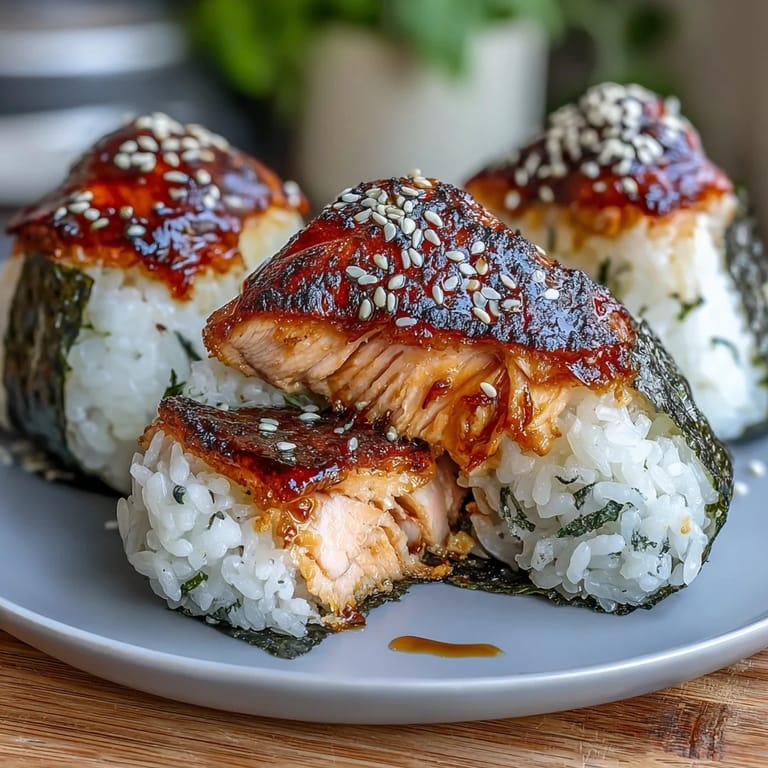
- Wrap a strip of nori around each onigiri, pressing lightly so it sticks while still warm. Sprinkle with sesame seeds for a final nutty note and enjoy warm or let them cool to room temperature for the perfect snack.
 Save to Pinterest
  Save to Pinterest
 There was a moment I served these at an impromptu picnic in my backyard, seated on a faded blanket with mismatched cups of green tea. Watching friends reach for seconds, debating the best filling-to-rice ratio, I realized these little handheld snacks had become a source of comfort and connection.
Making Onigiri with Leftover Salmon
If you've got leftover cooked salmon in the fridge, you're already halfway there. Flake it cold, season lightly, and use straight from the fridge—the residual heat of the rice brings it right to life.
Creative Filling Additions
When I'm feeling adventurous, I sometimes tuck in a sliver of pickled plum or a dab of spicy mayo with the salmon. These twists keep the classic onigiri format but make each batch feel custom-made for whoever's eating.
Perfect Onigiri Every Time
The key lies in not overfilling and keeping your hands damp and lightly salted so each onigiri shapes and seasons itself with every squeeze. Make smaller rice balls if the triangles start to crumble, and don't sweat a bit of mess—perfect shapes come with practice.
- Taste the salmon before using—it should be flavorful but not too salty.
- Keep a bowl of clean water nearby to refresh your hands as you shape.
- Let the onigiri rest a few minutes before wrapping in nori for crisp plus chewy texture.
 Save to Pinterest
  Save to Pinterest
 However you fill or shape them, these salmon onigiri have a way of disappearing quickly—just enjoy the crispy bites and the simple pleasure of homemade Japanese comfort food.
Recipe Questions & Answers
- → What rice is best for onigiri?
Use Japanese short-grain rice for the stickiest texture. Rinse until water runs clear, cook with a tight water ratio, and let it rest so the grains cling when shaping.
- → How do I keep the filling from leaking?
Cool flaked salmon slightly before inserting, use a compact portion of filling, and press the rice firmly but gently around it so the grain seals the center.
- → Can I bake the salmon instead of grilling?
Yes. Brush salmon with soy, mirin and sesame oil, then bake at 200°C (400°F) for 8–10 minutes until cooked through; flake and cool slightly before assembly.
- → How do I get a crisp exterior on the onigiri?
Lightly oil a nonstick skillet or grill pan and sear the shaped onigiri 2–3 minutes per side over medium heat until golden. Brush with soy for extra color and flavor before flipping.
- → What are good filling variations or additions?
Add a dab of wasabi or a piece of pickled plum (umeboshi) for bright acidity. Canned salmon works in a pinch, or mix in a little sesame oil and scallions for extra depth.
- → How should I store leftovers?
Store cooled onigiri in an airtight container in the fridge for up to 24 hours; reheat briefly in a skillet to revive crispness. Keep nori separate until serving to maintain texture.