 Save to Pinterest
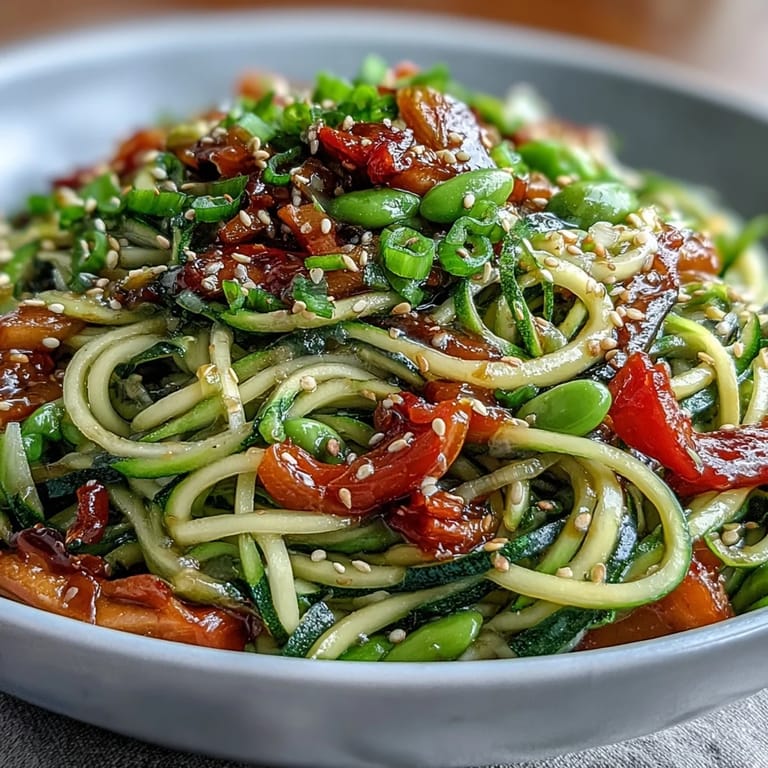
 There's something about the sound of a spiralizer doing its work that makes me feel like I'm actually eating well without much effort. One Tuesday evening, I stood in my kitchen watching those zucchini ribbons pile up, and it hit me: this could be the answer to those nights when I want something fresh and fast but don't want to feel deprived. What started as a random experiment with vegetables I had on hand turned into the meal I now make when I want to feel genuinely nourished without spending half the evening cooking.
I made this for my friend who'd just started a new fitness routine, and she was genuinely surprised when I told her how simple it was. She came back the next week and said she'd made it three times already, once even adding some leftover rotisserie chicken to make it more filling. That moment when someone takes your recipe seriously enough to make it their own—that's when you know it actually works in real life.
Ingredients
- Zucchini, spiralized: The base of this whole thing, and honestly, they cook so quickly that you need to be paying attention or they'll turn mushy—I learned that the hard way the first time.
- Red bell pepper and carrot: These add color and sweetness without needing any sugar in the sauce, plus the different textures keep every bite interesting.
- Snap peas: They stay crisp if you don't overcook them, and they add a little snap that makes the whole dish feel more alive.
- Green onions, garlic, and ginger: This trio is what actually makes the dish taste intentional rather than like you just threw vegetables in a pan.
- Low-sodium soy sauce or tamari: The base of your sauce, and using tamari means nobody has to worry about gluten hiding in there.
- Toasted sesame oil: A little goes a long way here, and it's the ingredient that makes people ask what smells so good.
- Rice vinegar: Adds brightness without being sharp, which is exactly what you want to balance the richness of the sesame oil.
- Honey or maple syrup: Just enough sweetness to round out the flavors without making it taste like dessert.
- Chili flakes: Optional, but if you like a little heat, this is where it lives.
- Sesame seeds and fresh herbs: The final touches that make this feel like something you actually tried, not just something you threw together.
Tired of Takeout? 🥡
Get 10 meals you can make faster than delivery arrives. Seriously.
One email. No spam. Unsubscribe anytime.
Instructions
- Make your sauce first:
- Whisk soy sauce, sesame oil, rice vinegar, honey, and chili flakes in a small bowl and set it aside so you're not scrambling while everything's cooking. This way you can focus on the vegetables and not feel rushed.
- Get your pan singing:
- Heat a large skillet or wok over medium-high heat and add just a splash of oil if you want, then throw in your garlic and ginger and wait until the kitchen smells amazing—that's your signal they're ready. This should take about 30 seconds, and you'll know it when you smell it.
- Build your vegetable layers:
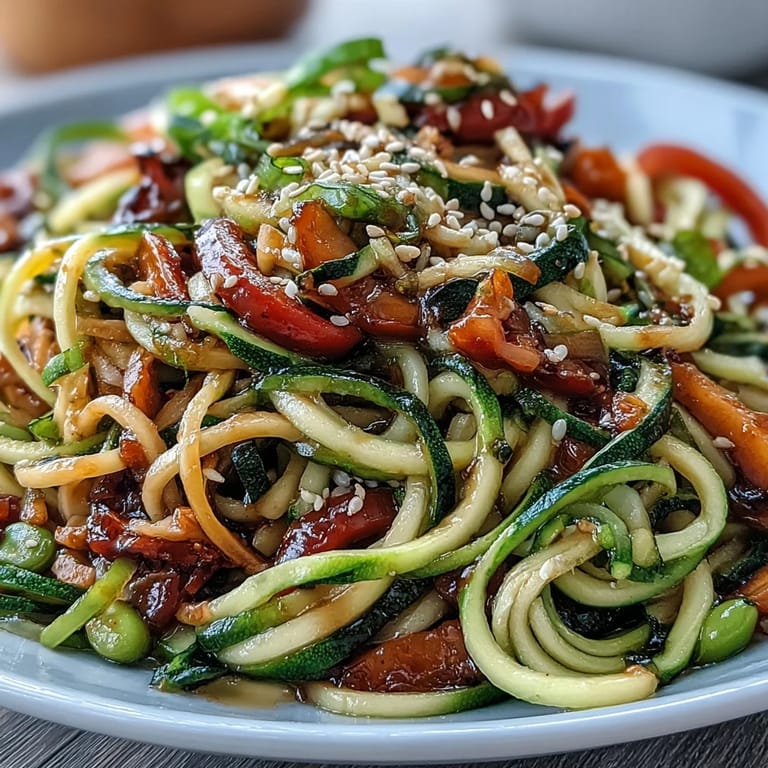
- Add the bell pepper, carrot, and snap peas and keep them moving with a spatula or tongs for 3 to 4 minutes until they're tender but still have some resistance when you bite them. You want them cooked through but not soft.
- Introduce the zucchini noodles:
- Toss in your spiralized zucchini and green onions and stir everything together for 2 to 3 minutes—watch them closely because they release water as they cook and you don't want them turning into mush. They should still feel a little firm, like fresh pasta.
- Bring it all together:
- Pour in that sauce you made earlier and toss everything for 1 to 2 minutes until it's evenly coated and everything's warm. You'll see the noodles glisten and the whole thing will smell restaurant-quality.
- Finish and serve:
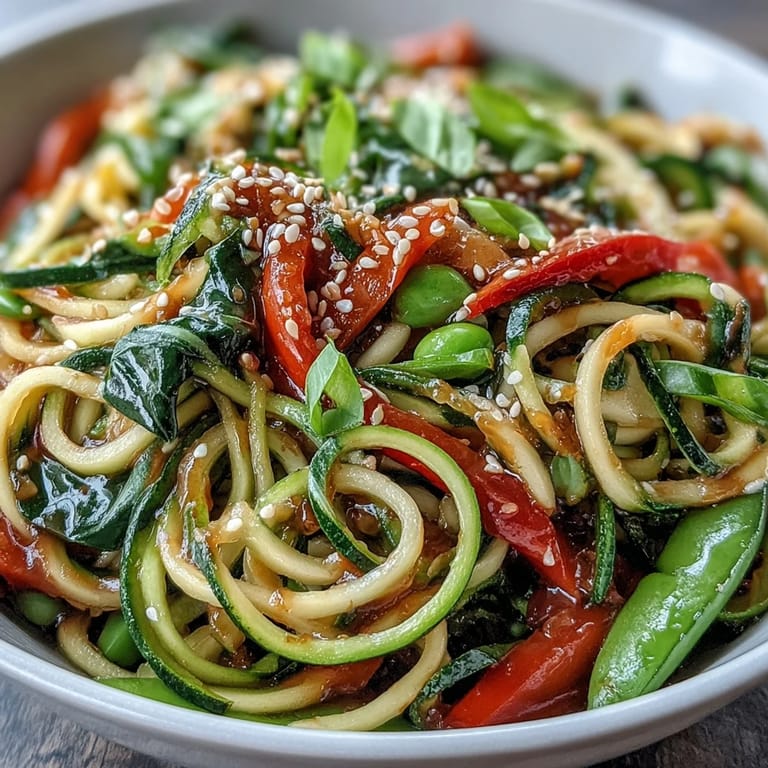
- Take it off the heat and divide between bowls, then scatter sesame seeds on top and add whatever fresh herbs or lime wedges you're using. Eat it right away while everything's still warm and crisp.
 Save to Pinterest
 My mom came over one afternoon when I was making this and watched the whole process without saying much, then asked if she could learn how to make it because she wanted to start cooking lighter dinners but didn't want everything to taste like punishment. There's something powerful about food that tastes good and makes you feel good at the same time, and I think that's what keeps this one in regular rotation.
Making It Your Own
The skeleton of this dish is sturdy enough that you can play around without breaking anything. I've added shredded cooked chicken on nights when I needed more protein, and I've thrown in some scrambled eggs to make it breakfast-for-dinner, and both times it worked beautifully. The sauce is flexible enough to handle additions, and the vegetable base is just a starting point.
Sauce Science
The balance in this sauce is what makes the whole thing sing—the saltiness of the soy, the nuttiness of the sesame oil, the brightness of the vinegar, and just enough sweetness to tie it all together. Once you understand how those elements work, you can adjust them to your taste without ruining anything. I've made batches where I added more ginger because I was in that kind of mood, and it was perfect.
Timing and Temperature
The whole point of this dish is that it comes together quickly, which means you need medium-high heat and you need to keep moving. There's no resting period or slow simmering, just constant motion and attention for about 10 minutes total. Once you've made it once and understand the rhythm, you can practically do it with your eyes closed.
- Start with a hot pan because cold pans and quick cooking don't mix.
- Keep vegetables moving so they cook evenly instead of getting soft in some spots and raw in others.
- Taste the sauce before you add it in case you want to adjust the seasoning.
 Save to Pinterest
 This is the kind of meal that proves healthy eating doesn't have to be complicated or boring. Make it once and you'll understand why it's become a regular thing in my kitchen.
Recipe Questions & Answers
- → What is the best way to spiralize zucchini?
Use a spiralizer or julienne peeler for even noodles. Choose firm, medium-sized zucchinis for best texture.
- → Can this dish be made gluten-free?
Yes, substitute regular soy sauce with tamari or a certified gluten-free soy sauce to keep it gluten-free.
- → How do I prevent zucchini noodles from becoming soggy?
Stir fry zucchini noodles briefly until just tender to maintain a crisp texture and avoid excess moisture.
- → What proteins pair well with this stir fry?
Cooked tofu, shrimp, or chicken can be added for extra protein and heartiness in the dish.
- → How can I adjust the heat level in this dish?
Modify the amount of chili flakes in the sauce to increase or decrease the spice according to taste.