 Save to Pinterest
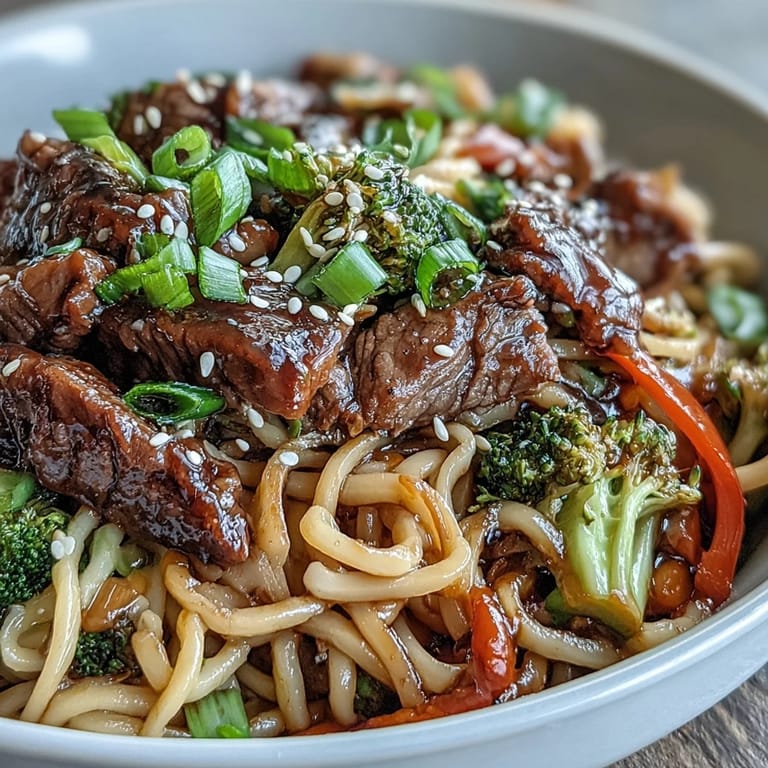
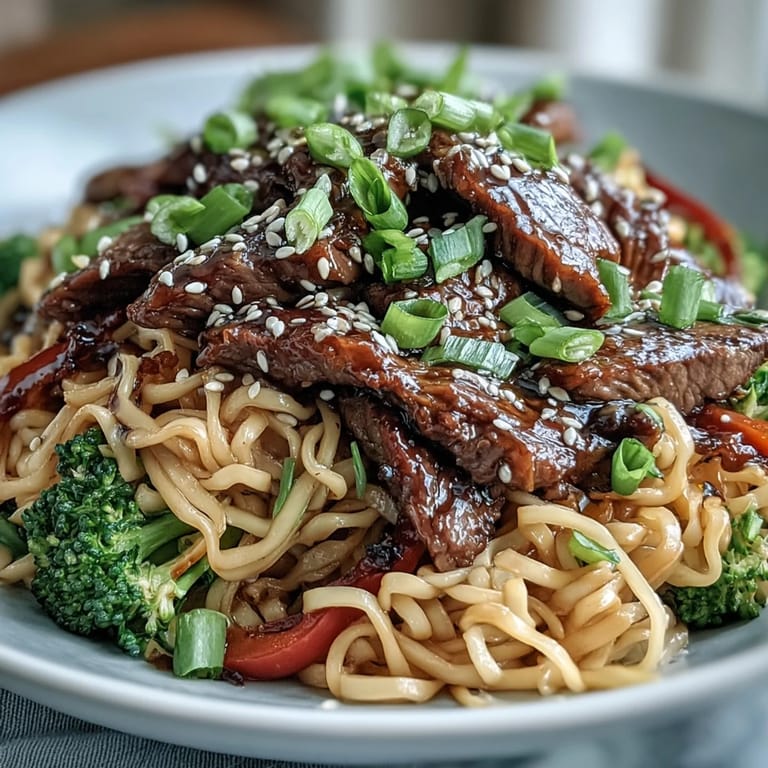
 The first time I made Korean beef noodles, my tiny apartment filled with this incredible ginger-garlic fragrance that had my neighbor knocking on my door to ask what I was cooking. I hadnt planned on sharing dinner, but those noodles ended up feeding four of us huddled around my coffee table. Theres something about the way the glossy sauce clings to slippery rice noodles that makes everything feel cozy and right with the world.
Last winter during a particularly brutal cold snap, I made a double batch of these noodles for my sister who was recovering from surgery. She texted me two days later asking if I had more, claiming it was the only thing that actually made her feel like herself again.
Ingredients
- Rice noodles: These soak up that gorgeous sauce without getting gummy, plus theyre naturally gluten-free
- Flank steak: Thinly slicing it against the grain keeps the beef tender even after a quick sear in the hot pan
- Broccoli florets: They hold up beautifully to stir-frying and add that perfect crunch
- Bell pepper: Red or yellow brings sweetness and color to the bowl
- Carrot: Julienned thin so they cook quickly but still keep some snap
- Garlic and ginger: These aromatics build the foundational flavor of the entire dish
- Soy sauce: The salty backbone that brings everything together
- Brown sugar: Caramelizes slightly in the heat for a subtle sweetness that balances the soy
- Sesame oil: Just a tablespoon adds that distinct nutty finish
Tired of Takeout? 🥡
Get 10 meals you can make faster than delivery arrives. Seriously.
One email. No spam. Unsubscribe anytime.
Instructions
- Prep your noodles:
- Cook the rice noodles according to the package, then drain and set them aside while you work on everything else.
- Sear the beef:
- Heat vegetable oil in a large skillet or wok over medium-high heat, then add the thinly sliced flank steak and cook for 2 to 3 minutes until browned before removing it from the pan.
- Bloom the aromatics:
- In that same hot skillet, add your minced garlic and grated ginger, stirring for about 30 seconds until the fragrance fills your kitchen.
- Crisp the vegetables:
- Toss in the broccoli, bell pepper, and carrot, stir-frying for about 5 minutes until theyre tender but still have some bite to them.
- Whisk the sauce:
- While the vegetables cook, stir together the soy sauce, brown sugar, and sesame oil until the sugar completely dissolves.
- Bring it all together:
- Return the beef to the skillet, pour that sauce over everything, stir well, then add the cooked noodles and toss gently for about 2 minutes until everything is heated through and evenly coated.
- Finish it off:
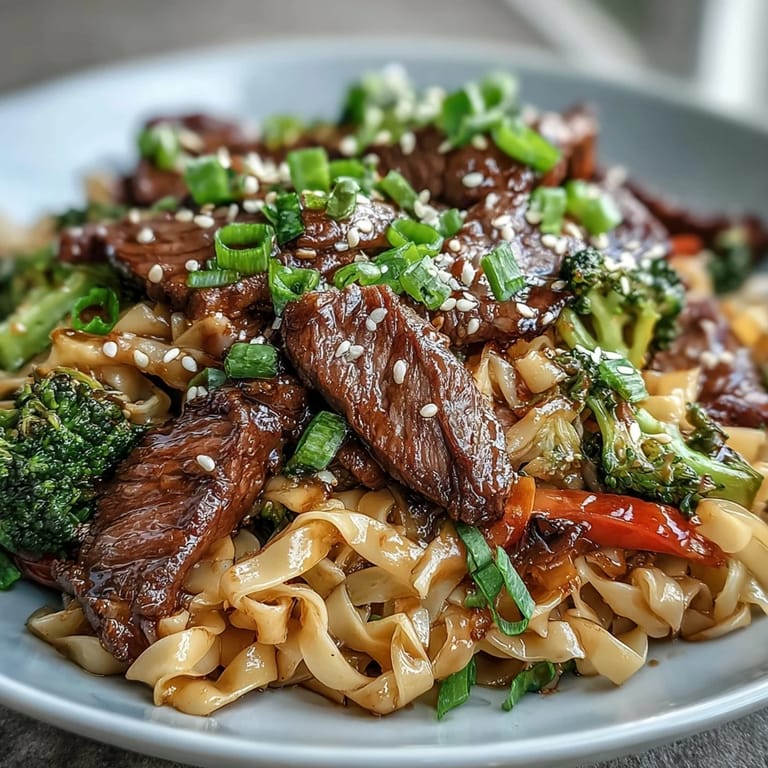
- Sprinkle with chopped green onions and sesame seeds right before serving to add fresh color and crunch.
 Save to Pinterest
 This recipe has become my go-to for new parents, friends who need a pick-me-up, or those Tuesday nights when takeout sounds tempting but I want something homemade and nourishing instead.
Making It Your Own
I love adding snap peas or zucchini when theyre in season, and sometimes Ill throw in baby spinach at the very end just to wilt it into the noodles.
Protein Swaps
Thinly sliced chicken breast works beautifully here, or you can use extra-firm tofu for a vegetarian version that still soaks up all that sauce.
Heat It Up
Sriracha or gochujang stirred into the sauce brings a lovely warmth that cuts through the sweetness.
- Start with one teaspoon of your chosen heat source
- Taste and adjust from there because you cant go backward once its too spicy
- Remember that the heat will mellow slightly as it coats the noodles
 Save to Pinterest
 I hope this brings as much comfort to your table as it has to mine over the years.
Recipe Questions & Answers
- → Can I use a different protein?
Absolutely! Chicken breast or thighs, cut into thin strips, make an excellent substitute for flank steak. For a vegetarian option, firm tofu or tempeh can be pressed, cubed, and stir-fried until golden before adding to the dish.
- → What other vegetables work well in this dish?
This meal is very versatile. Consider adding snap peas, sliced zucchini, mushrooms, or baby corn. Ensure they are cut to a similar size for even cooking, and add them along with the bell pepper and carrot.
- → How can I make this dish spicier?
For a delightful kick, you can easily incorporate heat into the sauce. Stir in a teaspoon or two of sriracha, gochujang (Korean chili paste), or a pinch of red pepper flakes along with the soy sauce mixture.
- → What's the best way to store leftovers?
Leftovers can be stored in an airtight container in the refrigerator for up to 3 days. Reheat gently in a microwave or a skillet over medium heat, adding a splash of water or broth if needed to loosen the noodles.
- → Is this dish suitable for a gluten-free diet?
This dish can be easily adapted to be gluten-free. Simply ensure you use certified gluten-free rice noodles and substitute regular soy sauce with tamari, which is a gluten-free alternative with a similar flavor profile.