 Save to Pinterest
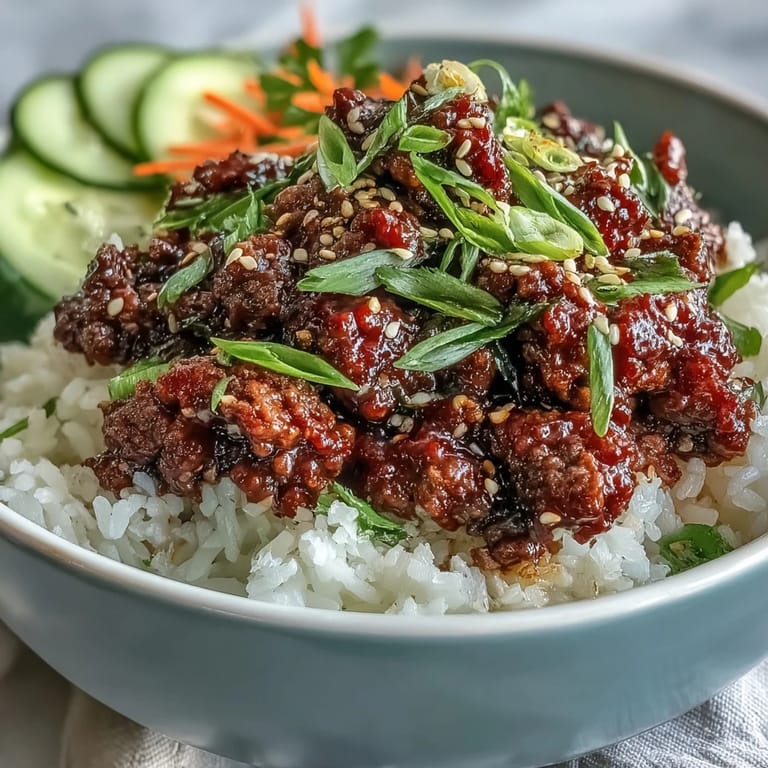
 The smell of sesame oil hitting a hot pan never fails to pull me straight into the kitchen. I started making this bowl on weeknights when I needed something fast but craved the kind of flavor that makes you put your phone down and actually pay attention to your dinner. The gochujang does all the heavy lifting, turning plain ground beef into something deeply savory and just spicy enough to wake up your taste buds. What I love most is how the cool cucumber and tangy kimchi cut through the richness, making every bite feel balanced. It became my go-to when I wanted restaurant-level satisfaction without the wait or the cleanup.
I once made this for a friend who swore she didnt like spicy food, and she ended up scraping her bowl clean and asking for the recipe. The trick was letting her control the kimchi and gochujang levels, which taught me that this dish is as flexible as you need it to be. We sat at my tiny kitchen table with mismatched bowls, and she admitted the sesame seeds made it feel fancy even though we were both still in sweatpants. That night it became more than just a quick dinner, it became proof that good food doesnt need to be complicated. Now I keep gochujang stocked like some people keep ketchup.
Ingredients
- Lean ground beef: The base of the bowl, it soaks up the gochujang marinade beautifully and cooks fast, though ground turkey or chicken works just as well if you want something lighter.
- Gochujang: This Korean chili paste is the soul of the dish, bringing fermented depth and a warm, lingering heat that builds without overwhelming.
- Soy sauce: Adds salty umami that balances the sweetness and ties all the flavors together, use tamari if you need it gluten-free.
- Brown sugar: Just enough to caramelize the beef slightly and mellow the heat, creating a subtle sweet-savory glaze.
- Garlic and ginger: These aromatics bloom in the sesame oil and form the fragrant backbone of the sauce.
- Toasted sesame oil: A little goes a long way, its nutty richness makes the whole kitchen smell incredible.
- Green onions: Half go into the beef for flavor, half stay fresh on top for a sharp, bright contrast.
- Short-grain rice: Sticky enough to hold the toppings but not mushy, it acts as the perfect neutral canvas.
- Edamame: Adds protein and a pop of green, plus a slight sweetness that plays well with the spice.
- Cucumber: Cool, crisp, and refreshing, it cuts through the richness and adds much-needed crunch.
- Carrot: Julienned thin, it brings color and a hint of natural sweetness.
- Kimchi: Tangy, funky, and alive, it transforms the bowl from good to unforgettable.
- Toasted sesame seeds: They look like a small detail, but they add a nutty finish and make everything feel polished.
Tired of Takeout? 🥡
Get 10 meals you can make faster than delivery arrives. Seriously.
One email. No spam. Unsubscribe anytime.
Instructions
- Bloom the aromatics:
- Heat the sesame oil in a large skillet over medium heat, then add the garlic and ginger, stirring constantly for about a minute until the kitchen smells toasty and fragrant. Dont let them brown or theyll turn bitter.
- Brown the beef:
- Add the ground beef and break it up with a spatula, stirring occasionally until its fully cooked and no longer pink, about 5 to 6 minutes. The goal is to get some caramelization on the edges without drying it out.
- Build the sauce:
- Stir in the gochujang, soy sauce, and brown sugar, mixing until the beef is evenly coated and the sauce thickens slightly, about 2 to 3 minutes. The sugar will help it cling to the meat and create a glossy finish.
- Finish with green onions:
- Remove the skillet from the heat and fold in half of the sliced green onions. This keeps them slightly crisp and adds a fresh bite to the warm beef.
- Assemble the bowls:
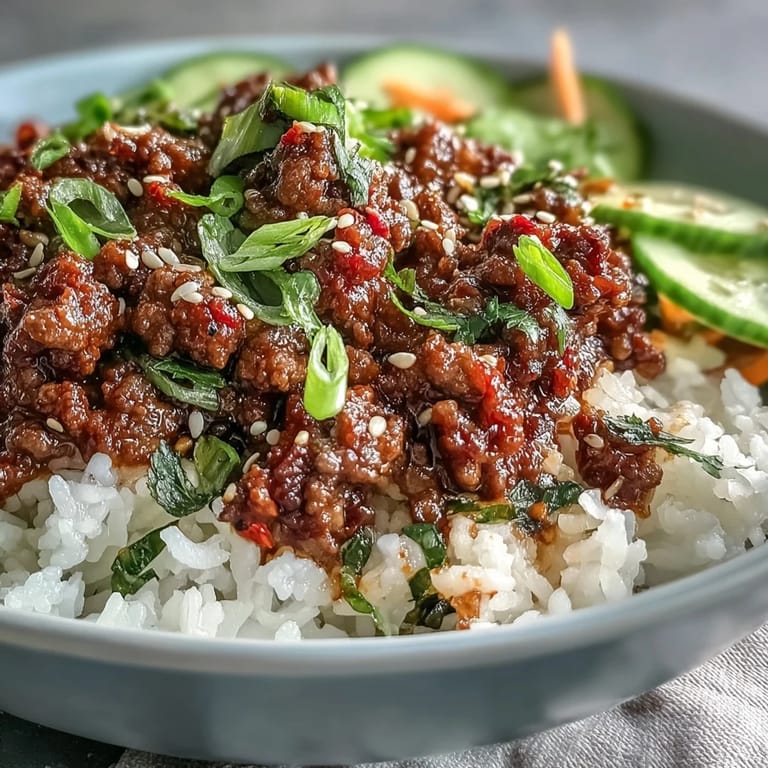
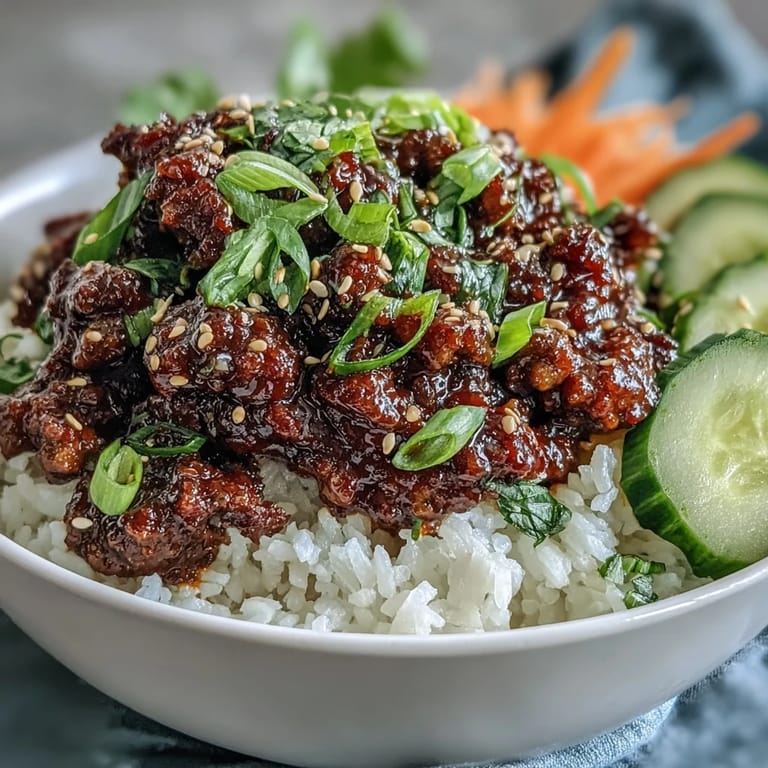
- Divide the cooked rice among four bowls, then arrange the beef, edamame, cucumber, carrot, and kimchi on top in separate sections for a colorful presentation. Sprinkle with the remaining green onions and sesame seeds, then serve right away while the beef is still warm.
 Save to Pinterest
 There was a rainy Tuesday when I made this just for myself, no one to impress, no camera, no plan. I piled everything into a big bowl, sat on the couch, and realized halfway through that I was smiling at my food like an old friend had just told me a good joke. That was the moment I understood this dish wasnt just easy or tasty, it was the kind of meal that made me feel taken care of, even when I was the one doing the cooking. Now every time I make it, I think about that quiet night and feel grateful for recipes that feel like home.
Making It Your Own
This bowl is incredibly forgiving and loves to be customized. Swap the beef for ground turkey, chicken, or even plant-based crumbles if youre avoiding red meat or want a lighter option. I once used leftover rotisserie chicken and it was just as satisfying. For extra crunch, add thinly sliced radish, shredded cabbage, or even snap peas. A fried egg on top turns it into brunch, and a drizzle of sriracha mayo makes it feel like a fusion experiment that actually worked.
Storing and Reheating
I like to prep the components separately and store them in the fridge for up to three days, keeping the beef, rice, and veggies in their own containers. This way I can assemble fresh bowls throughout the week without anything getting soggy or losing its texture. The beef reheats beautifully in the microwave or a skillet with a splash of water to loosen the sauce. Just add the cold toppings right before eating so you get that temperature contrast that makes the bowl so satisfying.
Choosing Your Kimchi
Not all kimchi is created equal, and the brand you choose will change the flavor of your bowl. Some are mild and crunchy, others are funky and deeply fermented, so taste before you buy if you can. I prefer a well-fermented napa cabbage kimchi with a good tang, but if youre new to it, start with a milder version and work your way up. Check the label if you have seafood allergies, as many traditional kimchis contain fish sauce or shrimp paste.
- Look for kimchi thats still crunchy, not mushy, for the best texture in your bowl.
- If its too spicy, rinse it lightly under cold water before chopping.
- Leftover kimchi juice makes an incredible stir-fry sauce or salad dressing base.
 Save to Pinterest
 This bowl has earned its place in my weekly rotation, not because its trendy or complicated, but because it delivers every single time. I hope it becomes one of those recipes you turn to when you need something reliable, vibrant, and deeply satisfying without any fuss.
Recipe Questions & Answers
- → What does gochujang taste like?
Gochujang delivers a complex balance of sweet, savory, and spicy flavors with fermented umami depth. The heat level is moderate and can be adjusted to your preference by using more or less paste.
- → Can I make this bowl ahead of time?
The seasoned beef keeps well in the refrigerator for 3-4 days and actually develops deeper flavor overnight. Store components separately and reheat the beef gently before assembling bowls for best texture.
- → What can I substitute for ground beef?
Ground turkey, chicken, or plant-based crumbles work beautifully. Lean pork is another authentic option. Adjust cooking time slightly as different meats may brown at different rates.
- → Is this dish spicy?
The spice level is moderate and family-friendly. You can reduce the gochujang for milder flavor or add extra for more heat. Serving with extra kimchi on the side lets each person customize their preferred spice level.
- → Can I use different vegetables?
Absolutely. Try shredded cabbage, sliced radishes, spinach, bean sprouts, or sautéed zucchini. The beauty of this dish is its versatility with whatever fresh vegetables you have on hand.