 Save to Pinterest
 My desk drawer used to be full of sad takeout menus until I started packing these jars every Sunday night. The first Monday I brought one to work, three coworkers circled my desk asking what smelled so good. Now we have a little mason jar lunch club, and I'm the one who started it all by accident. It's funny how a simple glass container can turn meal prep from a chore into something I actually look forward to.
I made these for my sister when she started her new job and didn't have time to figure out lunches. She texted me a photo every day that week with the jar half-eaten and a thumbs up emoji. By Friday, she asked for the recipe and admitted she'd been eating sad vending machine snacks before. Watching someone rediscover their lunch break because of something you taught them feels better than any fancy dinner party compliment.
Ingredients
- Dried ramen or rice noodles (200 g): I prefer rice noodles because they hold up better in the fridge and don't get mushy, but ramen works beautifully if that's what you have.
- Cooked chicken breast, tofu, or shrimp (200 g, diced): This is your protein base, and I've learned that dicing it small helps everything mix better when you pour in the hot water.
- Shredded carrots (1 cup): Adds sweetness and crunch, plus they keep their texture even after a few days in the jar.
- Thinly sliced bell peppers (1 cup, red or yellow): I slice these as thin as I can so they soften quickly when the hot water hits them.
- Baby spinach or kale (1 cup): Spinach wilts perfectly, but kale holds up longer if you're prepping for the end of the week.
- Thinly sliced scallions (1/2 cup): These add a sharp, fresh bite that wakes up every other flavor in the jar.
- Bean sprouts (1/2 cup): They stay surprisingly crisp and add that classic noodle bowl texture.
- Soy sauce (4 tbsp): The salty backbone of your sauce, and I always use low sodium so I can control the salt level myself.
- Rice vinegar (2 tbsp): This brightens everything and keeps the sauce from tasting too heavy.
- Sesame oil (2 tbsp): A little goes a long way, and it gives the whole jar that nutty, toasted flavor.
- Honey or maple syrup (1 tbsp): Balances the salty and tangy with just enough sweetness.
- Sriracha or chili sauce (2 tsp, optional): I always add it because I like a little heat, but my kids skip it entirely.
- Garlic (1 clove, minced): Fresh garlic makes the sauce taste alive instead of flat.
- Fresh ginger (1 tsp, grated): This is non-negotiable for me, it adds warmth and complexity that dried ginger just can't match.
- Chopped cilantro (2 tbsp, optional): I add this fresh right before eating so it doesn't wilt in the jar.
- Roasted peanuts or cashews (2 tbsp, chopped, optional): The crunch factor that makes every bite more interesting.
- Sesame seeds (1 tbsp, optional): A small detail that makes the jar look restaurant-quality.
- Lime wedges (optional): A squeeze right before eating brings everything together.
Tired of Takeout? 🥡
Get 10 meals you can make faster than delivery arrives. Seriously.
One email. No spam. Unsubscribe anytime.
Instructions
- Cook and cool the noodles:
- Boil your noodles just until tender, then drain and rinse them under cold water to stop the cooking process. This keeps them from turning into mush when they sit in the jar for a few days.
- Whisk together the sauce:
- In a small bowl, combine soy sauce, rice vinegar, sesame oil, honey, Sriracha, minced garlic, and grated ginger until smooth. Taste it and adjust the heat or sweetness to your liking.
- Divide the sauce into jars:
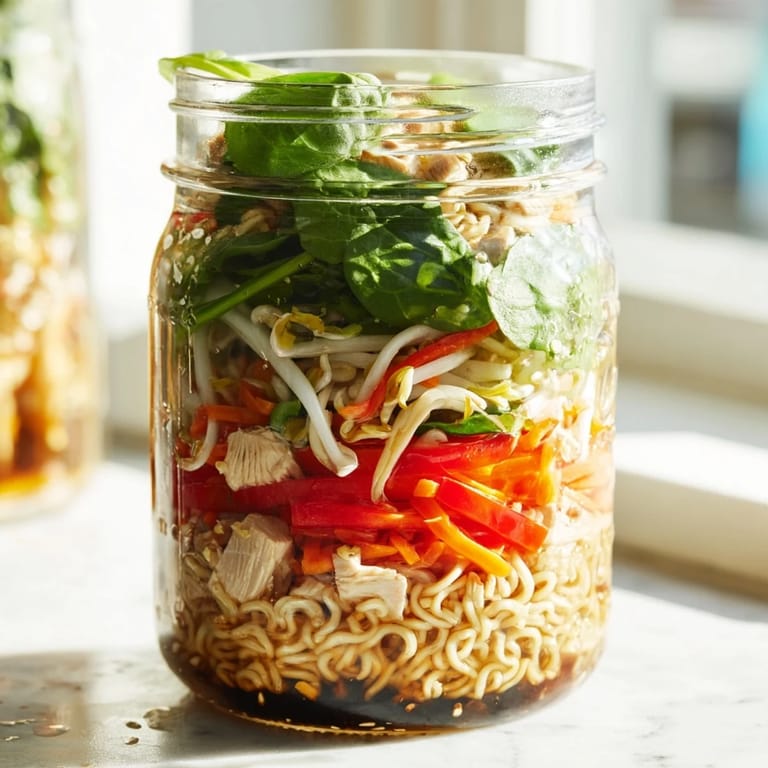
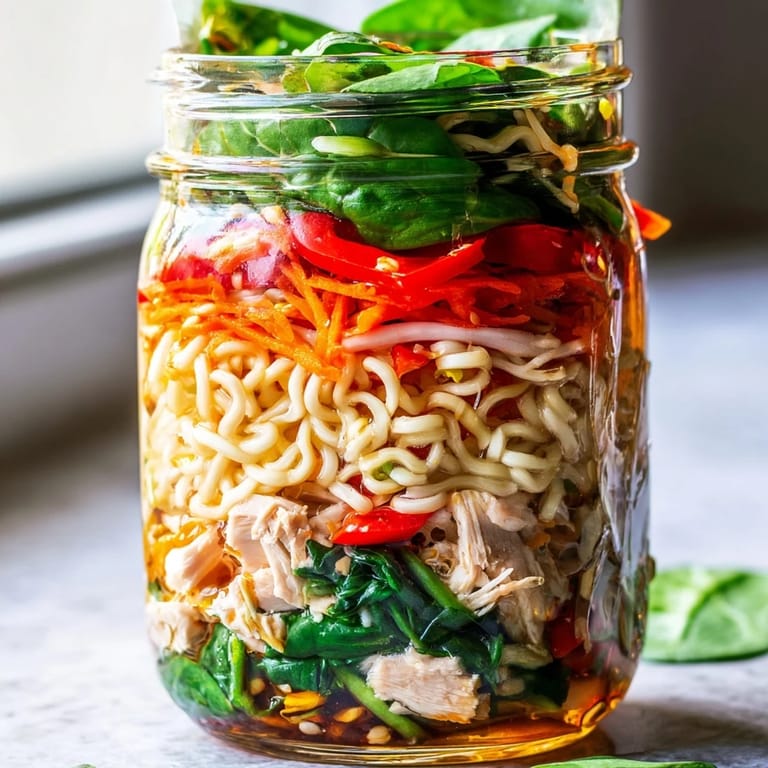
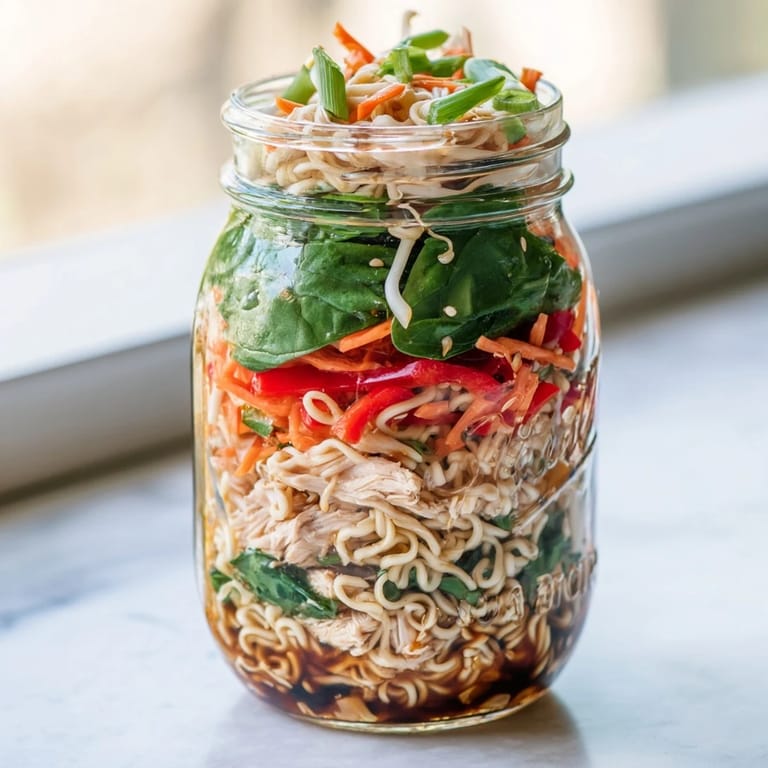
- Pour equal amounts of sauce into the bottom of four large mason jars. This is the secret to keeping everything fresh because the sauce acts as a barrier.
- Layer your protein:
- Add your diced chicken, tofu, or shrimp right on top of the sauce. The protein soaks up flavor while it sits, which makes every bite better.
- Add the vegetables:
- Layer in the carrots, bell peppers, spinach, scallions, and bean sprouts in that order. Pack them in gently but don't smash them down.
- Top with noodles:
- Finish each jar with a portion of the cooked noodles as the final layer. Seal the jars tightly and store them in the fridge.
- Prepare and enjoy:
- When you're ready to eat, remove the lid and add your toppings. Pour about half a cup of hot water into the jar, let it sit for two to three minutes, then stir everything together and dig in.
 Save to Pinterest
 There was one week when I meal prepped six jars because I knew it was going to be chaotic at work. On Wednesday, I gave one to a coworker who'd forgotten her lunch, and she looked at me like I'd handed her a gift card. She couldn't believe it was homemade and kept asking how long it took. Sometimes the best compliment is watching someone enjoy something you made without even knowing you were stressed when you made it.
Swapping Ingredients to Fit Your Week
I've made these jars with leftover rotisserie chicken, baked tofu, and even canned tuna when I was in a pinch. The beauty of this recipe is that it's more about the method than the exact ingredients. If you have half a bag of snap peas or some leftover cabbage, toss it in. The sauce is forgiving, and the layering technique works no matter what you use. I've never had a combination that didn't taste good once the hot water brought it all together.
Making It Last All Week
These jars stay fresh for up to four days in the fridge, but I've noticed they taste best on days two and three when the flavors have had time to meld. If you're worried about the vegetables losing their crunch, add the bean sprouts and scallions to a separate small container and toss them in right before you add the hot water. I also keep a little bag of chopped peanuts in my desk drawer so I can add them fresh. It's a small extra step that makes a big difference.
Adjusting for Different Diets
My brother is gluten-free, so I make his jars with tamari and rice noodles. My friend who's vegan gets hers with baked tofu and maple syrup instead of honey. The template is so flexible that I can prep for three different people in the same batch without much extra effort.
- Use spiralized zucchini or shirataki noodles if you're cutting carbs.
- Double the vegetables and skip the protein if you want a lighter lunch.
- Add a soft-boiled egg on top right before eating for extra richness.
 Save to Pinterest
 Now every Sunday night, I line up my jars on the counter and pack them while listening to music. It's become my favorite kind of quiet ritual, and Monday mornings feel a little less overwhelming because I know lunch is already handled.
Recipe Questions & Answers
- → How long do mason jar noodles stay fresh?
These meal prep jars stay fresh in the refrigerator for up to 4 days when properly sealed and stored at 40°F or below.
- → What type of noodles work best for this meal prep?
Rice noodles or ramen work perfectly. For low-carb options, try spiralized zucchini or shirataki noodles instead.
- → Can I make these jars vegetarian or vegan?
Absolutely! Use tofu or edamame as your protein and substitute maple syrup for honey in the sauce to keep it vegan-friendly.
- → Do I need to add hot water before eating?
Yes, pour about 1/2 cup of hot water into the jar and let it sit for 2-3 minutes. This rehydrates the noodles and warms the ingredients before mixing.
- → Why does the sauce go in first?
Placing sauce at the bottom prevents the noodles from getting soggy and ensures even distribution when you mix everything together before eating.
- → Can I customize the vegetables in this dish?
Yes! Feel free to swap in snap peas, edamame, cabbage, or any fresh vegetables you prefer. Just maintain the layering order for best results.