 Save to Pinterest
 The smell of garlic and ginger hitting hot oil always brings me straight back to Wednesday nights when I needed dinner fast but wanted something better than takeout. I stumbled on this teriyaki bowl during one of those weeks where nothing seemed to go right, and honestly, the glossy sauce clinging to tender chicken felt like a small victory. The pineapple was a last-minute grab from the fridge, but it turned out to be the best accident. Now it shows up on my table at least twice a month. Sometimes the simplest combinations teach you the most about balance.
I made this for my neighbor after she mentioned craving something bright and filling without dairy. She sat at my counter, quiet for the first few bites, then asked for the recipe before she even finished her bowl. Watching someone enjoy food you made never gets old, especially when they go back for seconds. That night reminded me why I keep cooking, even when Im tired.
Ingredients
- Boneless, skinless chicken thighs or breasts (1.5 lbs): Thighs stay juicier and handle the high heat better, but breasts work if you watch them closely and dont overcook.
- Soy sauce (1/3 cup): The backbone of the teriyaki, bringing deep umami that ties everything together.
- Mirin (1/4 cup): This sweet rice wine adds a gentle sweetness and subtle complexity you just cant fake with sugar alone.
- Brown sugar (2 tbsp): Helps the sauce caramelize and cling to the chicken with that signature glaze.
- Honey (2 tbsp): Rounds out the sweetness and gives the sauce a beautiful shine.
- Rice vinegar (1 tbsp): A splash of brightness to keep the sauce from feeling too heavy.
- Garlic (2 cloves, minced): Pungent and aromatic, it blooms in the marinade and perfumes the whole dish.
- Fresh ginger (1 tsp, grated): Adds warmth and a little zing that wakes up your palate.
- Sesame oil (1 tsp): Just a touch brings a nutty, toasty note that deepens the flavor.
- Cornstarch slurry (1 tbsp cornstarch + 2 tbsp water): The secret to that thick, glossy coating that makes teriyaki irresistible.
- Jasmine or short-grain white rice (2 cups): Fluffy and slightly sticky, it soaks up the sauce without falling apart.
- Broccoli florets (1 cup): Crisp-tender with a slight char, they add texture and color.
- Carrots (1 cup, sliced thin): Sweet and crunchy, they hold up well in a hot pan.
- Red bell pepper (1 cup, sliced): Bright and slightly sweet, they bring visual pop and a hint of smokiness when seared.
- Snap peas (1 cup): They stay snappy and fresh, adding a light crunch that balances the richness.
- Vegetable oil (1 tbsp): Neutral and high-heat friendly for stir-frying without burning.
- Fresh pineapple (1 cup, diced): Juicy, sweet, and acidic, it cuts through the savory glaze like nothing else.
- Scallions (2 tbsp, sliced): A fresh, sharp finish that brightens every bowl.
- Toasted sesame seeds (1 tsp): Tiny but mighty, they add a nutty crunch and make everything look polished.
Tired of Takeout? 🥡
Get 10 meals you can make faster than delivery arrives. Seriously.
One email. No spam. Unsubscribe anytime.
Instructions
- Prepare the rice:
- Rinse the rice under cold water until it runs clear, this removes excess starch and keeps it fluffy. Combine rice, water, and a pinch of salt in a saucepan, bring to a boil, then reduce heat, cover, and simmer for 15 minutes before letting it stand off the heat for 10 minutes.
- Make the teriyaki sauce:
- Whisk together soy sauce, mirin, brown sugar, honey, rice vinegar, garlic, ginger, and sesame oil in a small bowl until the sugar dissolves. The aroma alone will make you hungry.
- Marinate the chicken:
- Place chicken pieces in a bowl and pour half the teriyaki sauce over them, tossing to coat. Let it sit for at least 10 minutes while you prep the vegetables, letting the flavors soak in.
- Stir-fry the vegetables:
- Heat vegetable oil in a large skillet or wok over medium-high heat until shimmering. Add broccoli, carrots, bell pepper, and snap peas, stir-frying for 3 to 4 minutes until crisp-tender with a little char on the edges.
- Cook the chicken:
- In the same pan, add the marinated chicken and cook for 6 to 8 minutes, stirring occasionally, until browned and cooked through. The chicken should develop golden edges and release easily from the pan.
- Thicken the sauce:
- Add the remaining teriyaki sauce to the pan with the chicken. Stir the cornstarch with water to create a slurry, then pour it into the sauce and simmer for 2 to 3 minutes until thick and glossy.
- Assemble the bowl:
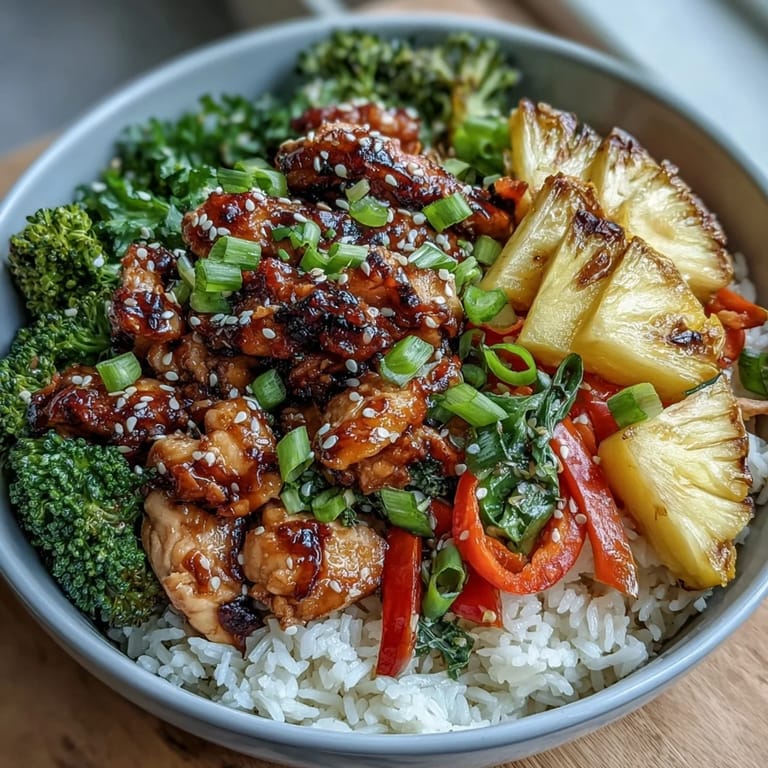
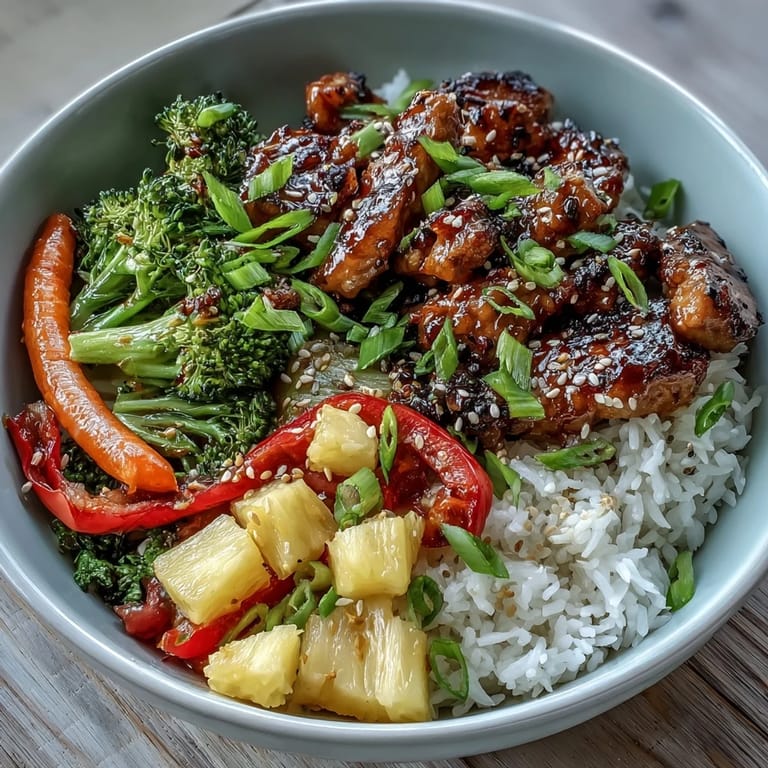
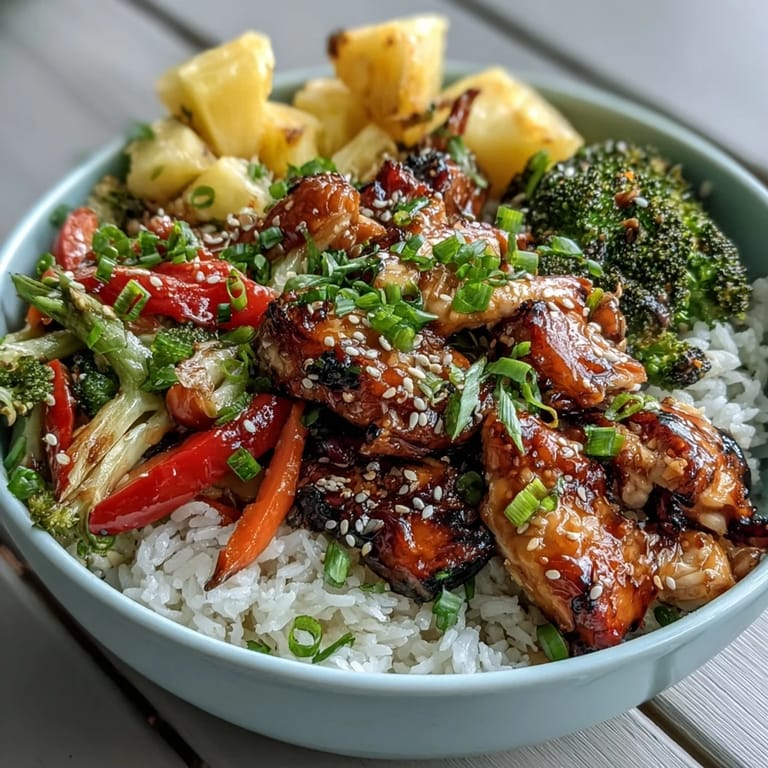
- Fluff the cooked rice with a fork and divide it among four bowls. Top with teriyaki chicken, sautéed vegetables, and diced pineapple, then sprinkle with scallions and sesame seeds.
 Save to Pinterest
 One evening, my friend brought over a bottle of chilled Sauvignon Blanc, and we paired it with this bowl on a whim. The crisp acidity of the wine lifted the sweet teriyaki and pineapple in a way I hadnt expected. We sat on the back porch, bowls balanced on our knees, laughing about nothing in particular. Food like this turns an ordinary night into a memory you keep.
How to Store and Reheat
Store the chicken, vegetables, and rice separately in airtight containers in the fridge for up to four days. The rice tends to dry out, so sprinkle a little water over it before reheating in the microwave or on the stovetop. The chicken and vegetables reheat beautifully in a skillet over medium heat, just add a splash of water or extra teriyaki sauce to bring back the gloss. I avoid freezing this because the vegetables lose their snap, but the chicken and sauce freeze well if you want to prep ahead.
Variations and Substitutions
Swap chicken for firm tofu or tempeh if youre cooking vegetarian, just press the tofu well and marinate it the same way. I sometimes throw in mushrooms, zucchini, or baby corn depending on whats in the crisper. If you want extra heat, a drizzle of sriracha or chili oil on top does the trick without overpowering the sweetness. For a gluten-free version, use tamari or coconut aminos instead of soy sauce, the flavor stays rich and satisfying.
Serving Suggestions
This bowl is filling on its own, but sometimes I serve it with a simple cucumber salad dressed in rice vinegar and a pinch of sugar. A cold glass of iced green tea or a light lager works just as well as wine if youre in a casual mood. The pineapple garnish isnt just pretty, it brings a juicy contrast that makes every bite feel complete.
- Serve with a side of miso soup for a more traditional Japanese-inspired meal.
- Top with a soft-boiled egg if you want extra richness and protein.
- Finish with pickled ginger on the side for a palate-cleansing bite between forkfuls.
 Save to Pinterest
 This teriyaki bowl has earned its place in my regular rotation because it delivers big flavor without demanding perfection. Make it your own, and dont be afraid to toss in whatever vegetables are calling your name from the fridge.
Recipe Questions & Answers
- → Can I use chicken breasts instead of thighs?
Yes, boneless skinless chicken breasts work well. Cut them into similar bite-sized pieces, though breasts may cook slightly faster than thighs. Adjust cooking time accordingly to prevent drying.
- → What can I substitute for mirin?
If mirin is unavailable, substitute with additional rice vinegar and a pinch more sugar. Dry sherry or white wine with honey also works in a pinch, though the flavor profile will shift slightly.
- → How do I store leftovers?
Store components separately in airtight containers in the refrigerator for up to 3 days. Reheat the chicken and vegetables gently, adding a splash of water if the sauce thickens too much. Rice reheats well in the microwave.
- → Is this dish gluten-free?
Traditional teriyaki sauce contains soy sauce which typically includes wheat. Use tamari or certified gluten-free soy sauce to make this bowl gluten-free. Check all other ingredient labels to ensure compliance.
- → Can I make this vegetarian?
Absolutely. Substitute firm tofu or tempeh for the chicken. Press and cube the tofu, marinate as directed, then pan-fry until golden before adding the sauce. The cooking time remains similar.
- → What other vegetables work well?
Mushrooms, zucchini, baby corn, bok choy, snow peas, or cabbage all complement the teriyaki flavors beautifully. Adjust cooking times based on vegetable density, adding quicker-cooking items later.