 Save to Pinterest
 There's a moment in every cook's life when a soup changes everything, and for me, it was Tom Kha Gai on a gray Tuesday night when my neighbor brought over a thermos of it and wouldn't stop raving about the coconut broth. I was skeptical at first—how could something so simple feel so luxurious?—but one spoonful of that silky, aromatic heat told me I needed to learn this immediately. Now, years later, I make it whenever I want to feel like I'm sitting in a Bangkok street market, even if I'm just in my kitchen with the windows fogged up from steam.
I made this for my sister when she was going through a rough patch, and watching her take that first spoonful—how her shoulders dropped, how she closed her eyes—reminded me that food is sometimes the best medicine. She asked for the recipe that same night, and now it's her go-to for when she needs to feel grounded.
Ingredients
- Boneless, skinless chicken breast (400 g): Slice it thin so it cooks through in minutes without turning rubbery; partially freezing it for 15 minutes makes slicing effortless.
- Chicken stock (800 ml): Use a good quality broth—it's the foundation, and skimping here shows in every spoonful.
- Full-fat coconut milk (400 ml, 1 can): Don't use light; the richness is what makes this soup sing.
- Lemongrass stalks (2, trimmed and smashed): Smashing releases the essential oils that perfume the entire pot; your kitchen will smell incredible.
- Kaffir lime leaves (4, torn): Tearing them slightly helps release their fragrant oils into the broth.
- Galangal slices (3) or fresh ginger: This peppery, slightly medicinal root is what gives Tom Kha its distinctive warmth.
- Thai bird's eye chilies (3, crushed): Start with fewer if you're heat-sensitive; you can always add more heat but can't take it back.
- Garlic cloves (4, smashed): Smashing opens up the flavor without overpowering delicate broth.
- Small shallots (4, sliced): Their gentle sweetness balances the heat and sourness beautifully.
- Oyster or white mushrooms (200 g, sliced): They absorb the coconut broth and add an earthy, meaty texture.
- Cherry tomatoes (100 g, halved): They soften just enough to burst with tang, adding brightness to the richness.
- Fish sauce (2 ½ tbsp): Yes, it smells pungent in the bottle, but it dissolves into umami magic in the broth.
- Fresh lime juice (1 ½ tbsp): Squeeze it fresh right before tasting; bottled just doesn't have the same vibrant snap.
- Palm sugar or light brown sugar (1 tsp): A pinch of sweetness rounds out the flavors and balances the heat and acid.
- Salt (½ tsp): Taste as you go; the fish sauce already contributes saltiness.
- Fresh cilantro, sliced green onions, lime wedges, and sliced red chili for garnish: These finishing touches are where the soup gets its personality and freshness.
Tired of Takeout? 🥡
Get 10 meals you can make faster than delivery arrives. Seriously.
One email. No spam. Unsubscribe anytime.
Instructions
- Infuse the broth with aromatics:
- Bring the chicken stock to a gentle boil in a large saucepan, then add lemongrass, kaffir lime leaves, galangal, chilies, garlic, and shallots. Simmer for 5 minutes and watch as the pot fills with an intoxicating aroma that tells you everything is working.
- Cook the chicken gently:
- Add the thin chicken slices to the aromatic broth and reduce heat to a gentle simmer for 5–7 minutes until they're just cooked through and tender. Overcooking will make them tough, so stay present and use a timer.
- Stir in the coconut milk:
- Pour the coconut milk in slowly while stirring gently, then add the mushrooms and tomatoes. Let it simmer for 5 more minutes without ever allowing it to boil, which would separate the coconut cream.
- Season to perfection:
- Add the fish sauce, lime juice, palm sugar, and salt, then taste and adjust. This is your moment to dial in the balance between heat, tang, creaminess, and umami—trust your palate.
- Remove the solids (optional):
- If you prefer a cleaner presentation, use a slotted spoon to fish out the lemongrass stalks, kaffir lime leaves, and larger pieces of galangal. Some people love finding them as they eat, so this step is entirely your call.
- Serve with joy:
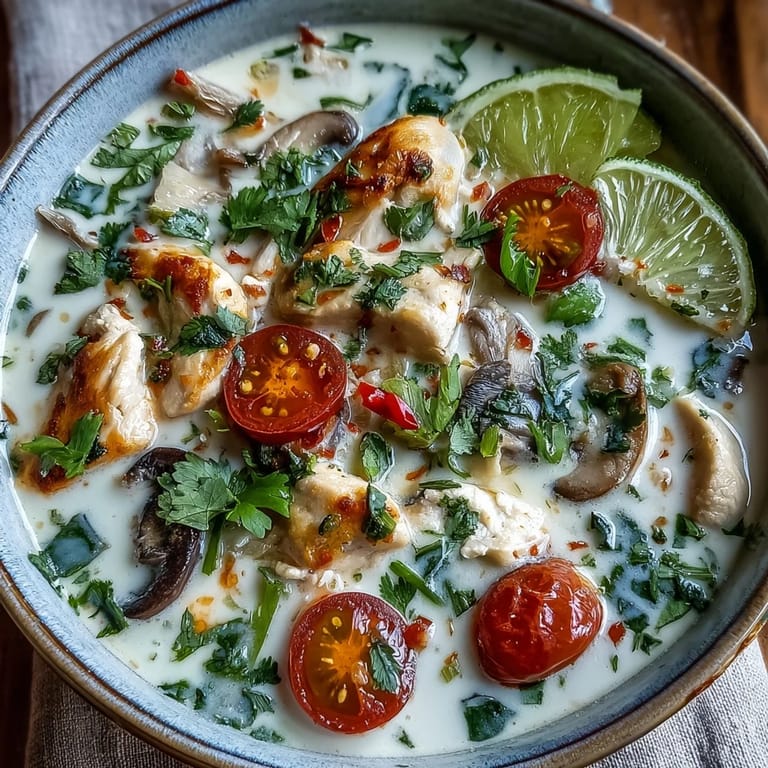
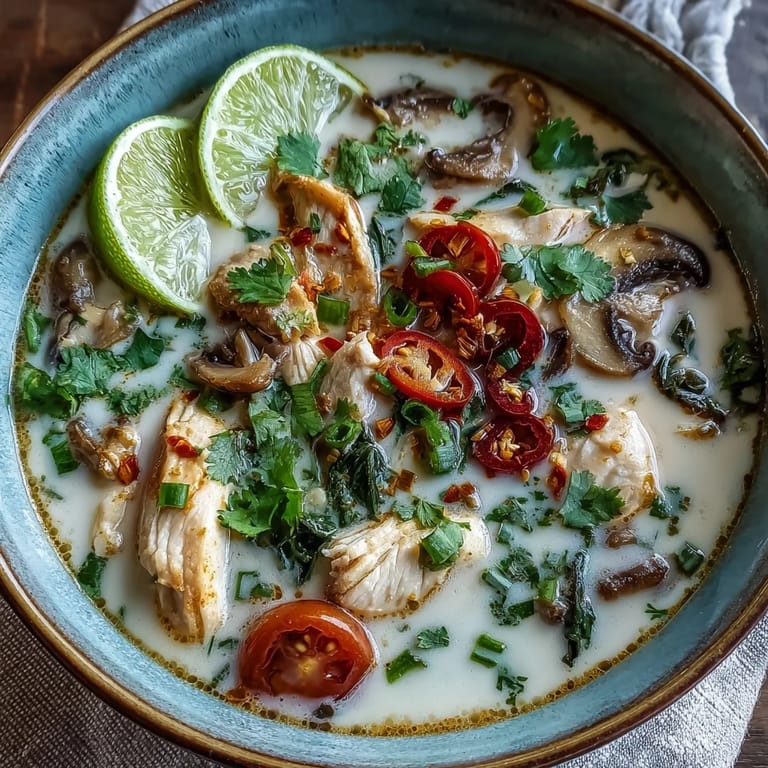
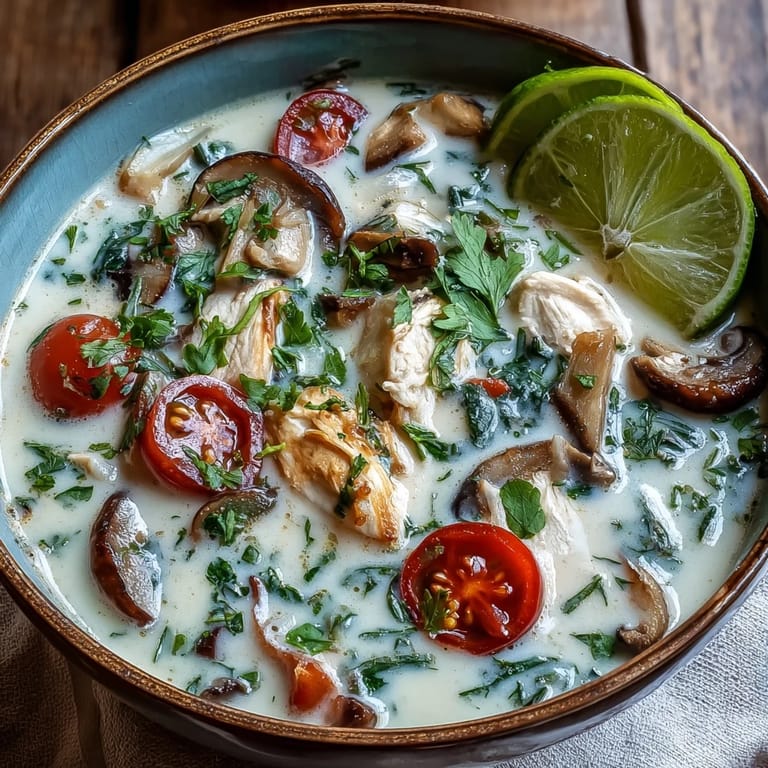
- Ladle the soup into bowls and crown each one with fresh cilantro, green onions, a squeeze of lime, and a sliver of red chili. The steam rising from the bowl should smell like a trip to Thailand.
 Save to Pinterest
 My eight-year-old nephew asked me once why this soup made him happy, and I realized it wasn't just the flavors—it was the way every element in the bowl worked together, the way one spoonful felt both comforting and exciting. That's when I understood why people come back to this recipe again and again.
The Aromatics Are Everything
The magic of Tom Kha Gai lives in how those four aromatics—lemongrass, galangal, kaffir lime leaves, and chilies—create a flavor foundation that feels almost impossible to achieve any other way. When you smash that lemongrass, you're not just preparing an ingredient; you're releasing decades of Thai culinary tradition into your pot. The galangal adds a warmth that ginger can't quite replicate, though ginger will work if you're in a pinch. Don't rush past these; they're worth hunting down at an Asian market or ordering online because they're the difference between a decent soup and one that tastes like it came from a restaurant.
Choosing Your Mushrooms
I've made this soup with oyster mushrooms, white button mushrooms, shiitake, and once in desperation with cremini, and honestly, each one tells a slightly different story in the broth. Oyster mushrooms are delicate and absorb the coconut milk beautifully, becoming almost silky, while shiitakes bring an earthier depth that some people prefer. The key is slicing them all about the same thickness so they cook evenly in those final 5 minutes without turning mushy or staying firm.
Balancing Heat, Sour, and Sweet
This soup teaches you something important about flavor balance that extends far beyond Thai cooking: heat, sour, and sweet need to live in harmony, and the ratio changes depending on your mood, your palate, and what you ate yesterday. I've learned to taste at every stage and write down adjustments so I can recreate the perfect bowl next time. On mornings when I want more brightness, I add an extra squeeze of lime; on nights when I crave comfort, I increase the sugar slightly. The beauty is that it's completely forgiving once you understand the interplay.
- Start with less chili and build up; you can't remove heat once it's in the pot.
- Add lime juice just before serving so it stays vibrant and doesn't cook off.
- Palm sugar dissolves more cleanly than brown sugar, but both work if that's what you have.
 Save to Pinterest
 Tom Kha Gai isn't just soup; it's a reminder that food cooked with intention and fresh ingredients can transform a moment, a meal, or even a whole day. Make it for yourself, make it for people you love, and let the steam rise up and carry all that fragrant warmth into your kitchen.
Recipe Questions & Answers
- → What makes Tom Kha Gai different from other Thai soups?
Tom Kha Gai features coconut milk as its base, creating a rich, creamy texture that distinguishes it from clearer soups like Tom Yum. The combination of galangal, lemongrass, and kaffir lime leaves provides distinctive aromatic depth while maintaining a delicate balance between tangy, salty, and subtly sweet flavors.
- → Can I make this soup vegetarian?
Substitute chicken breast with firm tofu and replace chicken stock with vegetable broth. Use soy sauce or tamari instead of fish sauce to maintain the salty umami element. The aromatic herbs and coconut milk remain the same, ensuring the characteristic flavor profile stays intact.
- → What can I use if I can't find galangal or kaffir lime leaves?
Fresh ginger works as a galangal substitute, though it has a slightly different flavor profile. For kaffir lime leaves, use lime zest to add citrus notes. While these alternatives won't replicate the exact traditional taste, they still create a delicious, aromatic soup with similar character.
- → How spicy is this soup?
The recipe includes three Thai bird's eye chilies, which provide moderate heat. Adjust the quantity to suit your preference—reduce to one or two for milder flavor, or increase to four or five for extra spice. Removing the chilies after simmering also mellows the heat while preserving their aromatic contribution.
- → Why shouldn't the soup boil after adding coconut milk?
Coconut milk can separate or become grainy if boiled vigorously. Gentle simmering preserves the smooth, creamy texture and prevents the milk from breaking. This technique ensures the soup remains velvety and visually appealing while maintaining the delicate balance of flavors.
- → What should I serve with Tom Kha Gai?
Steamed jasmine rice is the classic accompaniment, soaking up the flavorful broth. You can also serve with fresh rice noodles or enjoy it as a standalone starter. A side of crisp Asian vegetables or a light salad complements the rich, creamy nature of this soup beautifully.