 Save to Pinterest
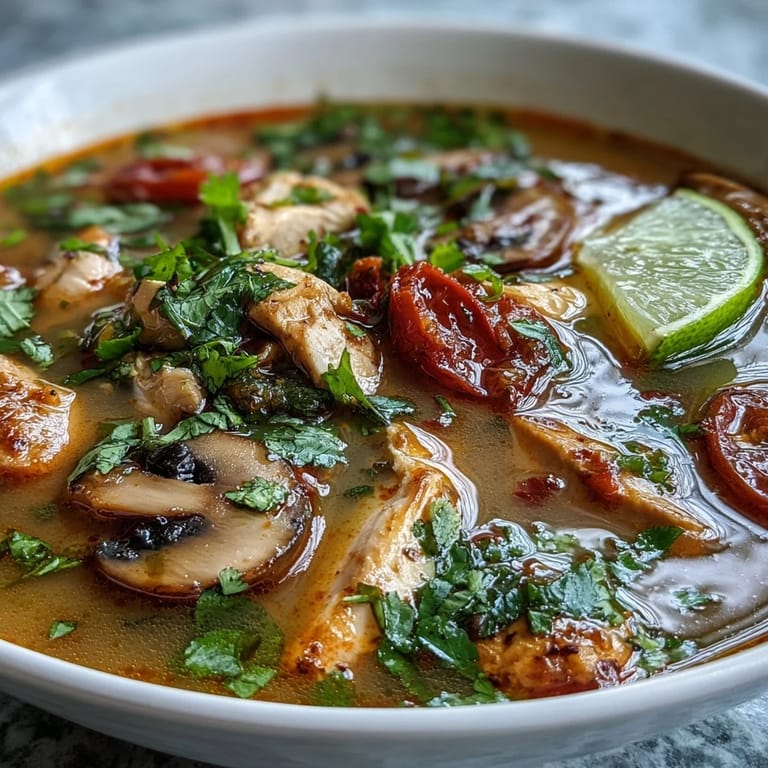
 Bangkok's humid evenings have a particular magic, and I discovered it in a tiny soi where an elderly vendor ladled Tom Yum Gai into chipped bowls with the precision of someone who'd made the same soup ten thousand times. The first sip hit all at once—sour lime juice, the heat of fresh chiles, that mysterious earthiness I couldn't place until she pointed to the galangal floating near the surface. Years later, recreating it in my own kitchen, I realized that soup wasn't just about technique; it was about understanding how a few bold flavors could create something that felt both comforting and thrilling.
I made this for friends who'd just returned from Thailand, nervous they'd find it lacking compared to street stall versions. The moment they tasted it, their faces relaxed into that familiar smile of recognition, and someone asked if I'd secretly flown to Bangkok that morning. That's when I understood the real secret wasn't about perfection—it was about capturing that bold, unapologetic flavor profile that makes people close their eyes while eating.
Ingredients
- Chicken breast or thighs, thinly sliced: Thighs stay more forgiving if you're not watching the clock obsessively, but breast works beautifully if sliced thin so it cooks in minutes without turning rubbery.
- Chicken stock: Use good quality broth here—it's the foundation, and mediocre stock will show up immediately in the final taste.
- Lemongrass: Those tough outer layers everyone tosses? Smash them to release oils before discarding, then cut and smash the tender inner stalks for maximum flavor extraction.
- Kaffir lime leaves: Fresh or frozen, these deliver citrusy aromatics that bottled lime juice simply cannot replicate; tear them to wake up their oils.
- Galangal: If you can't find it, ginger works but tastes noticeably different—galangal has this warm, almost piney quality that's worth hunting down.
- Thai bird's eye chiles: These small missiles pack serious heat, so smash them to distribute their punch throughout the broth rather than biting into a whole one.
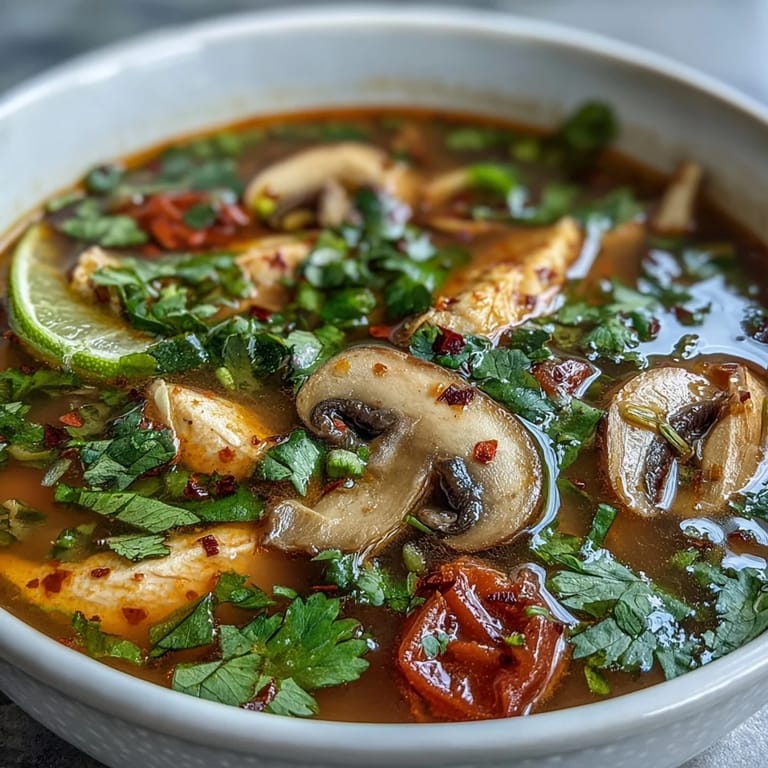
- Mushrooms: Oyster mushrooms have a silky texture that feels luxurious, though button mushrooms are reliable if that's what's available.
- Nam prik pao: This roasted chili paste is the secret weapon that transforms broth into something memorable; it adds depth that fresh chiles alone cannot achieve.
- Fish sauce: Counterintuitive amounts of this pungent ingredient actually create savory balance; don't skip it or cut corners with substitutes.
- Lime juice: Fresh-squeezed only; bottled tastes stale and flat in something this delicate.
Tired of Takeout? 🥡
Get 10 meals you can make faster than delivery arrives. Seriously.
One email. No spam. Unsubscribe anytime.
Instructions
- Build the aromatic broth:
- Bring stock to a gentle boil and add lemongrass, lime leaves, galangal, and smashed chiles, letting them simmer for five minutes until the broth transforms into something fragrant and warm. You'll know it's ready when the kitchen smells like you've just arrived in Thailand.
- Cook the chicken through:
- Slip in the sliced chicken and let it poach for three to four minutes, stirring occasionally so it cooks evenly without clumping. A light foam might rise to the surface—skim it away so your soup stays clear and refined.
- Add the vegetables gently:
- Toss in mushrooms, tomatoes, and onion, simmering just three to four minutes longer until they're tender but still hold their shape. Overcooked vegetables will turn mushy and lose their vibrant character.
- Season with intention:
- Stir in nam prik pao, fish sauce, sugar, and salt, letting them meld for two minutes as the flavors marry together. This is when the soup goes from good to unforgettable.
- Finish with brightness:
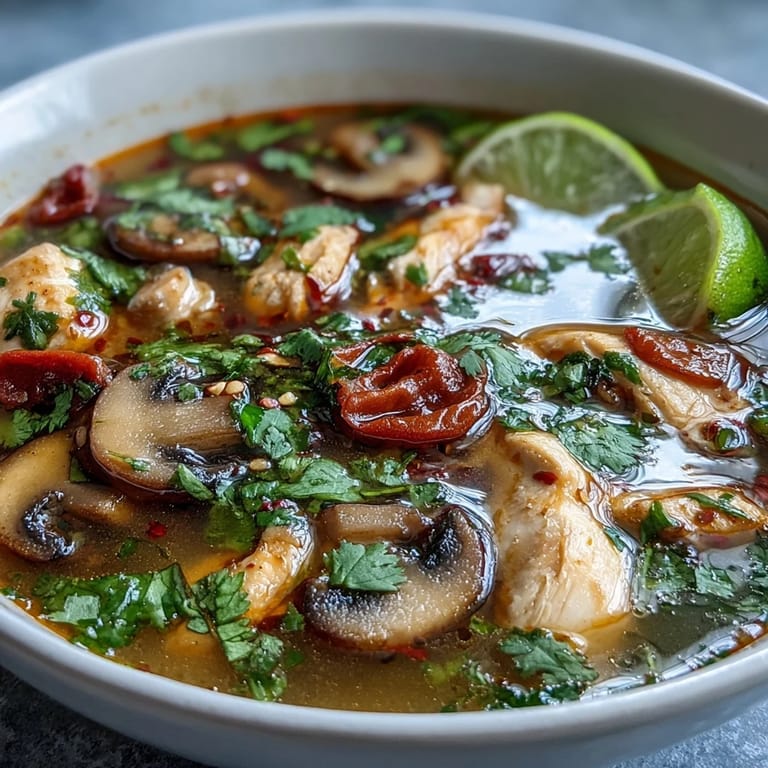
- Remove from heat and stir in fresh lime juice, then taste and adjust—more lime for pucker, more fish sauce for savory depth, more chiles if your guests like heat. Every bowl might need a squeeze more lime from the wedge on the side.
- Serve with ceremony:
- Ladle into bowls and crown each one with cilantro and extra chile slices, letting people customize heat levels at the table.
 Save to Pinterest
 A friend with a sensitive stomach once worried Tom Yum would be too aggressive for her system, but after one bowl she admitted it felt almost restorative, like the soup understood what her body needed. There's something about the combination of warming spices, fresh citrus, and simmered broth that hits differently than Western comfort soups.
The Story Behind the Flavors
Tom Yum Gai belongs to Thailand's holy trinity of soups alongside Tom Yum Goong (shrimp) and Tom Kha Gai (coconut chicken), but each one occupies its own flavor universe. The chicken version leans into clarity and heat, letting you taste each component distinctly rather than drowning everything in coconut cream. I've watched street vendors in Bangkok make this soup the same way for decades, which tells you something about a recipe this fundamentally sound.
Variations Worth Exploring
Once you understand the Tom Yum formula, you can swap proteins and vegetable combinations without losing the soul of the dish. Shrimp transforms it into Tom Yum Goong with a briny sweetness, while mushroom-forward versions work beautifully for vegetarians if you use vegetable stock and add a splash of soy sauce for umami depth. I've even experimented with adding cherry tomatoes instead of wedges for a sweeter version and a handful of baby corn for textural contrast.
Make It Your Own
The beauty of Tom Yum Gai is that it tolerates and even rewards personalization—this isn't a delicate French sauce where precision matters above all else. Some people swear by adding a tablespoon of evaporated milk for richness, others insist the soup must stay pure broth, and both camps are somehow right. The real rule is this: taste constantly as you cook, adjust fearlessly, and remember that your kitchen isn't a Bangkok soi but it can still produce something genuinely delicious.
- Have extra lime wedges ready because almost everyone squeezes more in after the first taste.
- If nam prik pao is unavailable, combine a tablespoon of chili paste with a teaspoon of soy sauce as a temporary substitute.
- Leftovers keep for three days refrigerated, though the broth tastes even better the next day once flavors have deepened.
 Save to Pinterest
 This soup tastes like warmth and intention in a bowl, the kind of meal that reminds you why cooking for people matters. Make it once and you'll find yourself craving the ritual of infusing that broth, the ritual of sharing those bowls.
Recipe Questions & Answers
- → What makes Tom Yum Gai different from other Thai soups?
Tom Yum Gai features the distinctive spicy-sour flavor profile from fresh lime juice and nam prik pao roasted chili paste, combined with aromatic herbs like lemongrass, galangal, and kaffir lime leaves that set it apart from milder coconut-based curries.
- → Can I make this less spicy?
Reduce the amount of Thai birds eye chiles and nam prik pao, or remove the chiles entirely after infusing the broth. The heat level is easily adjustable to your preference.
- → What's the best substitute for galangal?
Fresh ginger works as the closest substitute, though it has a slightly different flavor profile. Use slightly more ginger than galangal called for in the ingredients.
- → Can I use shrimp instead of chicken?
Yes, substitute shrimp for the chicken to make Tom Yum Goong. Add the shrimp during the last 2-3 minutes of cooking to prevent overcooking.
- → How long does the broth keep in the refrigerator?
Store the cooled soup in an airtight container for up to 3 days. The flavors actually develop and intensify overnight. Reheat gently on the stovetop.
- → Is nam prik pao essential?
Nam prik pao provides depth and the characteristic roasted flavor, but you can substitute with additional fresh chiles and a touch of roasted red pepper paste if unavailable.