 Save to Pinterest
 There's a reason French onion soup shows up on bistro menus in every corner of Paris, and it's not because it's complicated—it's because when you get it right, it tastes like someone spent all afternoon thinking about you. I discovered this soup on a gray November evening when a friend's grandmother opened her kitchen door and the smell that hit me was pure caramelized gold, nothing fancy, just onions that had been loved into submission. That first spoonful, with the bread getting soft and the cheese starting to stretch, taught me that sometimes the best dishes are built on patience and a single good pot.
I made this soup for my partner during the first cold snap of the year, when we'd both been running around too much to actually sit down together. The house filled with that unmistakable smell, and suddenly everything felt slower, warmer, more real. When I brought the bowls to the table with the cheese still bubbling, they looked up and smiled in a way that had nothing to do with hunger and everything to do with feeling cared for.
Ingredients
- Yellow onions (6 large, thinly sliced): The backbone of this dish—their natural sweetness is what creates that deep, rich flavor as they break down, so don't rush the slicing and don't skimp on quantity.
- Unsalted butter (2 tablespoons) and olive oil (1 tablespoon): The butter brings richness while the oil prevents browning too quickly, giving you better control over the caramelization.
- Beef broth (6 cups): Use good broth here because there's nowhere for mediocre flavor to hide—homemade is ideal, but quality store-bought works beautifully too.
- Dry white wine (1/2 cup, optional): This adds brightness and cuts through the richness, plus deglazing the pan captures all those flavorful browned bits.
- Garlic (2 cloves, minced): Added late to keep it fresh and sharp against the sweetness of the caramelized onions.
- Sugar (1 teaspoon): A small amount helps draw out the onions' natural sweetness and speeds up the caramelization slightly.
- Salt, pepper, thyme, and bay leaf: These seasonings build layers—thyme adds earthiness, the bay leaf adds subtle depth, and salt brings everything into focus.
- Gruyère cheese (2 cups, grated): This cheese melts into silky strands and has a nutty flavor that stands up to the savory broth without getting lost.
- Crusty French bread (4 slices, 1 inch thick): The bread should be sturdy enough to hold up to the soup without falling apart, creating that satisfying textural contrast.
Tired of Takeout? 🥡
Get 10 meals you can make faster than delivery arrives. Seriously.
One email. No spam. Unsubscribe anytime.
Instructions
- Start the base with heat and patience:
- Melt the butter with olive oil over medium heat, then add your sliced onions and let them soften for about 15 minutes, stirring occasionally—this is where the sweetness starts to develop. You'll notice the kitchen already smells incredible, but resist the urge to crank up the heat; medium is your friend here.
- Coax out the caramelization:
- Sprinkle the onions with sugar and salt, then keep stirring frequently as they deepen in color over the next 30 to 40 minutes—this is the most important step, where patience transforms onions into something transcendent. You want them a deep golden-brown, almost bronze in places, and when you scrape the bottom of the pot you should see rich, dark bits clinging there.
- Bloom the garlic:
- Add your minced garlic and cook for just 1 minute to release its aroma without letting it burn—this brief moment brings a whisper of sharpness to the sweetness.
- Deglaze and build flavor:
- Pour in the white wine if using, and use a wooden spoon to scrape up all those concentrated, caramelized bits stuck to the bottom—this is liquid gold. Let it simmer for 2 to 3 minutes until the wine reduces slightly and mellows.
- Build the broth foundation:
- Add your beef broth along with the thyme sprigs and bay leaf, then bring everything to a boil before dropping the heat to a gentle simmer for 30 minutes uncovered. This simmering time lets the flavors marry and deepens the overall richness of the soup.
- Prepare your toppings:
- While the soup simmers, arrange your bread slices on a baking sheet and toast them under the broiler until they're lightly golden on both sides—they should be crispy enough to support the weight of cheese without becoming hard as a rock.
- Assemble and finish:
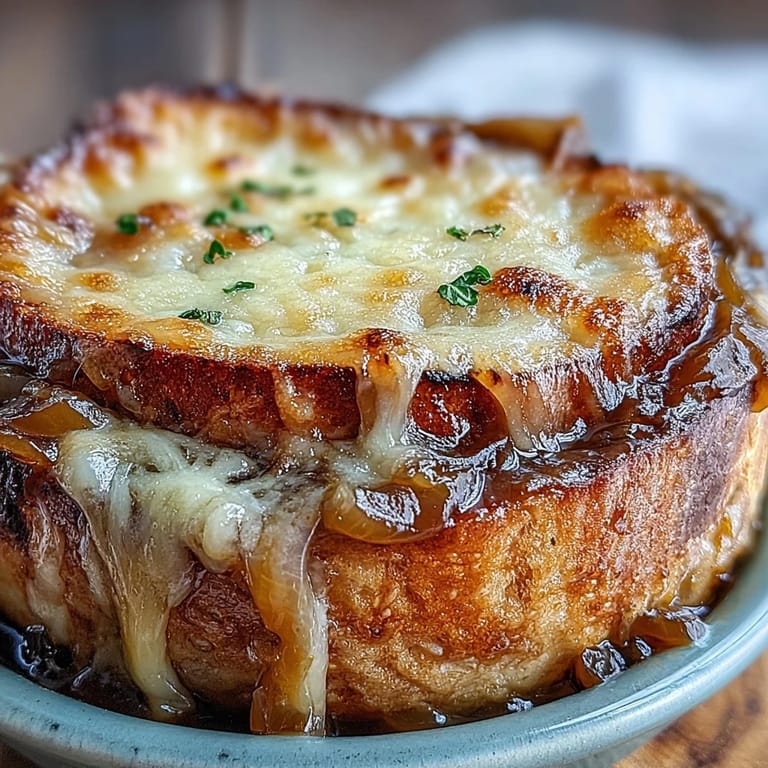
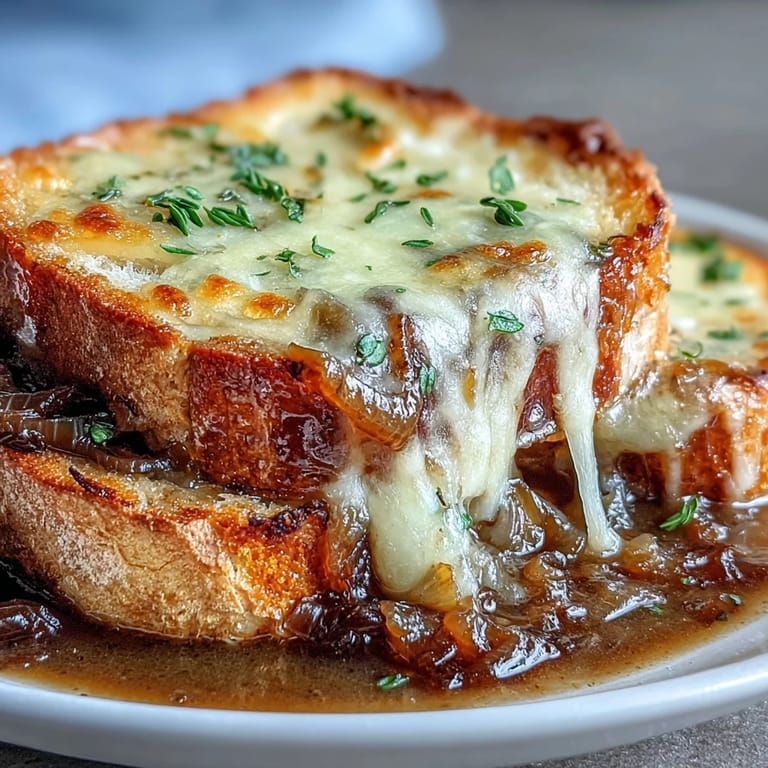
- Ladle the hot soup into oven-safe bowls, top each with a slice of toasted bread and a generous handful of grated Gruyère, then slide them under the broiler for 2 to 3 minutes until the cheese is melted and bubbling at the edges. Serve immediately while everything is still steaming and the cheese is at its stretchiest.
 Save to Pinterest
 There was one evening when my neighbor knocked on the door drawn by the smell, and we ended up eating this soup together at my kitchen counter while snow fell outside, barely talking, just passing tissues because the steam from the bowls was making us both teary. That's when I understood that this soup is about more than technique or ingredients—it's about the permission it gives you to slow down and feed someone, including yourself.
The Art of Caramelization
Caramelization is a chemical transformation where the natural sugars in the onions break down under heat, creating hundreds of new flavor compounds that taste nothing like raw onions and everything like comfort. The key is medium heat and time—rushing with high heat creates a burnt taste instead of the deep, sweet, almost caramel-like flavor you're after. I learned to trust the process by watching the color shift gradually from pale yellow to golden to amber to a deep bronze, and letting the smell guide me more than the clock.
Wine and Deglazing Explained
The white wine serves a dual purpose—it adds brightness and acidity to cut through the richness, and it creates a deglazing moment where you use the bubbling liquid to lift all those concentrated, flavorful browned bits off the bottom of the pot. Those bits are flavor bombs, and pouring wine over them transforms them from stuck carbon into liquid gold that flavors your entire soup. If you skip the wine, you can use a splash of broth instead, though the final soup will be slightly richer and less bright.
Making It Your Own
While this recipe is a classic for good reason, I've learned that the best cooking happens when you make small adjustments based on what you have and what you're craving. Some nights I add a splash of brandy instead of wine, or I use a mix of sweet and regular onions, or I experiment with different cheeses depending on the season and my mood. The framework stays the same, but these little variations keep the recipe from becoming routine.
- For a vegetarian version, swap beef broth with vegetable broth and the soup loses nothing—just a different kind of richness, equally compelling.
- If Gruyère isn't available, Emmental or even a good Swiss cheese works beautifully, though Gruyère's nuttiness is hard to beat.
- Rubbing the toasted bread with a cut clove of garlic before adding the cheese introduces a subtle sharpness that some people swear by.
 Save to Pinterest
 There's something deeply right about a soup that asks you to slow down, that fills your kitchen with warmth on cold days, and that tastes like it took hours to make even though the actual hands-on time is surprisingly short. Make this when you need comfort, when you want to impress someone, or when you just need to remember that good food doesn't have to be complicated to be meaningful.
Recipe Questions & Answers
- → How long does it take to properly caramelize onions?
Proper caramelization takes 45-55 minutes total. First, soften the onions for about 15 minutes, then continue cooking until they reach a deep golden brown color. This slow process develops the sweet, complex flavors that define this dish.
- → Can I make this vegetarian?
Absolutely. Simply substitute vegetable broth for the beef broth. The rich flavor primarily comes from the caramelized onions, so the dish remains delicious and satisfying even without beef broth.
- → What type of onion works best?
Yellow onions are ideal for French onion soup as they become naturally sweet when caramelized. Red onions can be too pungent, while sweet onions may caramelize too quickly. Stick with standard yellow onions for the best balance of flavor.
- → Can I prepare this in advance?
Yes, actually the flavors improve when made ahead. Prepare the soup up to 2 days in advance and refrigerate. When ready to serve, reheat gently and add the bread and cheese topping just before broiling.
- → What cheese alternatives work well?
While Gruyère is traditional, Emmental or Swiss cheese make excellent substitutes with similar melting properties. For something different, try Comté for a nuttier flavor or a mix of Parmesan and mozzarella for a different take.
- → Why is white wine added?
The white wine serves two purposes: it deglazes the pot, lifting up those flavorful browned bits from the bottom, and adds acidity to balance the sweetness of the caramelized onions. It can be omitted for a non-alcoholic version.