 Save to Pinterest
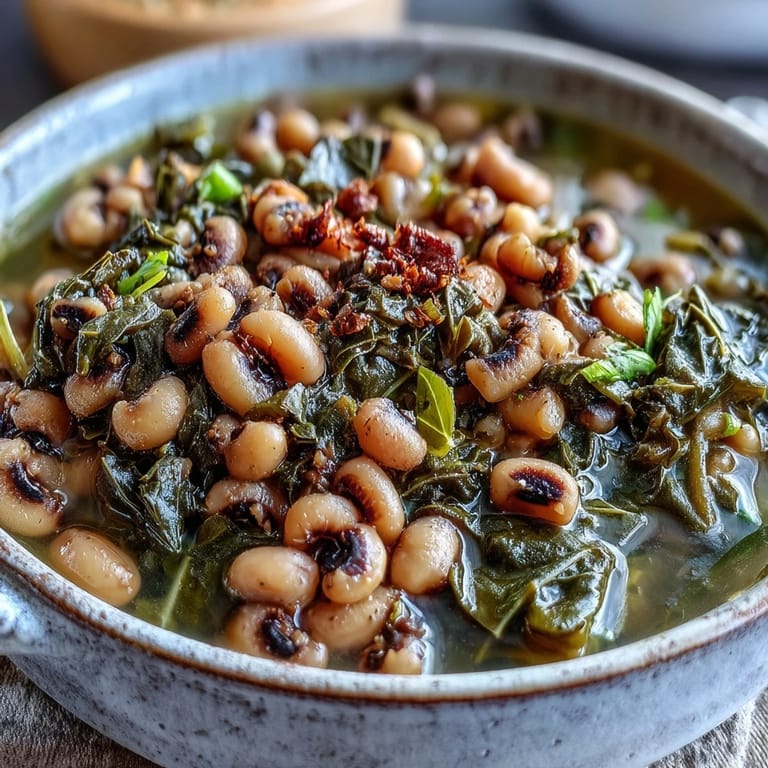
 My grandmother used to say that black-eyed peas on New Year's Day meant luck for the whole year ahead, and I believed her completely. Years later, I realized the real luck wasn't in the superstition—it was in how this humble dish brought everyone to the table, eager and hungry. The first time I made it myself, I burned the garlic and almost gave up, but the collard greens saved the day with their deep, silky comfort. Now, whenever winter rolls around and I need something that feels like home, this is what I reach for.
I served this to my neighbor one January when she was recovering from surgery, and watching her face light up over that first spoonful told me everything I needed to know about comfort food. She actually cried a little, not because it was fancy, but because it tasted like someone cared. That's the magic of this dish—it's unpretentious and generous at the same time.
Ingredients
- Black-eyed peas (2 cups dried or 3 cans): Use dried if you have time to soak overnight—they absorb flavor better and their texture stays intact through the long simmer.
- Collard greens (1 large bunch, about 1 lb): Remove those tough stems first or you'll be chewing forever; just pinch where the leaf meets the stem and pull, it comes away clean.
- Onion, garlic, celery, carrot (1 large, 3 cloves, 2 stalks, 1 medium): This is your flavor foundation, so don't skip the step of sautéing them until soft—it builds everything.
- Smoked paprika, dried thyme, bay leaf: These three work together to create that deep Southern flavor without anything fancy.
- Vegetable or chicken broth (6 cups): The broth quality matters more than you'd think; homemade tastes noticeably better, but a good store-bought broth works in a pinch.
- Apple cider vinegar (1 tablespoon): This small addition at the end brightens everything and keeps the dish from tasting too heavy.
- Smoked ham hock or turkey (4 oz, optional): If you use it, the smoke flavor permeates everything; if you skip it, you lose nothing because the spices carry the dish.
- Hot sauce for serving: Keep a bottle nearby—some people add it, some don't, but having it there means everyone customizes their own bowl.
- Cornbread (1 pan, cut into wedges): This isn't just a side; it's how you soak up every last bit of flavor from the pot.
Tired of Takeout? 🥡
Get 10 meals you can make faster than delivery arrives. Seriously.
One email. No spam. Unsubscribe anytime.
Instructions
- Prepare the peas:
- If using dried black-eyed peas, rinse them under cold water and soak overnight in a large bowl—they'll plump up and cook faster the next day. If you're short on time, canned peas skip this step entirely, just drain and rinse them well.
- Build your flavor base:
- Heat a splash of oil in your Dutch oven over medium heat, then add the chopped onion, celery, and carrot. Let them soften for about five minutes, stirring occasionally until the onion turns translucent and smells sweet. This is where the magic starts, so don't rush it.
- Add the garlic:
- Stir in the minced garlic and let it cook for exactly one minute until fragrant—any longer and it'll turn bitter on you. You'll know it's ready when the smell hits your face and makes you smile.
- Introduce the meat (if using):
- If you're adding ham hock or smoked turkey, toss it in now and let it cook for a couple minutes so the smoke starts mingling with everything else. You'll see the fat render slightly and that's exactly what you want.
- Toast the spices:
- Add your drained peas, bay leaf, smoked paprika, thyme, and red pepper flakes, then stir everything together until the peas are coated in the spice mixture. This coating step helps the flavors bloom when the liquid hits.
- Simmer the peas:
- Pour in your broth and bring it all to a boil, then immediately lower the heat, cover the pot, and let it simmer gently. If using dried peas, give them 45 minutes; if canned, they only need 20 minutes to warm through and absorb flavor.
- Add the greens:
- Uncover the pot and stir in your chopped collard greens—they'll look like an enormous pile but they'll wilt down as they cook. Simmer uncovered for another 30 minutes until the peas are so tender they almost fall apart and the greens have turned silky dark.
- Finish with brightness:
- Stir in the apple cider vinegar and remove the bay leaf. If you used a ham hock, fish it out, shred any meat from it, and stir the meat back into the pot, then season everything with salt and pepper to taste.
- Serve with intention:
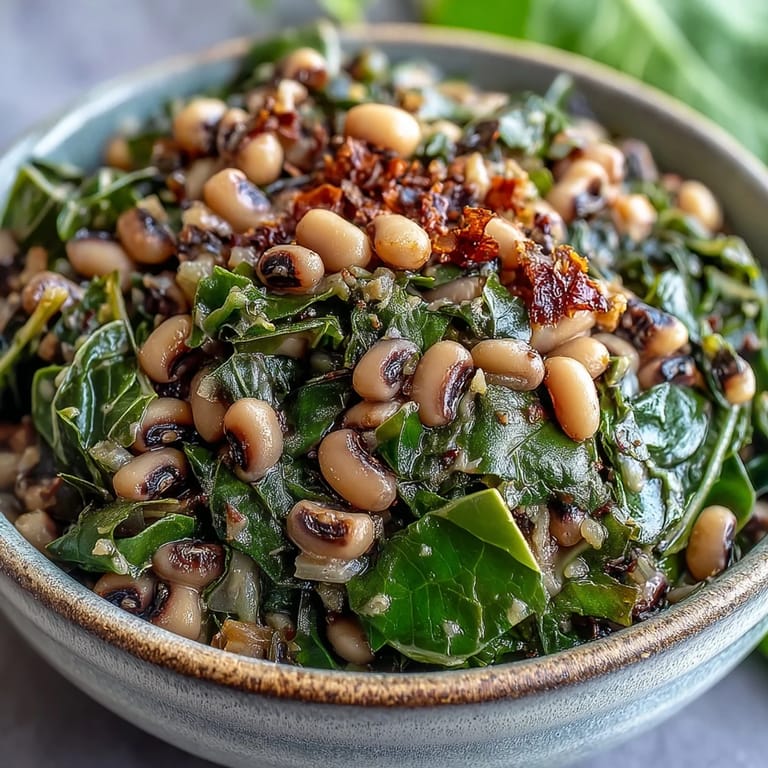
- Ladle this into bowls while it's hot, top with a wedge of cornbread, and set out hot sauce for anyone who wants it. The warmth should linger in your hands as you hold the bowl.
 Save to Pinterest
 There was a moment last year when my partner took the first bite and just closed their eyes, and I realized that some of the best meals aren't about impressing anyone—they're about nourishing the people in your kitchen. That's what this dish does, quietly and without fuss.
Why Dried Peas Beat the Canned Alternative
I used to think canned peas were a shortcut, but dried peas actually absorb the broth and spices in a way that makes the final dish taste fuller and more intentional. The overnight soak seems like extra work until you realize you're literally waking up a dried seed and preparing it to transform into something nourishing. When you see them plump up in the bowl the next morning, you understand why people have been doing this for generations.
The Secret to Silky Collard Greens
The key is time and low heat—rushing collard greens at high heat makes them tough and bitter, but letting them simmer gently in that flavorful broth for a full 30 minutes turns them into something almost creamy. I learned this the hard way by impatient cooking, watching them stay stubbornly chewy until my grandmother told me that greens are meant to be coaxed, not forced. Now I treat them with respect and they reward me with tender, silky leaves that taste like they've been simmering since morning.
Making It Your Own
This recipe is a foundation, not a rulebook, and I've seen it made a dozen different ways depending on what people had on hand or what their family tradition demanded. Some folks add diced tomatoes, others throw in hot peppers, and I once had a version with a splash of bourbon that made everyone at the table go quiet. The through-line is always the same—tender peas, cooked-down greens, and enough flavor to make you feel seen.
- Substitute mustard greens or kale if collards aren't available, though collards stay softest.
- A splash of bourbon or cognac added with the broth deepens the flavor for anyone wanting something special.
- Double this recipe without hesitation—it reheats beautifully and tastes even better on day two.
 Save to Pinterest
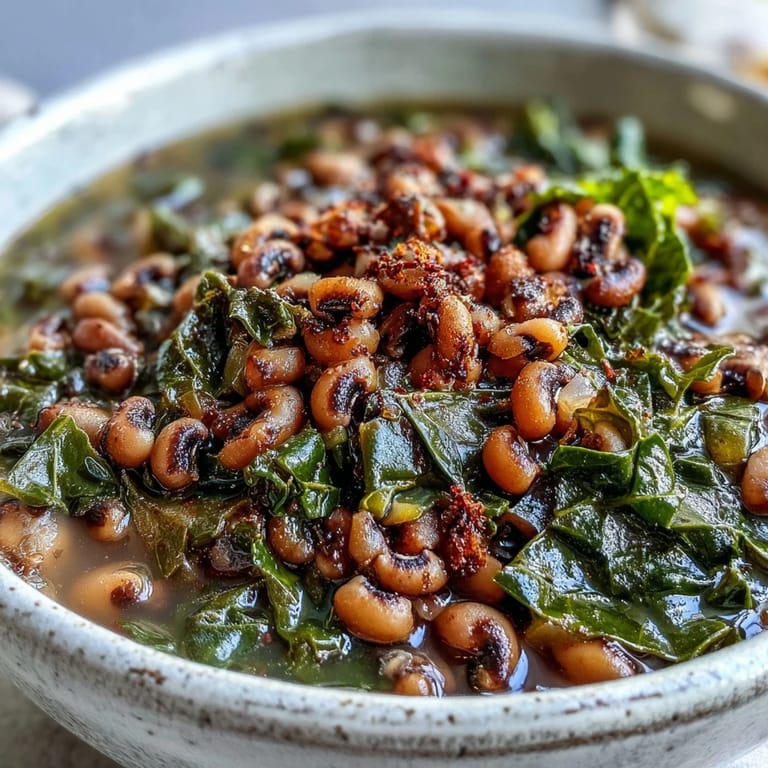
 This dish has taught me that sometimes the most profound meals are the simplest ones, made with ingredients that have fed people for centuries. Every time I make it, I'm connected to all the kitchens before mine that knew this recipe by heart.
Recipe Questions & Answers
- → Why are black-eyed peas and collard greens eaten on New Year's Day?
Black-eyed peas represent coins and collard greens symbolize paper money, making this combination believed to bring prosperity and good fortune in the coming year. This Southern tradition dates back to Civil War times and remains a beloved New Year's Day ritual.
- → Do I need to soak dried black-eyed peas before cooking?
Yes, dried black-eyed peas should be soaked overnight in cold water to ensure even cooking and tender texture. If you're short on time, you can use the quick-soak method by boiling for 2 minutes, then letting them sit for 1 hour off the heat. Alternatively, canned peas work wonderfully and skip the soaking step entirely.
- → Can I make this dish vegetarian?
Absolutely. Simply omit the ham hock or smoked turkey and use vegetable broth instead of chicken broth. The smoked paprika provides a subtle smoky depth that compensates nicely for the meat, and the dish remains just as satisfying and flavorful.
- → What can I substitute for collard greens?
Kale, mustard greens, or turnip greens work well as substitutes. Mustard greens have a peppery bite, kale is slightly milder, and turnip greens offer a nice bitterness. Each brings its own character while maintaining the dish's traditional spirit.
- → How long do leftovers keep in the refrigerator?
Leftovers store beautifully in an airtight container for up to 5 days. The flavors actually deepen and meld together, making it even more delicious the next day. Reheat gently on the stove, adding a splash of broth or water if needed to loosen the consistency.
- → What's the purpose of apple cider vinegar in this dish?
The vinegar adds brightness and helps balance the earthy, rich flavors of the peas and greens. It also cuts through any richness from smoked meats and enhances the overall flavor profile, making each taste more vibrant and well-rounded.