 Save to Pinterest
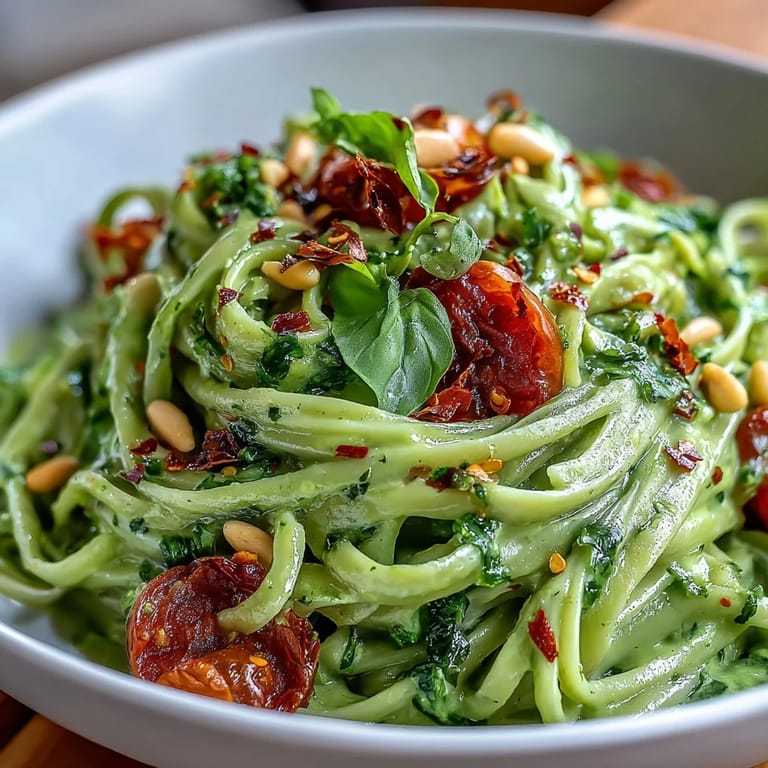
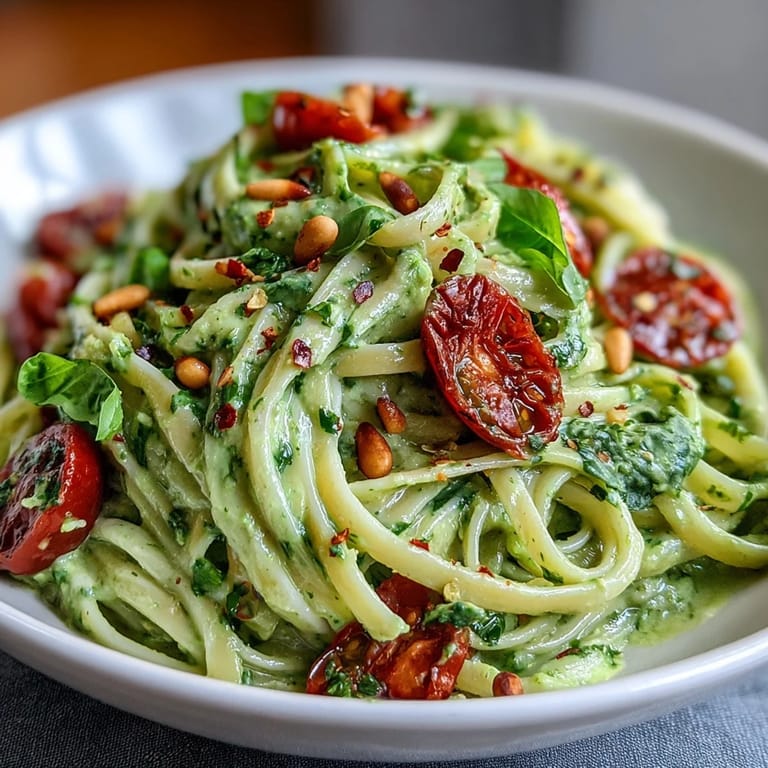
 There's something about the color green that stops me mid-week—a sudden craving for something bright and alive on the plate. I discovered this avocado pasta on a Thursday evening when I had exactly three things in my kitchen that mattered: perfectly ripe avocados, a lime going soft, and dried pasta. What started as improvisation became my go-to when I need to feel like I'm eating something vibrant without spending an hour cooking. The sauce comes together in moments, and somehow tastes like summer tastes.
I made this for my neighbor once when she stopped by with her new partner, and I threw it together while they sat at my kitchen counter talking about their road trip. When we ate it, there was this moment of silence—the good kind—where everyone just kept twirling their forks. That's when I knew it wasn't just a weeknight dinner; it was something you could serve with confidence.
Ingredients
- 350 g dried spaghetti or linguine: Choose whichever shape calls to you, though the thinner cuts catch the sauce better—I learned this after a few attempts with thick rigatoni.
- 2 ripe avocados, peeled and pitted: This is non-negotiable; underripe ones make the sauce grainy, overripe ones brown too quickly once exposed to air, so aim for that perfect buttery moment.
- 1 large lime, juiced: Fresh lime juice is essential—bottled won't give you that bright, alive quality that makes this dish sing.
- 2 cloves garlic, peeled: Raw garlic adds punch, so don't skip it even if you think you might.
- 3 tbsp extra virgin olive oil: This carries flavor and helps create that silky texture, so use something you'd actually taste on its own.
- 1/3 cup fresh basil leaves: Basil and avocado are partners in crime; torn by hand if possible, as a knife can bruise the leaves and turn them bitter.
- 1/4 cup unsweetened plant-based milk: This acts as an emulsifier, thinning the sauce to the right consistency without heaviness.
- 1/2 tsp sea salt and 1/4 tsp freshly ground black pepper: Season thoughtfully; you can always add more, but you can't take it back.
- Pinch of chili flakes, optional: A small amount adds heat and intrigue without overpowering the delicate flavors.
- 250 g cherry tomatoes, halved: These burst slightly when tossed with warm pasta, creating little pockets of juice and brightness.
- 2 tbsp toasted pine nuts: They add texture and a subtle richness, but sunflower seeds work just as well if you're avoiding tree nuts.
Tired of Takeout? 🥡
Get 10 meals you can make faster than delivery arrives. Seriously.
One email. No spam. Unsubscribe anytime.
Instructions
- Bring water to a rolling boil:
- Fill a large pot with water and salt it generously—it should taste like the sea. Once it's truly boiling, add your pasta and stir occasionally to prevent sticking.
- Cook pasta to al dente:
- Follow the package timing but taste a minute or two before it's done; you want it to have a slight firmness when you bite down. Reserve half a cup of starchy water before draining.
- Build the sauce while pasta cooks:
- In a blender or food processor, combine avocados, lime juice, garlic, olive oil, basil, plant-based milk, salt, pepper, and chili flakes if using. Blend until completely smooth, stopping to scrape down the sides as needed.
- Adjust the sauce consistency:
- If it's too thick, add reserved pasta water a splash at a time until you achieve a silky, pourable texture. Taste and adjust seasoning—the sauce should taste bright and balanced.
- Combine pasta and sauce:
- Transfer drained pasta to a large bowl and pour the avocado sauce over it, tossing gently to coat every strand. Add a bit more pasta water if needed to create that glossy, clingy texture.
- Fold in tomatoes gently:
- Add halved cherry tomatoes and toss just enough to distribute them evenly without breaking them apart.
- Plate and serve immediately:
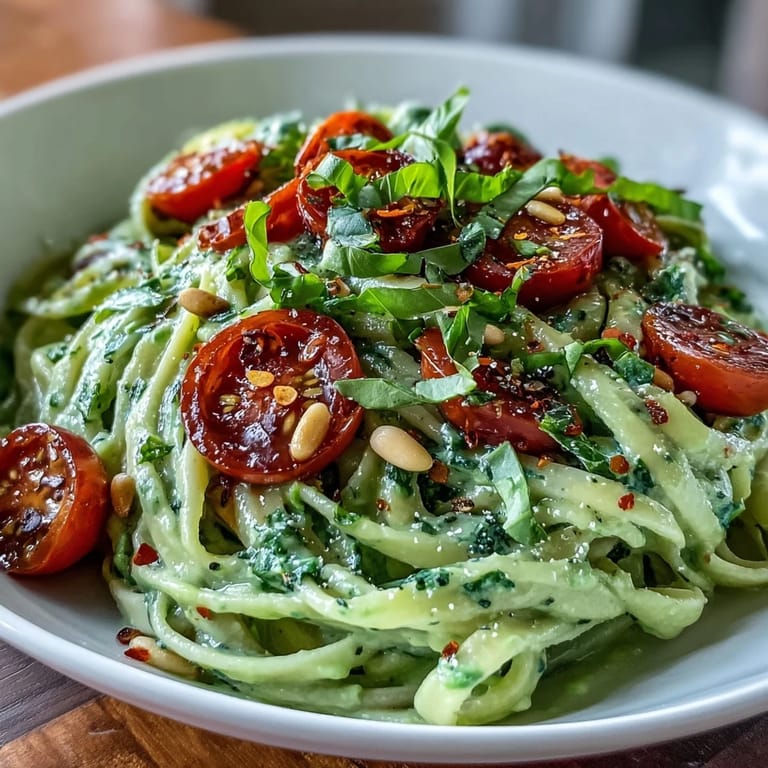
- This dish is best eaten right away while everything is still warm and the avocado hasn't oxidized. Top each serving with toasted pine nuts and fresh basil leaves.
 Save to Pinterest
 There's a peculiar joy in eating something this green and fresh when the kitchen is warm from boiling water and the air smells of basil and lime. For a moment, you're not just feeding yourself; you're choosing brightness over convenience, and it matters.
The Magic of Ripe Avocados
Picking avocados is an art I've refined through trial and error. A ripe avocado should yield slightly to gentle pressure without feeling mushy—that Goldilocks moment that lasts about two days. I've learned to buy them at different stages and stagger my cooking accordingly, so I always have one at peak ripeness waiting in my fruit bowl. If you find yourself with an almost-ready avocado, leave it on the counter near a banana; the ethylene gas speeds the ripening process naturally.
Making It Your Own
This recipe is a canvas, not a rulebook. I've added crispy chickpeas for protein on nights when I'm extra hungry, swapped the plant-based milk for coconut cream when I wanted richness, and used dill instead of basil when that's what I had growing on my windowsill. The core of the dish—creamy avocado, bright lime, silky pasta—holds everything together, so feel free to improvise with toppings and seasonings. Each variation taught me something new about what I actually love eating.
Pairing and Serving Suggestions
This pasta deserves a good wine or a crisp, cold drink to complement its richness. A Sauvignon Blanc cuts through beautifully, or keep it simple with sparkling water and a lime wedge. Serve it alongside a simple green salad or some crusty bread if you want something to soak up every last bit of sauce, though honestly, the pasta itself is complete enough to stand alone. If you're feeding guests, this is the kind of dish that looks effortless but tastes intentional—a quiet kind of impressive.
- Chill leftover pasta in an airtight container and eat it cold the next day for lunch; it becomes more of a salad, actually delicious.
- If you're meal prepping, keep the avocado sauce and cooked pasta separate until ready to eat to prevent browning.
- Double the recipe easily for larger groups; the timing stays the same, just use a bigger pot and blender.
 Save to Pinterest
 This pasta reminds me that the best meals don't require hours of work or complicated techniques—just good ingredients treated with a little care. Make it when you need something quick but still feel like you're taking time for yourself.
Recipe Questions & Answers
- → Can I make the avocado sauce ahead of time?
The sauce is best made fresh, as avocados oxidize and turn brown when exposed to air. If you need to prep ahead, blend the sauce and store it in an airtight container with plastic wrap pressed directly onto the surface for up to 2 hours. Add a squeeze of extra lime juice to help maintain the vibrant green color.
- → What can I use instead of pine nuts?
Try toasted sunflower seeds, pumpkin seeds, or chopped walnuts for a similar crunch. Hemp seeds also work well and add extra protein. For a nut-free option, simply omit the nuts or add breadcrumbs toasted with olive oil and garlic.
- → Is this suitable for meal prep?
The pasta is best enjoyed immediately as the sauce may separate when reheated. For meal prep, store the sauce and pasta separately, then toss together just before serving. If you must store combined portions, add a splash of plant-based milk when reheating and toss vigorously to restore the creamy texture.
- → Can I add protein to this dish?
Yes, this pairs beautifully with plant-based proteins. Try adding cooked chickpeas, white beans, or lentils directly to the pasta. Crispy tofu cubes, tempeh bacon, or pan-seared shrimp also work wonderfully. For a simpler boost, sprinkle with nutritional yeast or hemp seeds before serving.
- → How do I prevent the avocado sauce from tasting bitter?
Ensure your avocados are perfectly ripe—they should yield slightly to gentle pressure but not feel mushy. Remove any discolored portions before blending. The lime juice not only adds brightness but also helps balance any bitterness. If needed, add a touch more plant-based milk or a drizzle of maple syrup to smooth out the flavor.