 Save to Pinterest
 There's something about the smell of lemon cake baking that stops me mid-morning. I discovered this recipe during a week when I had a container of Greek yogurt I needed to use up, and I was curious if I could actually make something decent in a blender instead of pulling out every bowl in my kitchen. The first one came out golden and impossibly moist, with a brightness that didn't taste like I'd done anything complicated. Now it's what I make when I want something that feels homemade but doesn't require convincing myself to do it.
I brought this to a neighbor's house one Sunday afternoon when she'd been under the weather, and she ate three slices before offering it to her family. She called later to ask if I'd add the lemon glaze next time, and I realized this cake had somehow become the thing I make when I want to show up for someone without making a production of it. It's unpretentious enough to feel genuine.
Ingredients
- Greek yogurt (1 cup): This is your secret to moisture and a subtle tang that makes people wonder what you did differently.
- Eggs (3 large): They bind everything and create the crumb structure, so don't skip them or try to substitute.
- Vegetable oil (1/2 cup): Oil keeps the cake tender longer than butter would, and it blends seamlessly in a second.
- Granulated sugar (1 cup): This sweetens and aerates the batter when you blend it.
- Lemon zest (from 2 lemons): Fresh zest is non-negotiable here; the bright oils in the peel are where the real lemon flavor lives.
- Fresh lemon juice (1/4 cup): Choose bright, ripe lemons and juice them just before blending so the flavor doesn't fade.
- Vanilla extract (1 teaspoon): It rounds out the tartness and makes the lemon taste even more citrusy by contrast.
- All-purpose flour (1 1/2 cups): Measure by spooning into a cup and leveling off, or weigh it if you want consistency every time.
- Baking powder (2 teaspoons): This is what lifts the cake; make sure yours isn't expired or the cake will sit dense.
- Salt (1/4 teaspoon): A pinch enhances sweetness and prevents the cake from tasting one-note.
- Powdered sugar (1/2 cup, for glaze): Optional, but it adds a gentle sweetness that brings the lemon forward on the finish.
- Lemon juice for glaze (2–3 teaspoons): Use the same fresh juice you used in the batter so everything tastes cohesive.
Tired of Takeout? 🥡
Get 10 meals you can make faster than delivery arrives. Seriously.
One email. No spam. Unsubscribe anytime.
Instructions
- Set the stage:
- Heat your oven to 350°F and grease a 9x5-inch loaf pan with butter or oil, then dust it with flour. If you prefer a cleaner release, line the bottom and sides with parchment paper, letting a little hang over the edges so you can lift the cake out later.
- Blend the wet base:
- Pour the yogurt, eggs, oil, sugar, lemon zest, lemon juice, and vanilla into your blender. Blend on high for about 30 seconds until it's completely smooth and pale yellow; you'll see the zest distributed throughout. If you're using a weaker blender, blend for up to a minute, but stop once you don't see any lumps.
- Fold in the dry ingredients:
- Sprinkle the flour, baking powder, and salt over the wet mixture. Pulse gently five to eight times until just combined; you want to see no flour streaks, but pulsing stops the gluten from overdeveloping and making the cake tough. This is where patience pays off.
- Pour and smooth:
- Transfer the batter into your prepared pan and use a spatula to smooth the top. The batter should be thick and pour-able, not watery or lumpy.
- Bake until golden:
- Slide the pan into the oven and bake for 35 to 40 minutes, until the top is golden and a toothpick inserted in the center comes out clean or with just a crumb or two. The smell will be incredible by minute 25.
- Cool with patience:
- Let the cake rest in the pan for 10 minutes so it sets up enough to handle, then turn it out onto a wire rack to cool completely. Glazing a warm cake will cause the glaze to melt right off, so wait until it's totally cool to the touch.
- Make the glaze (optional):
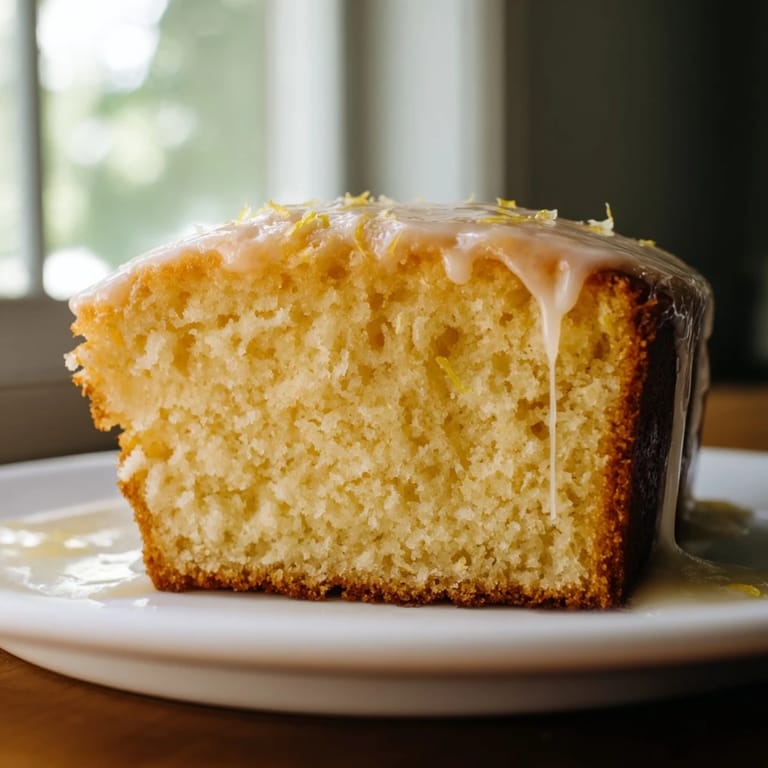
- Whisk the powdered sugar with 2 to 3 teaspoons of fresh lemon juice until smooth and pourable. Drizzle it over the cooled cake in zigzags or let it cascade down the sides.
 Save to Pinterest
 What strikes me most about this cake is how a handful of ingredients and a blender can create something that tastes both simple and refined. It reminds me that sometimes the best food doesn't require complicated techniques or a long ingredient list, just attention to what you're doing and fresh citrus.
Why Lemon and Yogurt Are a Perfect Pair
Yogurt's tanginess and richness were made to complement bright lemon. The creaminess softens the acidity of the juice, while the lemon cuts through the yogurt's heaviness, creating a cake that feels fresh and not cloying. Every bite tastes balanced because neither flavor bullies the other.
Variations to Try
If you want to play with this recipe, swap the yogurt for sour cream for an even tangier crumb, or add a teaspoon of poppy seeds to the batter for texture and nuttiness. You could also fold in fresh blueberries or raspberries just before baking if you want a berry surprise inside. The recipe is forgiving enough to handle these small experiments.
Serving and Storage Ideas
Slice this cake while it's cool and serve it with afternoon tea, or pair it with whipped cream and fresh berries for something closer to dessert. It keeps wrapped at room temperature for three days, and it freezes beautifully for up to a month if you want to bake ahead.
- Toast a slice and spread it with softened butter for a luxe breakfast moment.
- A dollop of mascarpone on the side turns a simple slice into something elegant.
- Fresh mint leaves arranged on top give it a restaurant finish with almost no effort.
 Save to Pinterest
 This cake has become my answer to so many moments—when I want something homemade but not fussy, when I need to bring something to someone, when I want my kitchen to smell like sunshine. Once you make it, you'll understand why it stays.
Recipe Questions & Answers
- → What type of yogurt works best?
Plain Greek yogurt yields a creamy texture and tanginess that balances the lemon flavor well. Whole-milk yogurt is a suitable substitute.
- → Can I enhance the lemon flavor?
Adding extra lemon zest or a few drops of lemon extract intensifies the citrus brightness without altering the texture.
- → How do I ensure the cake stays moist?
Using yogurt and vegetable oil keeps the batter moist and tender. Avoid overmixing the dry ingredients for the best crumb.
- → Is a glaze necessary?
The lemon glaze adds a sweet, tangy finish but is optional. It enhances the citrus profile and provides a shiny top.
- → What baking pan is recommended?
A 9x5-inch loaf pan or similarly sized pan ensures even baking and a well-shaped cake.