 Save to Pinterest
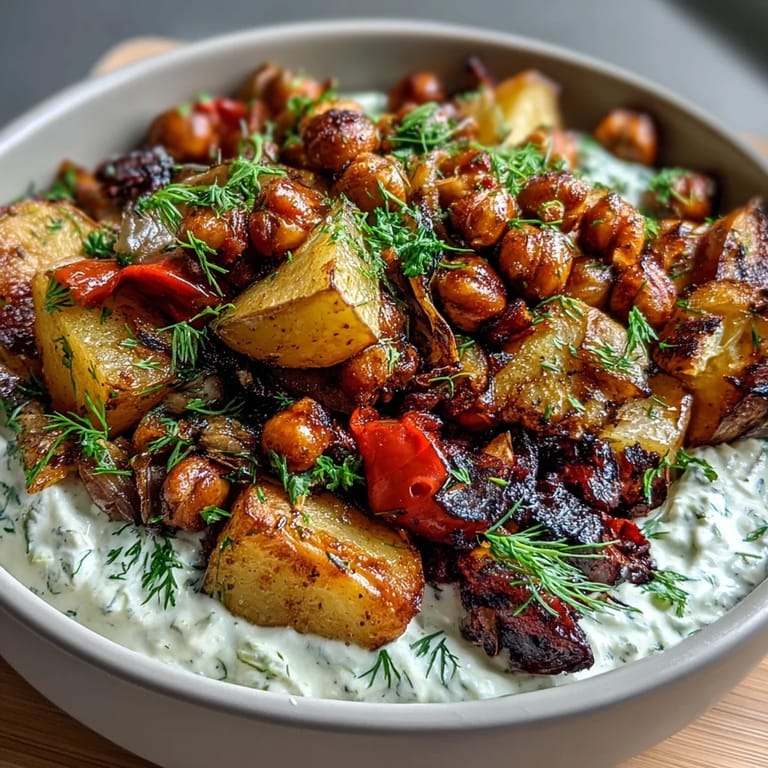
 There's something about the smell of vegetables caramelizing in the oven that makes you feel like you're doing something right in the kitchen. I discovered this Mediterranean bowl on a Tuesday afternoon when I had a can of chickpeas, half a red pepper, and the sudden urge to eat something that felt both comforting and alive. What started as a practical use of pantry ingredients became my go-to answer whenever someone asks what I'm making for lunch. The crispy edges on the potatoes, the cool tang of tzatziki—it's the kind of meal that tastes like it took hours but asks for barely more than your attention for forty minutes.
I made this for my friend Marco one evening when he mentioned being tired of the same salads, and watching him scrape the last bit of tzatziki off his bowl—no exaggeration—was worth every minute of prep. He asked for the recipe before he'd even finished eating, which doesn't happen often with Marco. Now it's become our standing joke that whenever he texts asking what I'm making, this is what he hopes to find waiting on the table.
Ingredients
- Chickpeas (1 can, 15 oz): Rinse them thoroughly under cold water to remove the canning liquid—this step prevents a starchy, gluey texture and lets them crisp up beautifully in the oven.
- Potatoes (3 cups, cut into ¾-inch cubes): Cut them uniform so they roast evenly, and don't skip patting them dry after rinsing because moisture is the enemy of crispiness.
- Red bell pepper and red onion: The pepper adds sweetness that develops in the heat, while the onion edges turn almost caramelized and mellow—they're the backbone of flavor here.
- Olive oil (3 tbsp): Use good quality oil you'd actually taste, because it's doing real work in bringing out the spice flavors and creating those golden edges.
- Mediterranean spice blend (paprika, basil, garlic powder, oregano, dill, parsley): Mix them all together first so everything distributes evenly; this step saves you from hot spots of intense flavor.
- Plain yogurt (2 cups): Greek yogurt gives the sauce body, but regular works too—the key is that it needs to be unsweetened and unflavored.
- Cashews (½ cup raw): They become invisible in the blender but create a silky richness that makes people ask if there's cream hiding in this sauce.
- Cucumber (½, grated): Squeeze out that moisture aggressively—I learned this the hard way when a watery tzatziki pooled sadly on my plate.
- Fresh dill and lemon juice: These two are what make your tzatziki taste like the Mediterranean and not just like yogurt with stuff in it.
Tired of Takeout? 🥡
Get 10 meals you can make faster than delivery arrives. Seriously.
One email. No spam. Unsubscribe anytime.
Instructions
- Heat your oven and gather your team:
- Preheat to 400°F and grab a large baking sheet—you want everything in one layer so the vegetables get direct heat and actually brown instead of steaming.
- Prep your vegetables with intention:
- Cut the potatoes into even ¾-inch cubes, dice your bell pepper into similar-sized pieces, and cut your red onion into wedges that won't fall apart. Rinse and drain your chickpeas until the water runs clear.
- Create your spice foundation:
- In a small bowl, whisk together paprika, basil, garlic powder, oregano, dill, parsley, salt, and pepper. Mixing them ahead means they'll coat everything evenly instead of settling unevenly on the pan.
- Coat and spread on the pan:
- Toss your potatoes, bell pepper, onion, and chickpeas with olive oil and that spice mixture on the baking sheet, making sure everything gets a light coating. Spread in a single layer where each piece has room to breathe—overcrowding means steaming instead of roasting.
- Let the oven work its magic:
- Roast for 40 minutes total, stirring halfway through so the bottom pieces get a turn at the heat. You're looking for golden edges and tender insides, especially on the potatoes.
- Build your tzatziki while vegetables roast:
- Combine yogurt, cashews, tofu, and minced garlic in a blender and run it until completely smooth and creamy—this takes longer than you'd think but the creaminess is worth it.
- Finish the sauce with freshness:
- Grate your cucumber and squeeze hard to remove excess moisture, then fold it into the blended mixture along with fresh dill, red wine vinegar, salt, pepper, and lemon juice. Taste and adjust—if it's too thick, a splash of water helps; too bland, more lemon does the trick.
- Assemble and serve right away:
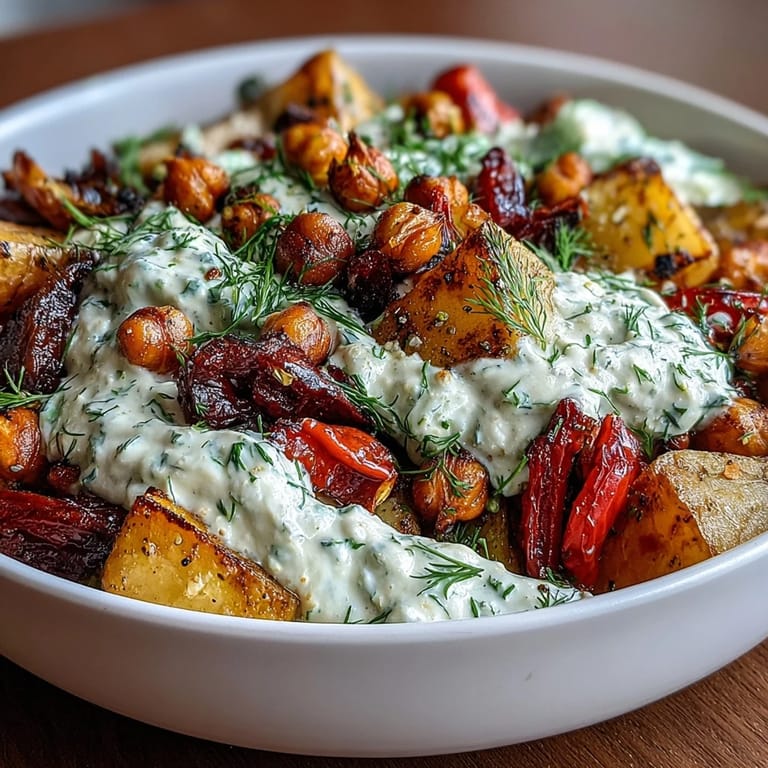
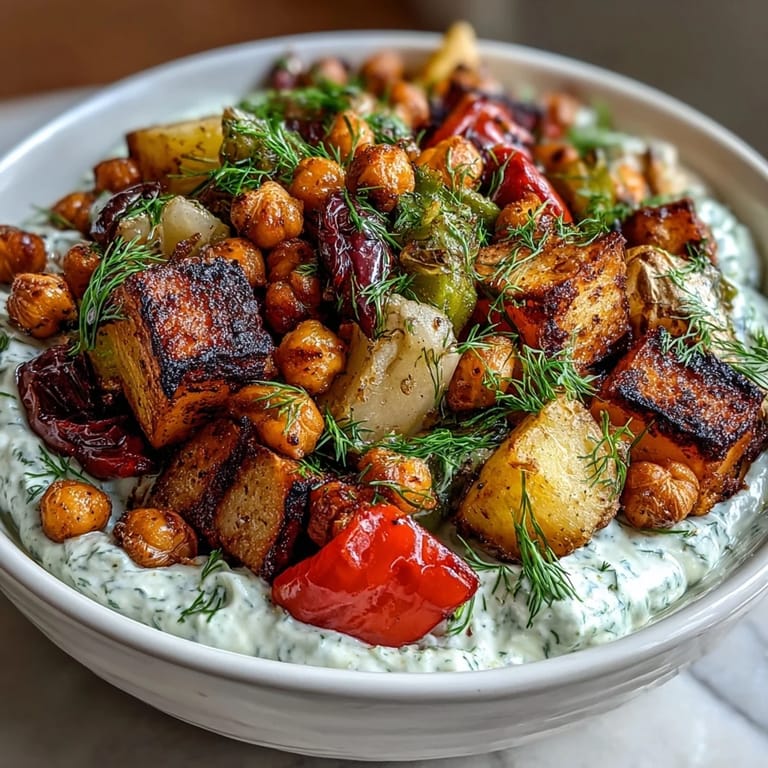
- Spread a generous layer of tzatziki on each bowl or plate, top with your warm roasted vegetables and chickpeas, and eat while everything's still at its best.
 Save to Pinterest
 There was this moment at a dinner party when someone asked if the tzatziki was store-bought because they couldn't believe how creamy it was made without any cream at all. That's when I realized this dish does something unexpected—it feels indulgent but reads as genuinely nourishing, which is a rare combination.
The Magic of Caramelization
Roasting isn't just about cooking vegetables; it's about coaxing out their natural sugars and turning them slightly sweet and deeply complex. When potatoes and onions hit that 400-degree heat, their starches convert to sugars that brown and crisp at the edges. The chickpeas go from soft and mild to nutty and almost buttery-tasting, holding onto the spices in ways boiling never could. This transformation is why the same vegetables that might taste boring in a salad taste exciting here.
Building a Creamy Sauce Without Cream
The first time I blended cashews, tofu, and yogurt together, I was skeptical that it would actually become silky instead of lumpy. But emulsification is real—when you blend these three ingredients long enough, their fats and proteins break down and bind together into something genuinely luxurious. The cashews dissolve into invisibility while adding richness, the tofu becomes a binding agent nobody notices, and the yogurt provides tang. It's like a magician's trick that actually works every time.
Why This Bowl Feels Like So Much More
What makes this recipe special is how the warm and cool elements play against each other—golden roasted vegetables meeting cold creamy sauce creates this textural excitement that elevates simple ingredients. It's the kind of dish where you can taste individual components but they still feel intentional together, never like something thrown at a plate. This is bowls done right: nourishing but not boring, vegetarian but nobody misses the meat, and wholesome without feeling punishing.
- Serve it warm right after roasting for the best contrast between the temperatures.
- The tzatziki tastes even better the next day when flavors have melded overnight, so leftovers improve with time.
- This bowl works equally well as a meal on its own or as a filling for warm pita if you want to transform it.
 Save to Pinterest
 This bowl has become my answer to the question of what to make when you want to eat well but don't want to spend your whole evening in the kitchen. It's proof that good food doesn't require complexity, just respect for the ingredients and a little patience while the oven does its work.
Recipe Questions & Answers
- → How do I achieve perfectly roasted vegetables?
Ensure vegetables are cut evenly and tossed thoroughly with olive oil and spices. Roast at 400°F (200°C) stirring halfway to get golden, caramelized edges and tender centers.
- → Can I substitute ingredients in the tzatziki sauce?
Yes, you can use plant-based yogurt for a vegan option. Cashews can be omitted or replaced with other nuts for creaminess, and extra lemon juice can brighten flavors.
- → What sides complement this Mediterranean bowl?
Warm pita bread, quinoa, or a fresh side salad pairs well, enhancing the wholesome and flavorful experience of the roasted vegetable bowl.
- → How to prepare the cucumber for the sauce?
Grate the cucumber and then squeeze out excess moisture using a clean towel to prevent the sauce from becoming watery while retaining freshness.
- → Is this dish suitable for gluten-free diets?
Yes, all main ingredients are naturally gluten-free, but always double-check ingredient labels to avoid cross-contamination.