 Save to Pinterest
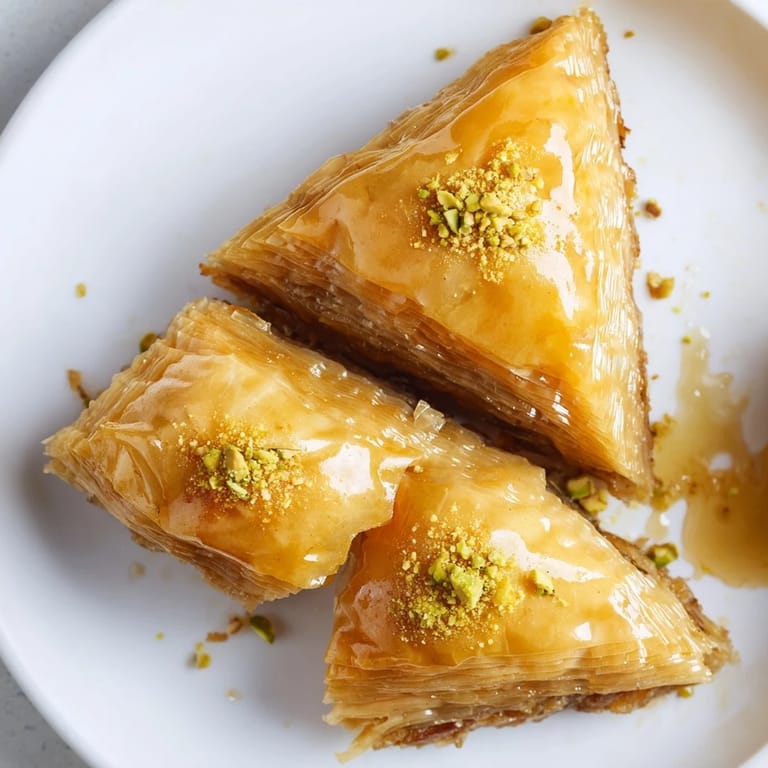
 My first encounter with proper baklava wasn't in a fancy pastry shop—it was in my neighbor's kitchen on a sticky summer afternoon, where she casually layered phyllo sheets while telling stories in two languages. I watched her butter each delicate layer with the precision of someone who'd done this a thousand times, the kitchen filling with the smell of toasting nuts and caramelizing honey. That day, I learned that baklava isn't just dessert; it's a meditation, a conversation, a small act of generosity wrapped in crispy pastry.
I remember bringing this to a dinner party where I was genuinely nervous—baklava feels like the kind of thing only experienced bakers make—but the moment someone broke into a piece and the honey dripped down their chin, everyone went quiet. Then came the questions, the compliments, the requests for extras to take home. That's when I realized this wasn't difficult, just methodical, and absolutely worth the effort.
Ingredients
- Phyllo dough (16 sheets, thawed): Don't skip the thawing step or you'll end up with cracked, difficult sheets that fight you—patience here pays off in texture.
- Unsalted butter (150 g, melted): This is what creates those shattered, crispy layers; don't stint on it or your baklava will taste dense instead of delicate.
- Hazelnuts (100 g, finely chopped): The subtle earthiness balances the sweetness perfectly—toast them lightly first if you want to deepen their flavor.
- Pistachios (100 g, finely chopped): These bring a gentle fruitiness that hazelnuts alone can't achieve; the combination is what makes this special.
- Granulated sugar (100 g, for filling): This sweetens the nuts and helps them bind together slightly without becoming a paste.
- Ground cinnamon (1 tsp, optional but encouraged): It whispers warmth without announcing itself; include it if you want people wondering what makes this taste so right.
- Water (120 ml): The base of your syrup; measure it accurately.
- Honey (150 g): Use real honey, not the squeezable stuff—the flavor difference is everything.
- Granulated sugar (100 g, for syrup): This balances the honey's richness and prevents the syrup from being cloying.
- Lemon juice (1 tsp): A small whisper of brightness that lifts the entire dessert.
Tired of Takeout? 🥡
Get 10 meals you can make faster than delivery arrives. Seriously.
One email. No spam. Unsubscribe anytime.
Instructions
- Set your stage:
- Preheat your oven to 180°C and brush your baking pan generously with melted butter—this prevents sticking and adds flavor to the bottom layer. Have all your ingredients prepped and within arm's reach because phyllo waits for no one once you start working.
- Build the first foundation:
- Lay down 4 sheets of phyllo, brushing each one with butter as you go—you'll feel the sheets become increasingly pliable under the brush. The butter should glisten but not pool; you're coating, not drowning.
- Layer your treasure:
- Mix hazelnuts, pistachios, sugar, and cinnamon in a bowl, then scatter one-third of this mixture evenly over your phyllo base. Don't overthink the evenness; a gentle, organic distribution looks and tastes better than a calculated grid.
- Repeat with intention:
- Add 4 more phyllo sheets with butter between each, then scatter another third of nuts. Then repeat once more with the final phyllo sheets, finishing with a buttered top layer that will turn golden in the oven.
- Score your diamonds:
- Using a sharp knife, cut straight down through all layers into diamond or square shapes—pre-cutting makes the baked baklava much easier to serve and ensures the syrup soaks in evenly.
- Bake to golden perfection:
- Slide the pan into your oven for 35–40 minutes, watching until the top turns a deep amber color that tells you the phyllo is properly crisped. Your kitchen will smell like a dream.
- While it bakes, prepare the syrup:
- Combine water, honey, sugar, and lemon juice in a saucepan and bring to a boil, then reduce heat and let it simmer gently for 10 minutes. The syrup should taste balanced—sweet but with a whisper of brightness from the lemon.
- The crucial finish:
- The moment your baklava comes out of the oven, immediately pour the hot syrup over the hot pastry while both are steaming. This is the magic moment—the heat opens the layers and lets the syrup soak in completely.
- The patience part:
- Let it cool completely, undisturbed, at room temperature—this allows the syrup to settle and the layers to set properly.
 Save to Pinterest
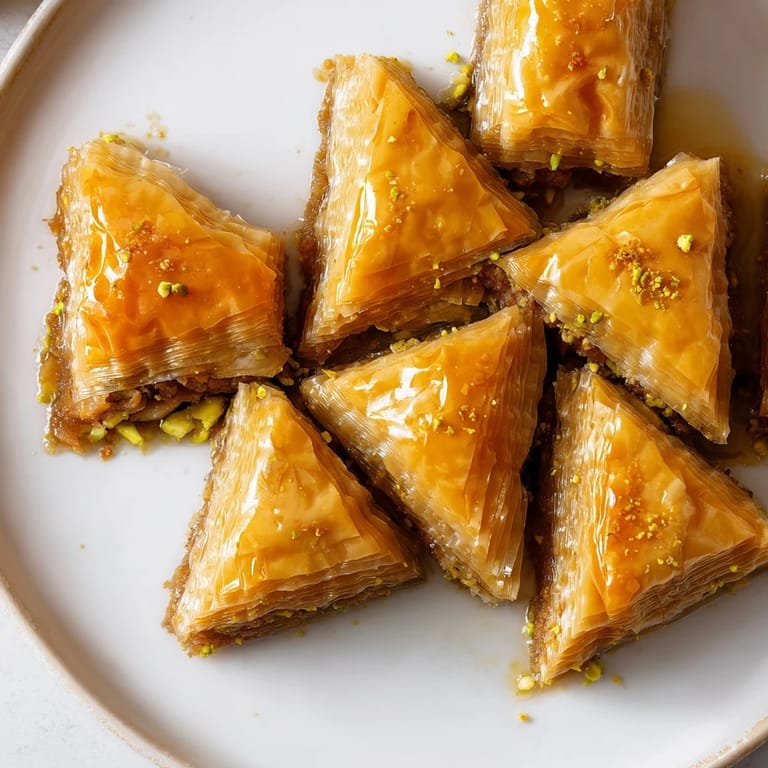
 I made this last winter when a friend was going through a rough patch, and watching her face light up as she bit into the first piece—the crunch, the honey, the nuts—reminded me that sometimes the most powerful thing you can offer isn't advice or solutions, but something warm and thoughtfully made. Food can do that.
Why the Pistachio-Hazelnut Combination Works
Most baklava uses one nut, but mixing pistachios with hazelnuts creates a depth that neither alone can achieve. The hazelnuts bring earthiness and a subtle richness, while pistachios contribute a delicate, almost fruity note that feels sophisticated without being pretentious. Together, they create a flavor profile that feels both familiar and slightly unexpected—the kind of thing that makes people pause mid-bite to really taste what they're eating.
Storage and Make-Ahead Tips
This dessert actually improves over time as the syrup continues to penetrate the layers, so making it a day or two ahead is not just acceptable, it's ideal. Store it in an airtight container at room temperature—the syrup keeps everything moist and prevents the phyllo from drying out. I've kept it successfully for up to 5 days, though it rarely lasts that long once people discover it's in the house.
Adapting and Experimenting
Once you feel comfortable with the basic technique, this recipe becomes a playground for subtle adjustments. Some people add a pinch of ground clove or cardamom to the nut filling for warmth, others substitute walnuts or almonds based on what they have on hand. The structure stays the same; the personality shifts slightly with each variation, which is exactly how traditional recipes evolve and stay alive in home kitchens.
- Orange zest stirred into the nut filling adds brightness that pairs beautifully with the honey.
- A touch of rosewater in the honey syrup transforms this into something that tastes almost like a memory of traveling.
- If you're doubling the recipe for a larger crowd, the baking time might extend by 5–10 minutes, so keep an eye on that golden color rather than relying solely on the timer.
 Save to Pinterest
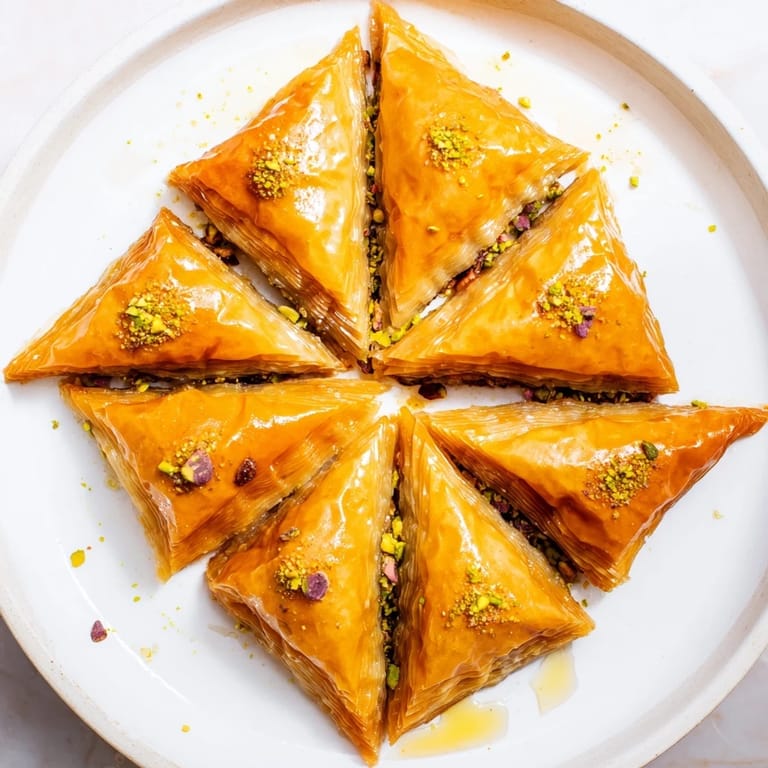
 There's something deeply satisfying about mastering a dish that feels fancy but becomes second nature once you understand its logic. This baklava is that dish—a small triumph that tastes like tradition and feels like you're sharing something precious.
Recipe Questions & Answers
- → How should the phyllo be handled?
Thaw the phyllo dough properly and keep it covered with a damp cloth to prevent drying while layering.
- → Can I substitute nuts in this dish?
Yes, walnuts can be used instead of hazelnuts for a different but equally rich flavor.
- → What is the best way to cut after baking?
For cleaner slices, chill the pastry thoroughly before cutting with a sharp knife into diamonds or squares.
- → How is the honey syrup prepared?
Simmer water, honey, sugar, and lemon juice together for about 10 minutes to create a fragrant, sticky syrup.
- → How long can this dessert be stored?
Store in an airtight container at room temperature for up to five days to maintain freshness and crispness.