 Save to Pinterest
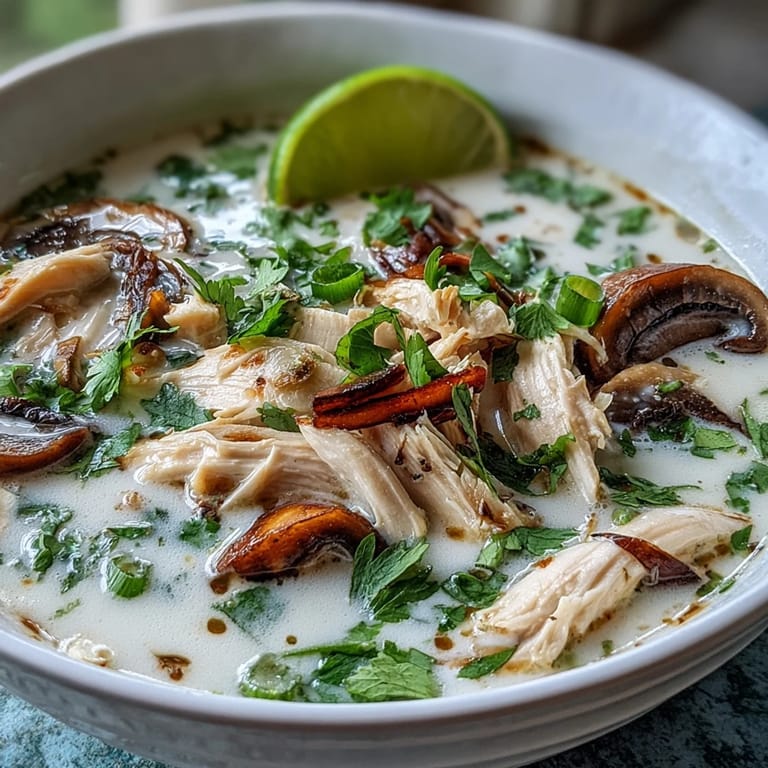
 My first real encounter with tom kha gai happened in a cramped Bangkok kitchen during the monsoon season, where a quiet chef handed me a spoon and let me taste the soup straight from the pot. The coconut milk had just begun to marry with the lemongrass and galangal, creating something that tasted like comfort wrapped in warmth. I've tried countless versions since, but that first sip—briny, bright, creamy all at once—set the standard. Now whenever I make it at home, I chase that same balance, adjusting the lime juice and fish sauce until the flavors sing the way they did that afternoon.
I made this for a friend who'd just moved to the city and was feeling homesick, standing in her tiny kitchen with nothing but a hot plate and hope. When she tasted it, she actually closed her eyes, and that's when I realized tom kha gai isn't just soup—it's a conversation starter, a bridge between worlds, something that says you care without needing many words.
Ingredients
- Chicken broth: Use good quality broth here because it forms the foundation; I learned the hard way that skimping on broth makes the entire soup taste thin and forgettable.
- Lemongrass: The fresh stalk is non-negotiable—smash it well to release those citrusy oils that make the broth sing.
- Galangal: This root is earthy and peppery in ways ginger isn't; seek it out at Asian markets because the substitution changes the character of the dish.
- Makrut lime leaves: Tear them gently to release their essential oils, and their fragrance should hit you immediately when you open the package.
- Thai bird's eye chilies: These tiny powerhouses pack serious heat, so crush them lightly to control the intensity and adjust to your preference.
- Boneless, skinless chicken thighs: Slice them thin so they cook quickly and stay tender; thighs have more flavor than breasts and won't dry out.
- Full-fat unsweetened coconut milk: Never use lite coconut milk here—you need the richness to balance the bright, sour notes.
- Fresh mushrooms: Straw mushrooms are traditional and delicate, but cremini works when you can't find them.
- Shallot: The mild sweetness rounds out the spicy and salty elements beautifully.
- Fish sauce: This is your umami anchor; it shouldn't taste fishy if used correctly, just deeply savory.
- Lime juice: Fresh squeezed makes all the difference—bottled tastes flat by comparison.
- Palm sugar: A touch of sweetness balances the heat and salt, creating harmony on your palate.
- Fresh cilantro and green onions: These finishing touches add freshness that elevates every spoonful.
Tired of Takeout? 🥡
Get 10 meals you can make faster than delivery arrives. Seriously.
One email. No spam. Unsubscribe anytime.
Instructions
- Build your aromatic base:
- Bring the chicken broth to a gentle simmer in your pot, then add the smashed lemongrass, galangal slices, torn lime leaves, and crushed chilies. Let these steep together for five to seven minutes—this is where the magic starts, as the broth transforms from plain to deeply fragrant and complex.
- Cook the chicken:
- Slide in your thinly sliced chicken and shallot, stirring gently so nothing sticks to the bottom. After three to four minutes, the chicken will turn opaque and the shallot will soften; you're looking for that moment when everything is just cooked through but still tender.
- Bring in the richness:
- Add the mushroom slices and pour in that coconut milk in a slow stream while stirring gently. Bring everything back to a simmer—never let it boil hard because aggressive heat can break the coconut milk and make it separate and grainy.
- Season with intention:
- Now comes the balancing act: add fish sauce, palm sugar, and lime juice, tasting as you go. The soup should feel salty, sweet, and tangy all at once, with no single flavor dominating; this is where your palate becomes the guide.
- Finish and serve:
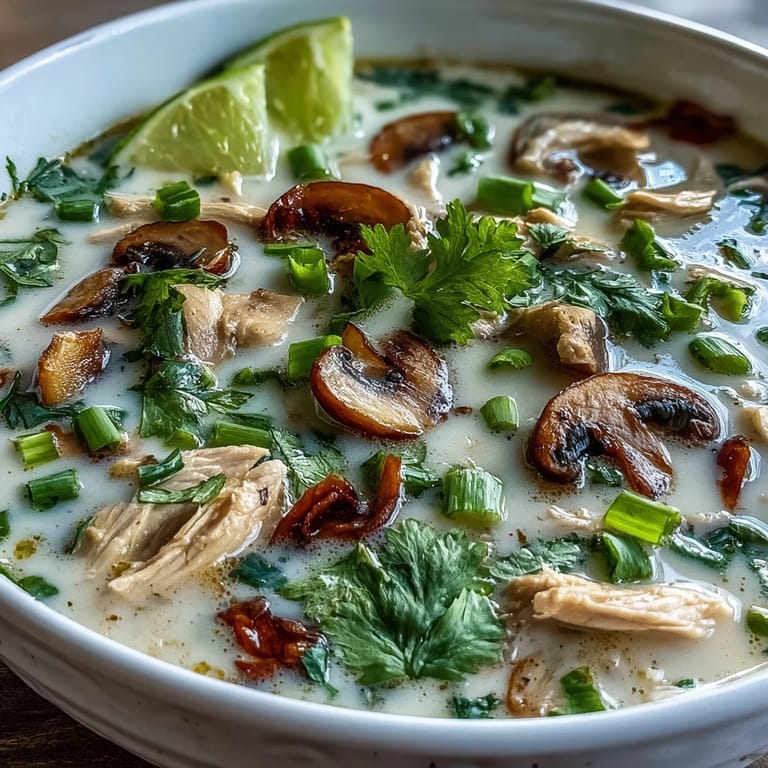
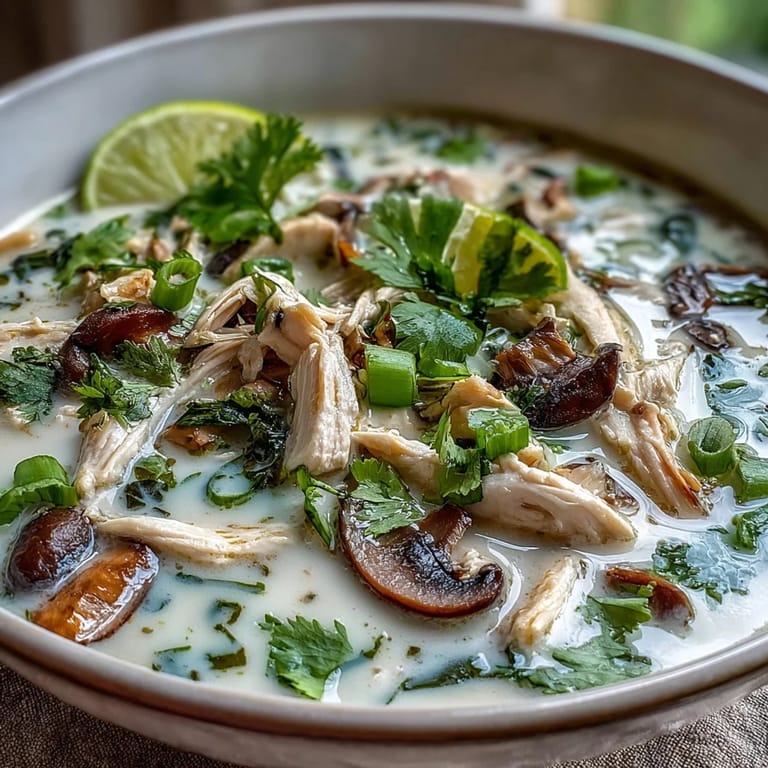
- Remove from heat and strain out the solids if you prefer a cleaner presentation, though I often leave them in for more flavor. Ladle into bowls and crown each one with cilantro, green onions, and a lime wedge on the side.
 Save to Pinterest
 There's something about serving tom kha gai that makes everyone slow down and actually enjoy their meal instead of just eating it. I've watched people stir their bowls slowly, pause between bites, and ask for the recipe before they're even halfway through—and that moment, right there, is why I keep making it.
The Art of Balancing Heat and Brightness
Thai cooking is all about equilibrium, and tom kha gai is the perfect classroom for learning it. The creamy coconut milk wants to coat your mouth, so the bright citrus from lime juice and the aromatic lift from lemongrass pull in the opposite direction, keeping everything from feeling heavy. If your first taste feels flat, it's probably missing acid—squeeze in more lime. If it feels too sharp, a pinch more palm sugar rounds the edges. This back-and-forth adjustment is where the soup becomes yours instead of just a recipe you followed.
Sourcing Ingredients in Your Area
Finding fresh galangal and makrut lime leaves used to feel impossible outside of major cities, but Thai and Asian markets have become more accessible everywhere. If you genuinely can't source them, ginger works in a pinch for galangal, though the flavor profile shifts slightly toward warmth instead of that peppery, earthy note. Regular lime zest can substitute for makrut leaves if necessary, but seek out the real thing at least once—the difference is subtle but real.
Variations and Flexibility
The beauty of tom kha gai is that it adapts to what you have without losing its soul. Vegetarians swap the chicken for silken tofu pressed gently into the broth, and soy sauce replaces fish sauce. Some cooks add a tablespoon of red curry paste for deeper color and complexity, while others stir in a handful of spinach at the end for earthiness. You can even serve it over rice to make it heartier, though traditionally it stands alone as a soup course.
- Add a splash of red curry paste for deeper, more savory notes if you want extra dimension.
- Substitute tofu for chicken and tamari or soy sauce for fish sauce to make it vegetarian without losing authenticity.
- Serve with jasmine rice on the side or ladled directly over rice for a complete one-bowl meal.
 Save to Pinterest
 Tom kha gai is the kind of dish that reminds you why cooking matters—it's simple, but it requires intention and a few ingredients you have to seek out intentionally. Make it once, and you'll understand why it's beloved across Thailand and everywhere Thai food has traveled.
Recipe Questions & Answers
- → Can I substitute galangal with ginger?
Yes, you can substitute galangal with ginger, though the flavor profile will change slightly. Galangal has a more piney, citrusy taste compared to ginger's warmth. Use approximately the same amount and add it early in the cooking process to infuse the broth properly.
- → How spicy is this soup?
The heat level is adjustable with the Thai bird's eye chilies. Three lightly crushed chilies provide a gentle warmth that builds gradually. For more heat, leave the seeds in or add an extra chili. For milder flavor, reduce to one or two chilies or remove them entirely after the broth infuses.
- → Can I make this vegetarian?
Absolutely. Substitute the chicken broth with vegetable broth, replace chicken thighs with firm tofu cubes, and use soy sauce or tamari instead of fish sauce. Add the tofu during the last few minutes of cooking to prevent it from breaking apart.
- → Why shouldn't I boil the coconut milk vigorously?
Coconut milk can separate or curdle when boiled at high temperatures, affecting the soup's texture. Simmering gently preserves the creamy consistency and prevents the oil from separating from the milk. Stir occasionally and maintain a gentle bubble rather than a rolling boil.
- → How long does this soup keep in the refrigerator?
Store cooled soup in an airtight container for up to 3 days. Reheat gently over low heat, adding a splash of broth or water if the coconut milk has thickened. The flavors often develop and improve overnight. Avoid freezing as the coconut milk texture may change slightly upon thawing.
- → What mushrooms work best?
Straw mushrooms are traditional and available at Asian markets, offering a slight crunch and mild flavor. Cremini or button mushrooms are excellent substitutes with earthy notes. Shiitake mushrooms also work beautifully, adding depth to the broth. Slice them evenly for consistent cooking.