 Save to Pinterest
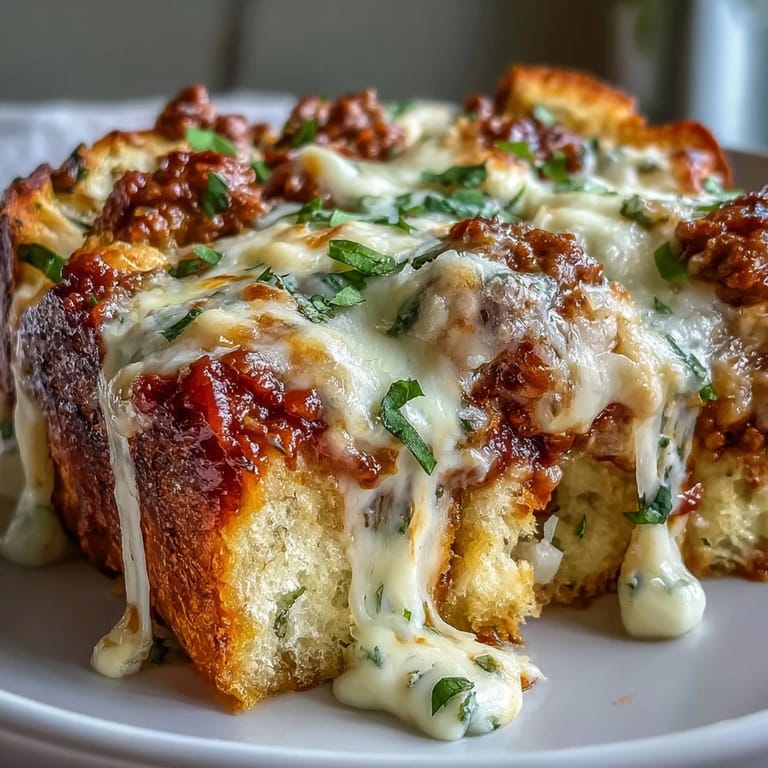
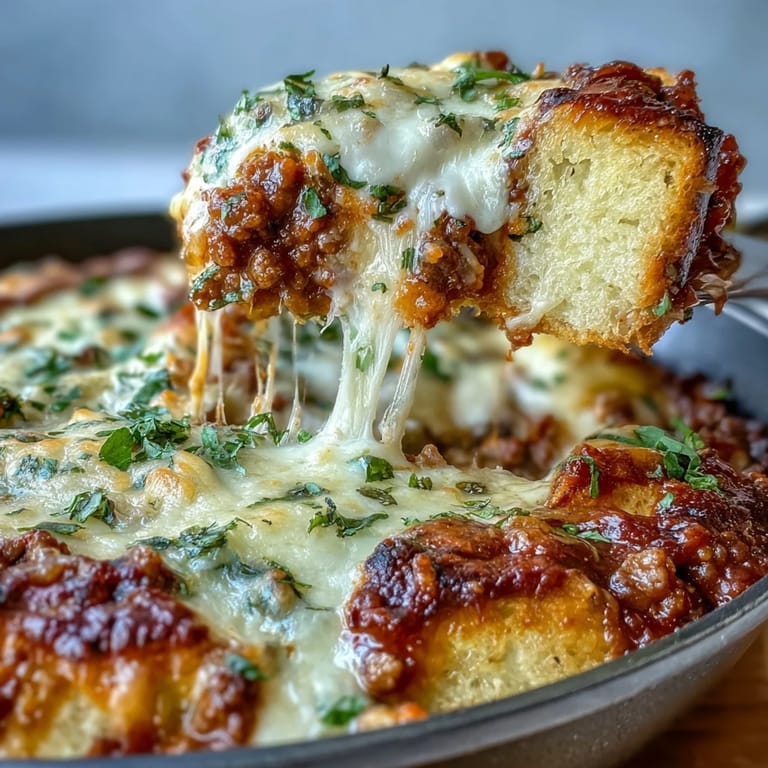
 My cast-iron skillet has seen a lot of dinners, but the night I poured melted garlic butter over bread cubes and watched them turn golden alongside bubbling lasagna sauce felt different. Someone at the table said it tasted like garlic bread had finally figured out its true purpose, and honestly, I haven't made lasagna any other way since. This is comfort food that doesn't overthink itself, just layers of rich flavors that somehow make sense together in a way that surprises you every time.
I made this for my partner on a random Tuesday when we were both tired of takeout menus, and watching their face when they realized the garlic bread wasn't a side dish but woven right through the lasagna made the whole thing worth it. The kitchen smelled incredible for hours afterward, the kind of smell that lingers in your hair and clothes in the best possible way.
Ingredients
- 1 large baguette or Italian loaf, cut into 2-inch cubes: Look for bread with structure that won't crumble at the first sign of sauce; day-old bread works beautifully here because it holds its shape better than fresh.
- 4 tbsp unsalted butter, melted: This is your connector between bread and seasoning, so don't skimp on quality—the flavor difference is real.
- 3 cloves garlic, minced for the bread coating: Mince finely so you get those little flecks throughout rather than chunks that feel too aggressive.
- 2 tbsp fresh parsley, chopped: Fresh is non-negotiable here; dried tastes dusty by comparison and you'll feel the difference in every bite.
- 1/4 tsp salt: Just a touch for the bread layer since the filling brings its own seasoning.
- 1 lb ground beef or Italian sausage: Ground sausage adds fennel notes that make this feel more authentic, but beef works fine if that's what you have.
- 1 small onion, diced: Small dice means it breaks down and almost disappears into the sauce, becoming flavor rather than chunks.
- 2 cloves garlic, minced for the filling: Fresh garlic in the sauce gives it brightness that jarred garlic simply can't match.
- 1 (24 oz) jar marinara sauce: Any reliable brand works, but taste it first; some are saltier than others and you can adjust accordingly.
- 1 tsp dried oregano: Italian seasoning works too if that's all you have, though oregano's earthiness is what we're after here.
- 1/2 tsp black pepper and 1/2 tsp salt: Layer these in gradually while tasting; you're building flavor, not overpowering it.
- 1 cup ricotta cheese: This is your creamy binding element; don't use cottage cheese as a shortcut because the texture falls apart when baked.
- 1 large egg: Binds the ricotta and helps it set into layers instead of turning into a puddle.
- 1/4 cup grated Parmesan cheese: Adds a sharp note that cuts through all the richness and keeps things from tasting one-dimensional.
- 2 cups shredded mozzarella cheese: Buy the block and shred it yourself if you have time; the pre-shredded stuff has anti-caking agents that make it grainy.
Tired of Takeout? 🥡
Get 10 meals you can make faster than delivery arrives. Seriously.
One email. No spam. Unsubscribe anytime.
Instructions
- Get your oven ready:
- Preheat to 375°F (190°C) so the heat is steady and even when your skillet goes in. This temperature is the sweet spot where everything bakes through without the top catching before the middle cooks.
- Coat the bread cubes:
- Combine melted butter, minced garlic, parsley, and salt in a large bowl, then toss the bread cubes until every piece glistens with butter and you can smell the garlic from across the room. The bread should look glossy and golden before it hits the oven, not soggy or underwhelming.
- Brown the meat:
- Heat your cast-iron skillet over medium heat and add the ground beef and diced onion, breaking the meat apart as it cooks. After about 5–6 minutes, it should be fully browned with no pink remaining, and the onion should have softened into submission.
- Build the sauce:
- Stir in the minced garlic, marinara sauce, oregano, black pepper, and salt, then let it bubble gently for about 5 minutes so the flavors get to know each other. You want the kitchen to smell like an Italian grandmother is judging your cooking from the next room.
- Mix the ricotta layer:
- In a separate bowl, combine ricotta, egg, and Parmesan until the mixture is smooth with no lumps of cheese hanging around. This becomes your creamy barrier between the meat and bread, adding richness without heaviness.
- Begin the layering game:
- Remove half the meat sauce from the skillet and set it aside, leaving a foundation layer in the bottom. This is your strategy moment: you're building architecture, not chaos.
- First layer down:
- Spread half of your garlic bread cubes over the remaining sauce, then dollop half of the ricotta mixture and sprinkle with 1 cup of mozzarella. Each layer should feel intentional and even, like you're building something that matters.
- Complete the stack:
- Pour the reserved meat sauce over the cheese, then top with remaining bread cubes, ricotta, and the last cup of mozzarella. You've now created layers that will bake into something greater than the sum of their parts.
- Cover and bake:
- Cover loosely with aluminum foil and slide the skillet into the oven for 20 minutes, which steams everything through gently without drying it out. The foil is your friend here, trapping moisture while the cheese melts underneath.
- Finish with color:
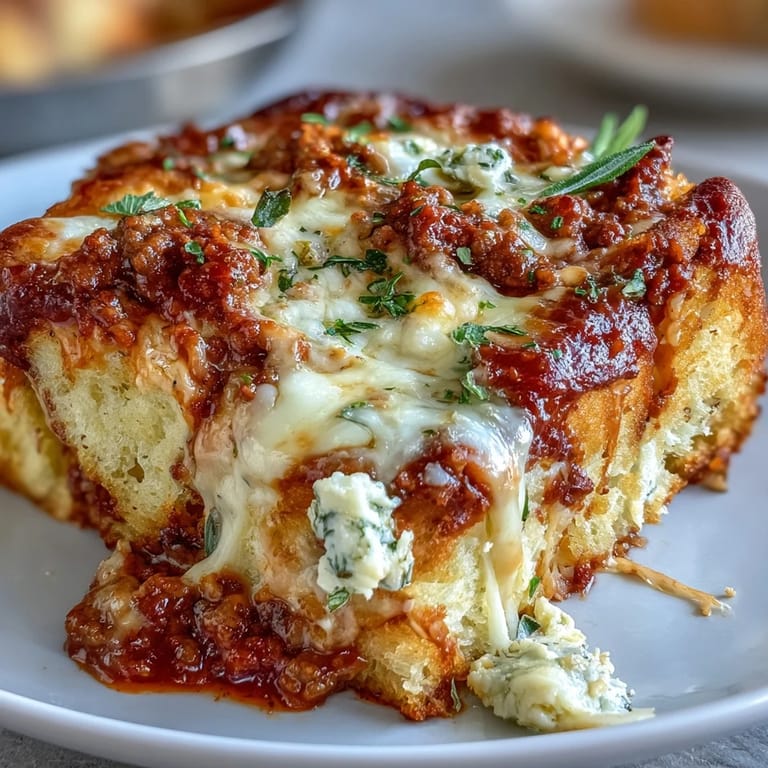
- Remove the foil and bake for another 10–15 minutes until the cheese is bubbling at the edges and the top is turning golden brown. You'll know it's ready when you can't resist taking a photo because it looks that good.
- Rest before serving:
- Let it cool for 10 minutes after coming out of the oven, which sounds impossible but makes the difference between a perfect slice and a molten mess on your plate. Sprinkle fresh parsley on top if you have it, because green specks make everything taste more intentional.
 Save to Pinterest
 There's a particular moment when you take a fork to the edge and watch the layers come apart perfectly—bread, cheese, sauce, ricotta, more cheese—and that architectural moment is when you realize this dish is more than just experimentation. It became the thing we request on tired Tuesdays and the thing we make when we want to feel a little less alone in the kitchen.
Why Cast Iron Matters Here
A cast-iron skillet holds and distributes heat differently than any baking dish, creating those slightly crispy, browned edges on the bread that you simply cannot achieve in ceramic or glass. The metal conducts heat more evenly across the bottom, so the bread cubes at the base get texture and color instead of becoming soggy pedestrians. Once you've made this in cast iron, going back feels like a compromise.
Feeding People and Making Moments
This dish has a way of bringing people to the table without fanfare or apology, which is rare in a recipe that's technically impressive. The flavor profile is familiar enough that it doesn't scare anyone, but the execution is novel enough that you get credit for trying something different. It's the kind of food that opens conversations about what makes something taste like home.
Variations That Actually Work
The vegetarian route is genuinely delicious if you sauté sliced mushrooms with the onion until they release their water and concentrate their umami, creating depth that rivals any meat. You can also brush the bread cubes with herb-infused oil instead of butter if dairy isn't happening that day, and the dish remains itself. Red pepper flakes scattered on top before baking add heat without changing the fundamental character of what you're making, so don't be shy if you like a little fire.
- Fresh basil stirred into the sauce at the very end brings brightness that transforms the whole experience.
- A drizzle of truffle oil over the finished dish is indulgent and unnecessary and absolutely worth trying once.
- Experiment with different cheeses like a blend of mozzarella and provolone if you're feeling adventurous without straying too far from home.
 Save to Pinterest
 This skillet has become proof that sometimes the best meals happen when you stop thinking of dishes as separate entities and start seeing them as conversation starters. Make it tonight and watch what happens when familiar flavors wake up in a new arrangement.
Recipe Questions & Answers
- → Can I make this vegetarian?
Yes, replace the ground beef with plant-based meat crumbles or sautéed mushrooms. The vegetarian version works just as well with the garlic bread cubes and cheese layers.
- → What type of bread works best?
A day-old baguette or Italian loaf holds up well during baking. Slightly stale bread absorbs the butter and garlic flavor while maintaining its texture through the baking process.
- → Can I assemble this ahead of time?
Yes, assemble the entire skillet up to a day in advance and refrigerate. Add 5-10 minutes to the baking time if baking from cold.
- → How do I store leftovers?
Store in an airtight container in the refrigerator for up to 4 days. Reheat in the oven at 350°F until warmed through, or microwave individual portions.
- → Can I freeze this dish?
Yes, wrap the cooled skillet tightly in foil and freeze for up to 3 months. Thaw overnight in the refrigerator before reheating.