 Save to Pinterest
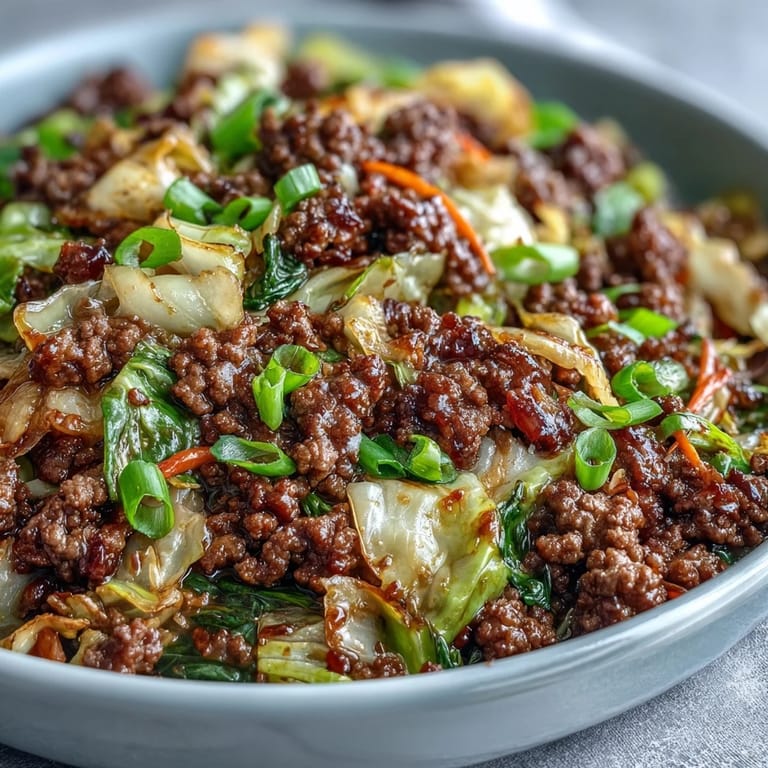
 There's something about the sound of ground beef hitting a hot wok that makes you feel like you've got dinner under control. I discovered this stir-fry on a Tuesday night when I was tired of the usual rotation and had a head of cabbage staring at me from the fridge. The beauty of it is how quickly everything comes together—ten minutes of prep, fifteen minutes of cooking, and suddenly you've got something that tastes like you spent way more effort than you actually did.
I made this for my partner last month when he came home talking about wanting Chinese takeout, and instead of ordering, I just started cooking. The way the whole apartment filled with that ginger-garlic-soy smell while he was still taking off his shoes—he literally forgot about the takeout idea. That's when I knew this recipe was a keeper, honestly.
Ingredients
- Lean ground beef (1 lb): Use the leanest you can find without going overboard—some fat keeps things flavorful, but too much means you'll end up with a grease slick instead of a glossy sauce.
- Green cabbage (1 small head, thinly sliced): The thinness matters here because thicker pieces won't soften in the time you've got, and you want that tender-crisp thing happening.
- Green onions (3, sliced): Split them into whites and greens—the whites go in early for flavor depth, and the greens are your finishing touch for brightness.
- Garlic and ginger (2 cloves and 1-inch piece): Don't even think about using the pre-minced stuff for this one; the fresh versions bloom so differently when they hit that hot oil.
- Carrot (1 medium, julienned, optional): This is technically optional for strict low-carb, but it catches the sauce beautifully and adds a subtle sweetness if you decide to include it.
- Soy sauce (3 tbsp): This is your umami backbone—use tamari if gluten-free matters to you, and don't skimp on quality here because there's nowhere for it to hide.
- Oyster sauce (1 tbsp): The secret ingredient that makes everything taste more Chinese restaurant than home kitchen, but use gluten-free if needed and check for shellfish allergies.
- Rice vinegar (1 tbsp): A touch of acid that cuts through the richness and wakes everything up on your palate.
- Sesame oil (1 tbsp): Drizzle this in at the end mostly—it's potent, and a little goes a long way toward that toasted, aromatic finish.
- Sriracha or chili garlic sauce (1 tsp, optional): Only if you want heat; I usually add it because I like the way it builds slowly as you eat.
- White pepper (1/2 tsp): Milder and more refined than black pepper, it dissolves into the sauce rather than creating little specks.
- Sugar or sweetener (1/2 tsp, optional): A tiny pinch balances the salty-savory, though honestly you can skip it if you're not into that.
- Vegetable oil (1 tbsp): Something neutral that won't compete—peanut oil is lovely if you have it because it handles high heat without complaining.
Tired of Takeout? 🥡
Get 10 meals you can make faster than delivery arrives. Seriously.
One email. No spam. Unsubscribe anytime.
Instructions
- Make your sauce first:
- Whisk together the soy sauce, oyster sauce, rice vinegar, sesame oil, Sriracha if you're using it, white pepper, and sugar in a small bowl. Set it right by your stove so you're not fumbling for it later when things are moving fast.
- Get your oil screaming hot:
- Pour the vegetable oil into a large wok or skillet and crank the heat to medium-high—you want it shimmering and almost smoking. This is where the beef will get that beautiful browned exterior instead of just steaming.
- Brown the beef with purpose:
- Add the ground beef and immediately start breaking it up with a spatula, pushing it around the pan so it browns evenly rather than clumping. After about 4 to 5 minutes, it should be completely cooked through with no pink hiding anywhere.
- Bloom the aromatics:
- Toss in the minced garlic, grated ginger, and the white parts of the green onions—stir constantly for just a minute while they release their fragrance. The kitchen should smell incredible right now, and that's your signal you're on track.
- Get the cabbage in there:
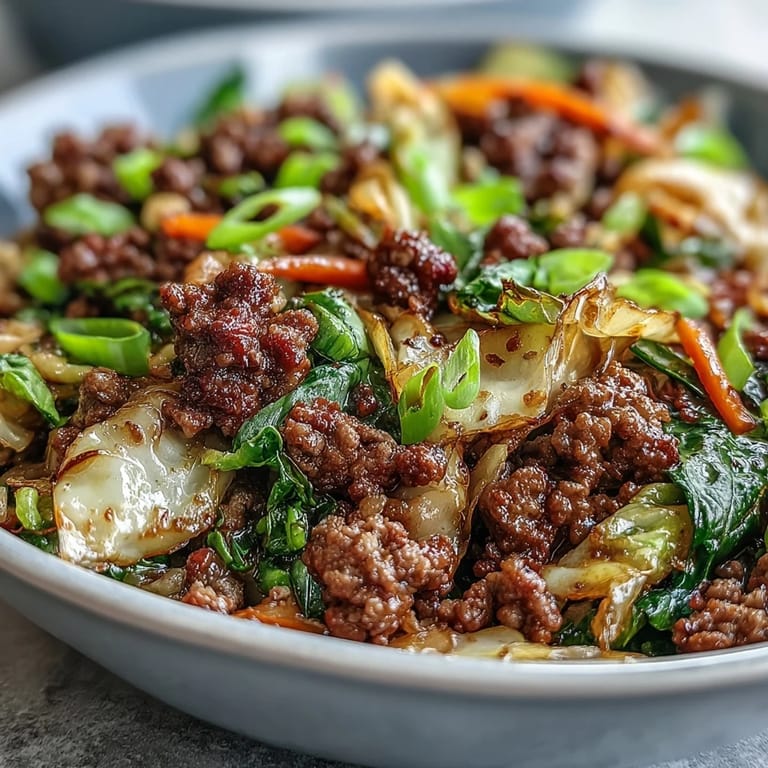
- Add your thinly sliced cabbage and the carrot if you're using it, and keep stirring for 5 to 7 minutes until the cabbage starts to soften but still has some snap to it. You're looking for it to go from raw to tender-crisp, not wilted and sad.
- Bring it all together with the sauce:
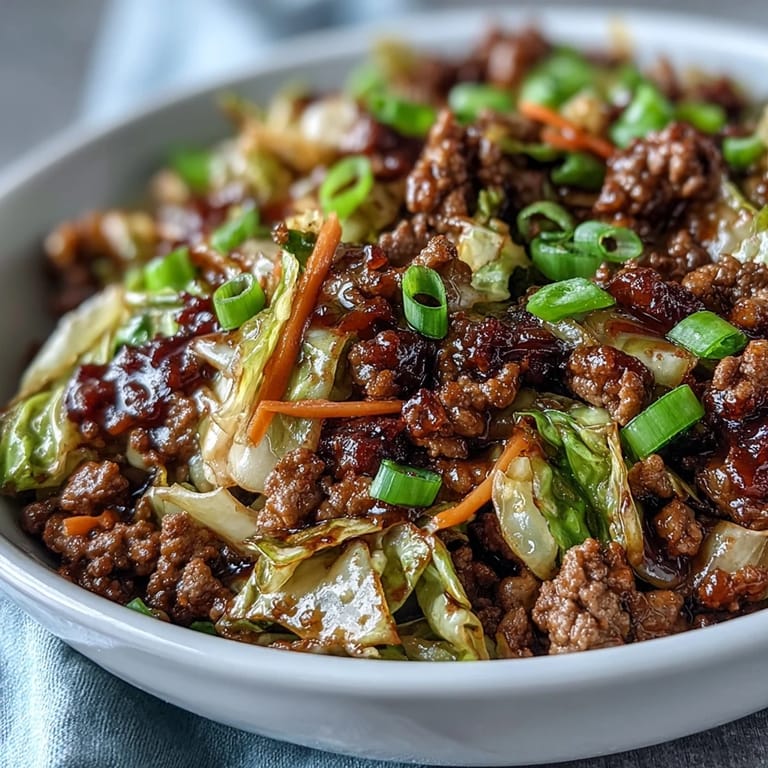
- Pour that sauce you made earlier over everything and toss until every piece is coated in that glossy, umami-rich coating. Let it cook for another 1 to 2 minutes so the sauce reduces slightly and clings to the vegetables.
- Finish and serve:
- Take it off the heat, scatter the green parts of the green onions on top, and serve it hot—maybe over cauliflower rice if you're keeping it strict, or over regular rice if you're just looking for something fast and satisfying.
 Save to Pinterest
 My mom watched me make this once and said it tasted just like the takeout place she used to order from, except somehow better because it was warm and fresh and made with care in our kitchen. That moment reminded me that food doesn't have to be complicated to be meaningful.
Why This Works as a Weeknight Dinner
The whole operation is finished in 25 minutes flat, which means you can come home from work, have dinner on the table before anyone gets hangry, and still have time to sit down and actually enjoy eating it. There's no standing around waiting for something to simmer or rise or cool—it's direct, honest cooking that respects your time.
The Sauce is Everything
I learned the hard way that dumping sauce ingredients directly into a hot wok is a recipe for uneven seasoning and some bites being way too salty. When you mix it together first in a bowl, it emulsifies slightly and distributes evenly, and the sesame oil gets a chance to fully incorporate instead of sitting on top like a slick. That's the difference between a good stir-fry and one that tastes like you actually know what you're doing.
Variations and Flexibility
This recipe is honestly forgiving enough that you can swap proteins without changing a thing—ground chicken, pork, or turkey all work beautifully and take about the same time to cook through. The vegetables are also just a starting point; if you've got broccoli or snap peas or mushrooms, they'll soak up that sauce just as happily as cabbage will. The sauce-to-vegetable ratio is what keeps things balanced, so trust that and build from there.
- Top it with toasted sesame seeds or chopped roasted peanuts if you want extra crunch and richness.
- Make it gluten-free by swapping tamari for soy sauce and checking your oyster sauce label carefully.
- Serve over cauliflower rice to keep it aggressively low-carb, or use regular rice if you're just looking for speed.
 Save to Pinterest
 This stir-fry has become the recipe I reach for when I want to prove to myself that good food doesn't need to take hours. It's turned into one of those reliable friends in my kitchen that shows up when called and always delivers.
Recipe Questions & Answers
- → Can I use a different type of ground meat?
Yes, ground chicken, pork, or turkey all work well as substitutes for beef in this stir-fry.
- → How do I make this gluten-free?
Use tamari instead of soy sauce and choose a gluten-free oyster sauce. Always check labels to ensure products are certified gluten-free.
- → What can I serve with this dish?
Serve over steamed cauliflower rice for a low-carb option, or pair with jasmine rice or noodles for a more filling meal.
- → How long does this keep in the refrigerator?
Store leftovers in an airtight container for up to 3-4 days. Reheat in a skillet or microwave until heated through.
- → Can I add more vegetables to this stir-fry?
Absolutely! Bell peppers, snap peas, mushrooms, or bok choy make excellent additions. Just adjust cooking times based on vegetable density.
- → Is this dish spicy?
The Sriracha is optional, so you control the heat level. Without it, the dish has a savory umami flavor with no spice.