 Save to Pinterest
 My neighbor Maria brought this soup to our door during a particularly gray November, and I still remember how the steam from the bowl seemed to chase away the chill before I even tasted it. There's something about cabbage soup that feels less like cooking and more like wrapping yourself in warmth—the kind of dish that asks for nothing fancy, just good ingredients simmering together until the kitchen smells like home. I've made it dozens of times since, sometimes when I'm tired and need something simple, sometimes when I want to feed people without fuss. The beauty is in its honesty: cabbage, tomatoes, broth, and time do all the heavy lifting.
I once made this for a friend who was going through a rough patch, and she called me three days later to say she'd made it again herself. That's when I knew this wasn't just a recipe—it was the kind of thing that gives people permission to be gentle with themselves in the kitchen.
Ingredients
- Green cabbage: The star that softens into silky ribbons as it cooks, and honestly, don't skip the chopping step—rough pieces won't cook evenly.
- Carrots and celery: These build the flavor foundation, so take your time slicing them somewhat uniformly so they finish cooking at the same moment as the cabbage.
- Onion and garlic: The aromatics that wake up the pot and make everything smell like you've been cooking for hours when you've barely started.
- Canned diced tomatoes: Using canned actually works better here than fresh because you get the juice and consistent acidity without worrying about tomato season.
- Tomato paste: A spoonful adds concentrate and richness that deepens the broth in a way that seems almost magical.
- Vegetable broth: The backbone—use good quality because this soup is simple enough that everything shows, including shortcuts.
- Thyme and bay leaf: Dried herbs work perfectly here and actually blend better with the long simmer than fresh ones would.
- Smoked paprika: Optional but genuinely transformative if you want to add a subtle warmth without heat.
Tired of Takeout? 🥡
Get 10 meals you can make faster than delivery arrives. Seriously.
One email. No spam. Unsubscribe anytime.
Instructions
- Build the base:
- Heat your pot, add a splash of oil, and sauté the onion, carrot, and celery for about five minutes. You're looking for the moment when they soften just enough to release their sweetness into the pot.
- Wake up the garlic:
- Stir in your minced garlic and let it cook for just a minute—this is not the time to get distracted, as garlic can go from fragrant to bitter in seconds.
- Add the cabbage:
- This is where the transformation begins. Stir in your chopped cabbage and let it sit for three or four minutes, stirring occasionally, until it starts to soften and release its natural sweetness.
- Deepen the flavor:
- Add your tomato paste and stir it around the pot for about a minute so it caramelizes slightly and loses its raw edge.
- Bring it all together:
- Pour in your tomatoes with their juice, broth, thyme, bay leaf, paprika if you're using it, and a good pinch of salt and pepper. Stir everything so nothing settles at the bottom.
- Let it simmer:
- Bring the whole thing to a boil, then turn the heat down low, cover the pot, and let it bubble gently for twenty-five to thirty minutes. The kitchen will smell incredible, and the cabbage will turn tender and almost creamy.
- Finish and serve:
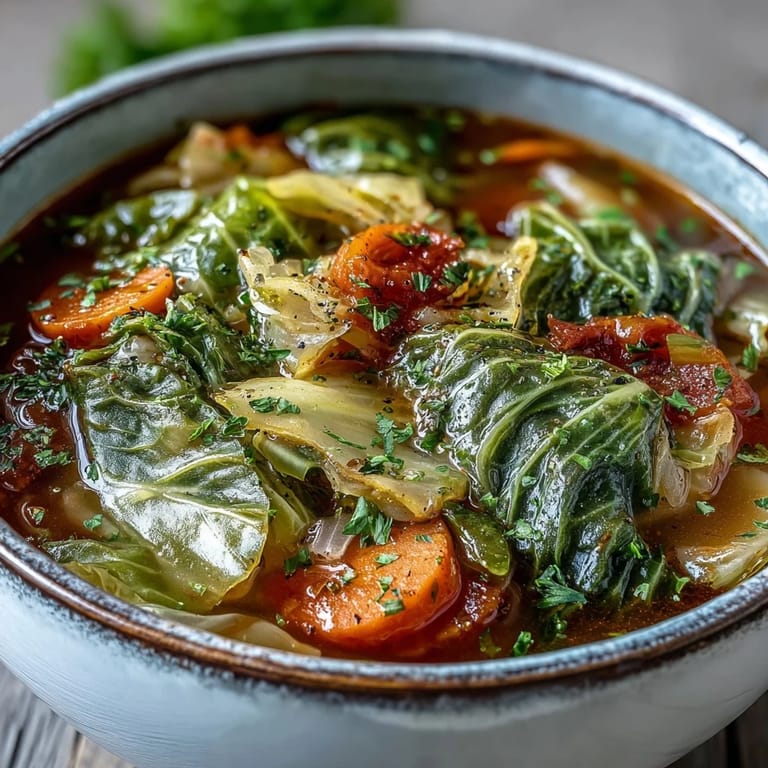
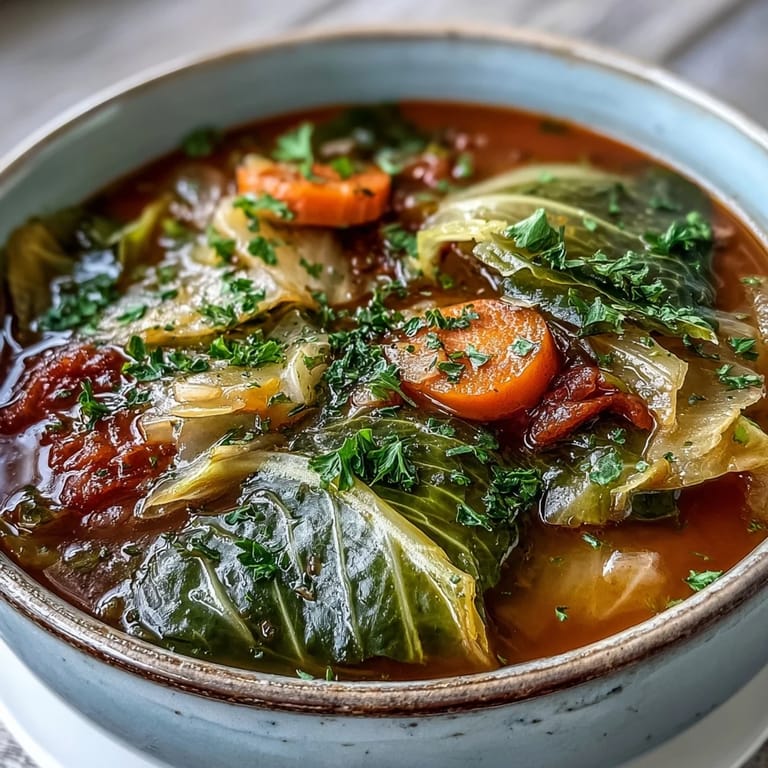
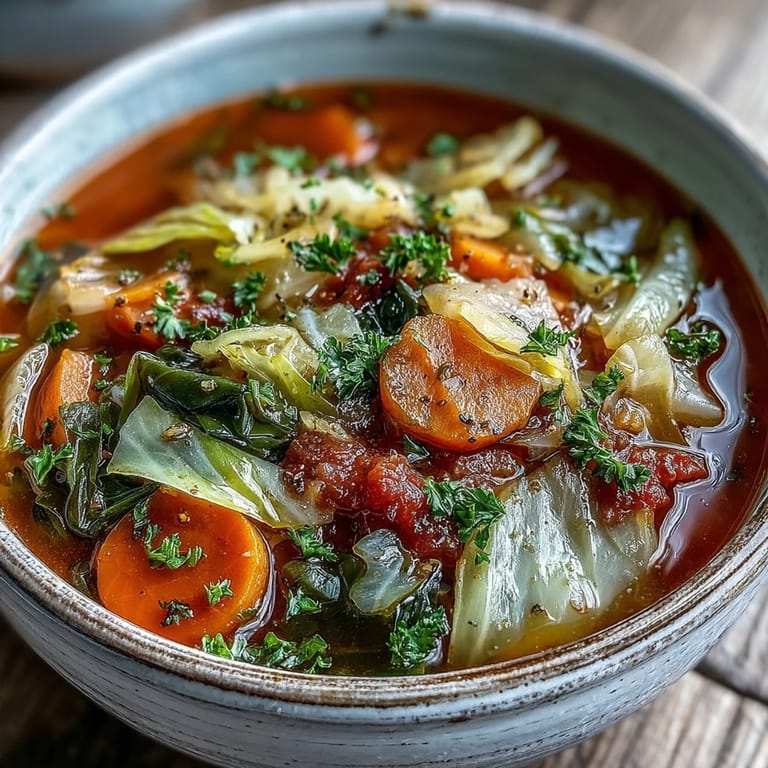
- Fish out the bay leaf, taste the soup, and adjust your seasoning. Ladle it into bowls and top with fresh parsley if you have it—the green catches the light and makes it feel celebratory.
 Save to Pinterest
 There was an afternoon when my daughter helped me chop the cabbage, and she was frustrated because the knife kept slipping. We ended up laughing so hard at her determined face that we nearly forgot to add the broth—and that's when I realized this soup had become less about nutrition and more about the ritual of making something together.
Making It Your Own
This soup is genuinely forgiving once you understand the basic structure. I've added diced potatoes when I wanted something more substantial, stirred in white beans when I had them on hand, and even added a can of diced fire-roasted tomatoes when I wanted a smokier depth. The constant is the vegetable broth and the cabbage—everything else is negotiable based on what you have and what you're craving that particular day.
The Bread Question
Honestly, this soup doesn't strictly need bread, but pairing it with something makes the meal feel complete. A thick slice of rye bread, a hunk of sourdough, or even soft dinner rolls transform it from a light lunch into something that feels more grounding. I've learned that the bread becomes the vehicle for soaking up the broth, which is honestly the best part of the bowl.
Storage and Second Helpings
This soup actually tastes better the next day when the flavors have had time to meld and deepen—I often make a batch specifically knowing I'll eat it for lunch all week. It keeps beautifully in the fridge for four or five days, and it freezes even better if you remove the bay leaf first and store it in containers that leave a little headroom. One warning though: the cabbage softens significantly when reheated, so if you prefer it with some texture, cook the soup slightly under and reheat it gently.
- Cool the soup completely before storing it to avoid condensation that makes vegetables mushy.
- Reheat on the stovetop over medium heat rather than the microwave for more even warming.
- If it thickens too much in the fridge, thin it with a splash of broth or water when you reheat.
 Save to Pinterest
 This soup has become my quiet comfort, the thing I make when I want to slow down and remember that the best meals don't need to be complicated. I hope it becomes that for you too.
Recipe Questions & Answers
- → Can I add protein to this cabbage soup?
Yes, you can add cooked chicken, ground beef, or white beans to make it heartier. Add protein during the last 10 minutes of simmering to heat through.
- → How long does cabbage soup last in the refrigerator?
Store in an airtight container in the refrigerator for up to 5 days. The flavors often improve after a day. Reheat gently on the stovetop or in the microwave.
- → Can I freeze this soup?
Absolutely. Cool completely and freeze in portions for up to 3 months. Thaw overnight in the refrigerator before reheating. The texture remains excellent after freezing.
- → What can I substitute for vegetable broth?
Use chicken broth for a non-vegetarian version, or water with additional seasoning. Bouillon cubes dissolved in water also work well as a substitute.
- → Why is my cabbage soup bland?
Cabbage soup needs adequate salt and acid. Taste and adjust seasoning at the end. A splash of apple cider vinegar or lemon juice can brighten the flavors significantly.
- → Can I use red cabbage instead of green?
Yes, red cabbage works well and adds beautiful color. Note that it may slightly change the soup's color and has a slightly earthier flavor than green cabbage.