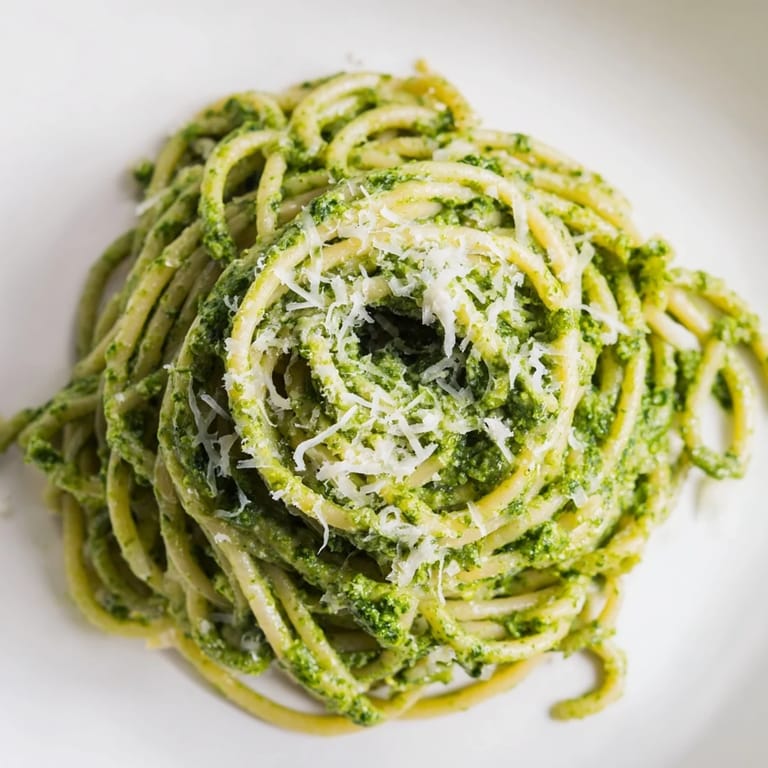
 Save to Pinterest
 The first time I made this pesto, I was completely broke and trying to impress a dinner guest with something that felt fancy but cost about eight dollars total. I stood in the grocery store aisle staring at pine nuts, did some mental math, and grabbed the sunflower seeds instead with a silent apology to tradition. Now honestly prefer it—the seeds have this gentle sweetness that plays so beautifully with basil, and something about the texture feels more grounded, less pretentious. My friend asked for seconds and the recipe has stayed in regular rotation ever since, through feast times and lean times alike.
Last winter during that endless stretch of gray February days, I made a triple batch and brought it to my sister's place when she was sick. She sent me a text three days later saying it was the only thing that actually tasted good through the congestion, which honestly might be the highest compliment a recipe has ever received in my family. There is something about the combination of warm pasta, bright herbs, and that subtle creaminess that feels like being hugged from the inside out.
Ingredients
- 1 cup unsalted sunflower seeds: Toasting these transforms them from bland into something golden and deeply aromatic, so do not skip that step
- 2 cups fresh basil leaves: Pack them down gently but firmly—the more basil, the more vibrant that signature green flavor becomes
- 2 cloves garlic: Fresh cloves give you that raw, spicy bite that mellows beautifully when blended with everything else
- 1/2 cup grated Parmesan cheese: Use the good stuff if you can, freshly grated, since it dissolves into the sauce instead of sitting in salty little clumps
- 1/2 cup extra virgin olive oil: This creates that silky mouthfeel that makes restaurant pesto feel so luxurious
- 1/4 cup water (plus more as needed): The secret weapon for getting the consistency just right without adding more oil
- 2 tablespoons lemon juice: Brightens everything up and keeps the pesto from feeling too heavy or rich
- 1/4 teaspoon salt and black pepper: Start here, but remember you can always add more once it is tossed with the pasta
- 400 g dried pasta: Something with texture catches the sauce beautifully—fusilli holds it in every little crevice
- Salt for pasta water: Make the water taste like the sea, seriously, it seasons the pasta from the inside out
- 1/2 cup heavy cream or plant-based cream: This is what transforms it from standard pesto pasta into something swoon-worthy and restaurant-worthy
Tired of Takeout? 🥡
Get 10 meals you can make faster than delivery arrives. Seriously.
One email. No spam. Unsubscribe anytime.
Instructions
- Get your pasta water going:
- Bring a large pot of salted water to boil—while it heats, start everything else so you are working efficiently
- Toast those seeds:
- Cook sunflower seeds in a dry skillet over medium heat for three to four minutes, shaking occasionally, until they turn golden and fill your kitchen with this incredible nutty smell
- Blend the pesto base:
- In your food processor, combine toasted seeds, basil, garlic, Parmesan, olive oil, lemon juice, salt, and pepper, pulsing until it forms a coarse paste
- Make it creamy:
- Add water and blend until completely smooth, adding a splash more if needed to reach that perfect sauce consistency
- Cook the pasta:
- Drop pasta into boiling water and cook until al dente, then reserve half a cup of pasta water before draining—this liquid gold helps everything come together
- Bring it all together:
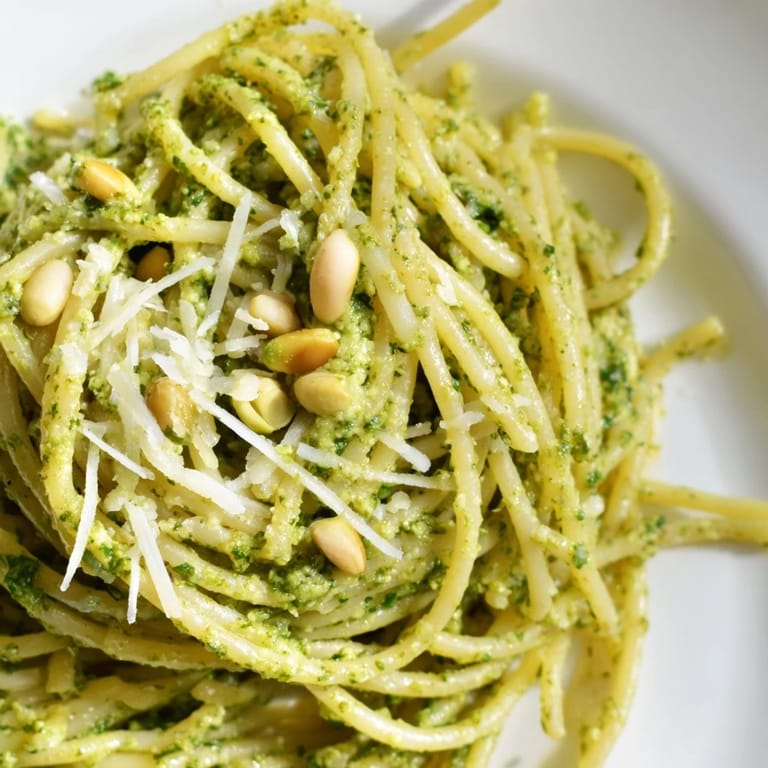
- Return the drained pasta to the pot over low heat, add the pesto and cream, tossing until every strand is coated and glossy, using that reserved pasta water to reach the perfect consistency
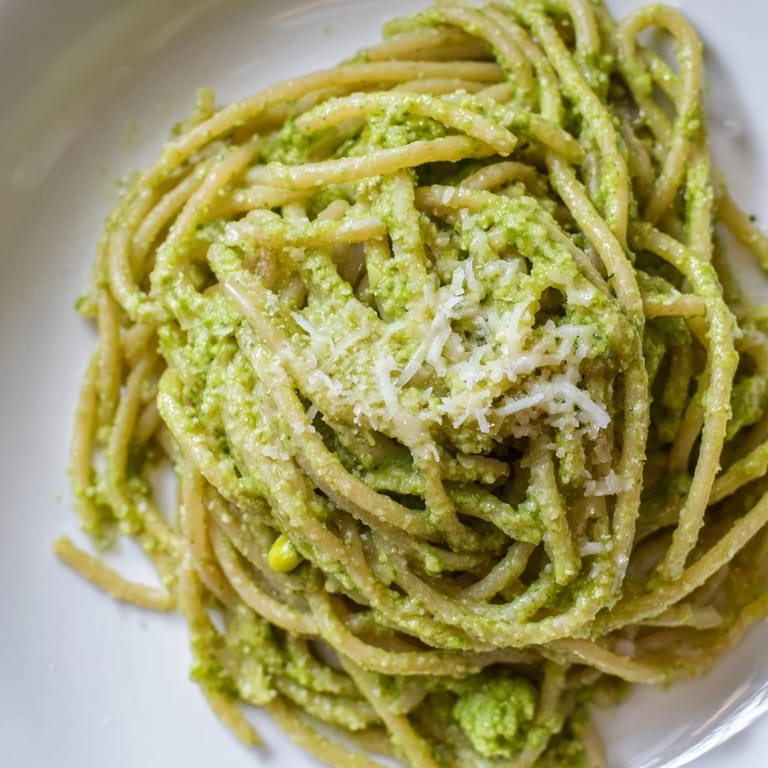 Save to Pinterest
 This recipe has become my go-to for nights when I want comfort food but something that still feels fresh and bright. There is something so satisfying about taking an ingredient as humble as sunflower seeds and turning it into something that feels indulgent and special.
Making It Your Own
Sometimes I throw in a handful of baby spinach right at the end, letting it wilt slightly in the warm pasta, which adds lovely color and makes me feel slightly virtuous about eating greens. Other times, if I am feeling particularly indulgent, I will crisp up some pancetta in the pan before adding the pasta, and those salty little bits throughout make it feel like a completely different dish.
What To Serve Alongside
A simple green salad with a sharp vinaigrette cuts through the richness beautifully, and honestly, there is something about the contrast of cold, crisp lettuce against warm, creamy pasta that just works. If you are feeding a crowd, some crusty garlic bread is non-negotiable for sopping up any extra sauce left in the bowl.
Storage And Make-Ahead Tips
The pesto keeps beautifully in the fridge for about a week, though I recommend storing it with a thin layer of olive oil on top to prevent the basil from oxidizing and turning that sad brown color. You can also freeze it in ice cube trays—each cube is perfect for a single serving of pasta, and there is something incredibly satisfying about having little portions of homemade sauce ready to go on busy weeknights.
- Press plastic wrap directly onto the surface of any leftover pesto before refrigerating to keep it vibrant green
- If freezing, skip the cream and add it fresh when you reheat the pasta for the best texture
- The sauce thickens in the fridge, so let it come to room temperature and thin with a splash of water or pasta water before tossing
 Save to Pinterest
 Hope this becomes one of those recipes you turn to again and again, adjusting and perfecting until it feels completely yours. That is really what cooking is all about.
Recipe Questions & Answers
- → Can I use a blender instead of a food processor?
Yes, a blender works well for making the pesto. You may need to add the water gradually and work in batches to achieve the right consistency. Blend until smooth and creamy, adding more water as needed to reach your desired texture.
- → How do I make this dish dairy-free?
Substitute the Parmesan cheese with nutritional yeast and use unsweetened plant-based cream instead of heavy cream. The nutritional yeast adds a savory, cheesy flavor while keeping the dish completely dairy-free and vegan-friendly.
- → Can I prepare the pesto ahead of time?
Absolutely. Store the pesto in an airtight container in the refrigerator for up to 3 days. You can also freeze it in ice cube trays for longer storage. Simply thaw and reheat gently before tossing with your cooked pasta.
- → What pasta shape works best?
Any pasta shape works well, but penne, fusilli, and spaghetti are excellent choices as they hold the creamy pesto sauce beautifully. Use gluten-free pasta if needed, following the package instructions for cooking time.
- → Why should I toast the sunflower seeds?
Toasting brings out the seeds' natural nutty flavor and creates a more aromatic, flavorful pesto. Toast them for 3-4 minutes over medium heat until golden and fragrant, then let them cool slightly before blending.
- → What adjustments can I make to the consistency?
The reserved pasta water is your best tool for adjusting consistency. Add it gradually while tossing the pasta until you reach your preferred thickness. You can also adjust the water content in the pesto itself before combining with pasta.