 Save to Pinterest
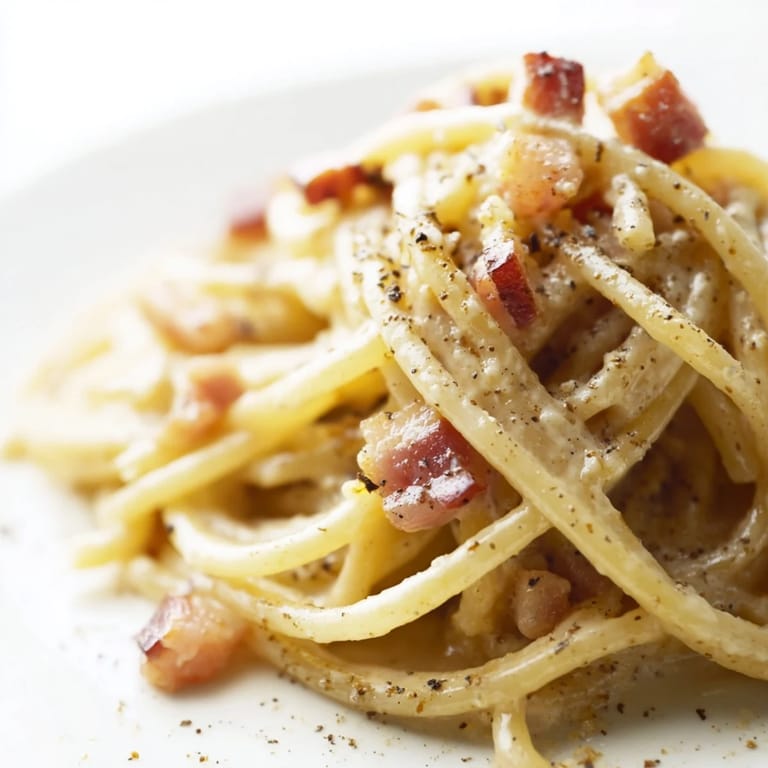
 There's something almost magical about carbonara—it's the kind of dish that proved to me that simplicity isn't a limitation, it's a superpower. I discovered this express version on a weeknight when I was absolutely starving and had maybe twenty minutes before I needed to eat something real. No fancy techniques, no hours of simmering, just eggs, bacon, pasta, and the kind of timing that keeps you sharp in the kitchen. The first time I nailed it, that creamy sauce came together in seconds and I felt like I'd cracked some Roman cooking secret. Now it's my go-to when I want restaurant-quality comfort without the stress.
I remember making this for a friend who'd just moved into a new place with a tiny kitchen and barely any equipment. We stood shoulder to shoulder at her stove, and I watched her face light up when that egg mixture transformed into something creamy instead of scrambled. She kept saying, "How is this even happening?" It became her signature dish to make for dates, which felt like the ultimate compliment to a recipe that asks so little but gives so much.
Ingredients
- Spaghetti: 200 g dried pasta is the foundation—look for a good quality brand with rough texture so the sauce clings better, and don't skip reserving that starchy pasta water, it's liquid gold for creating the sauce.
- Eggs: Use large eggs at room temperature if you can; cold eggs take longer to heat through and you're walking a tightrope between creamy and scrambled.
- Parmesan cheese: Freshly grated makes all the difference—the pre-grated stuff has anti-caking agents that keep it from melting as smoothly, and you'll taste the difference.
- Bacon or pancetta: Rendered bacon fat is doing half the work here, so don't skimp on quality and make sure it gets properly crispy.
- Black pepper: Freshly ground pepper has a brightness that pre-ground can't match, and it's noticeable in something this minimal.
Tired of Takeout? 🥡
Get 10 meals you can make faster than delivery arrives. Seriously.
One email. No spam. Unsubscribe anytime.
Instructions
- Get the water going and start the pasta:
- Fill a large pot with generously salted water and bring it to a rolling boil—this is where your pasta gets seasoned from the inside out. Drop in the spaghetti and stir it right away so it doesn't stick, then cook until it's just shy of fully tender; it'll continue cooking slightly when it hits the hot pan.
- Whisk your sauce base while pasta cooks:
- In a bowl, crack your eggs and whisk them together with the grated Parmesan and black pepper until it looks like a pale, well-combined custard. This is your creamy sauce waiting to happen.
- Crisp up the bacon in your serving skillet:
- Get your large skillet hot over medium heat and let the bacon pieces render slowly, stirring occasionally until they're golden and crackling at the edges. You want them crispy but still tender, not burnt.
- Combine everything off the heat—this is the magic moment:
- Drain your pasta, reserving that starchy water in a measuring cup. Pour the hot, drained pasta directly into the skillet with the bacon and remove it from the heat immediately. Pour in your egg mixture while tossing constantly and vigorously with tongs.
- Build the sauce by adding pasta water slowly:
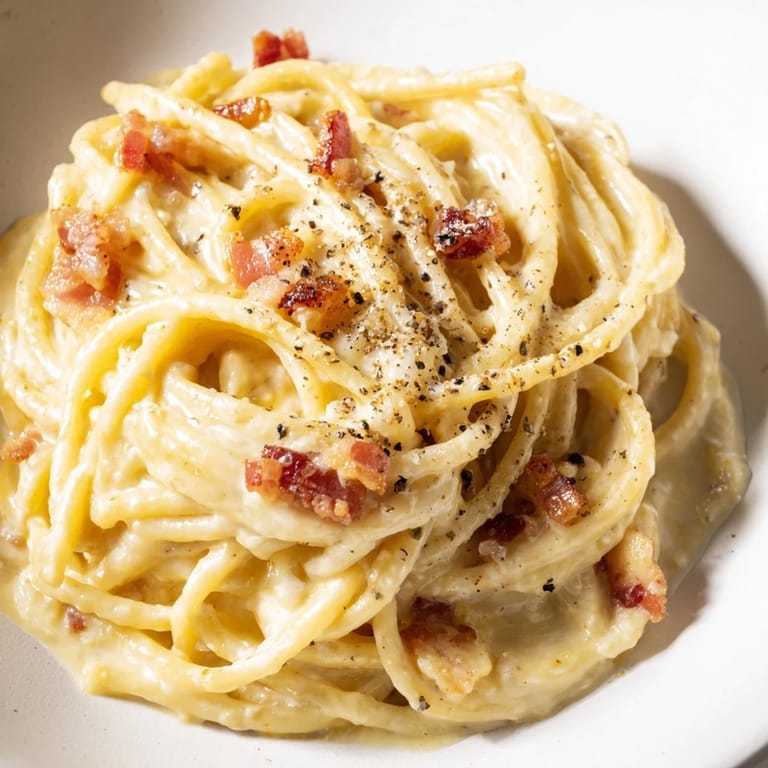
- Start adding splashes of that reserved pasta water, tossing continuously—the starch will help emulsify everything into a silky, creamy sauce that coats every strand. Add just enough until you get that luxurious coating you're after.
- Plate and finish:
- Move everything to bowls or plates right away while it's still hot and glossy, then top generously with extra Parmesan and freshly cracked black pepper.
 Save to Pinterest
 The first time someone told me carbonara was "real food" and not just a pasta shortcut, it completely reframed how I thought about cooking. There's dignity in making something perfect with minimal ingredients, and that's exactly what carbonara taught me.
The Timing Game
Carbonara is all about rhythm and speed—it's one of the few dishes where hesitation can actually work against you. Everything needs to happen in sequence, and there's almost no room for wandering off to check your phone. I actually find this meditative; it forces you to be present and engaged with what you're cooking, which is rare these days. The whole process becomes this brief, intense dance where every thirty seconds matters.
Why This Works So Well
Traditional carbonara uses just eggs, cheese, pasta water, and cured pork—no cream at all. The egg yolks and cheese emulsify with the starchy pasta water to create something that feels indulgent but is actually quite simple chemistry. This express version respects that tradition while being honest about the fact that sometimes you want dinner done in the time it takes to boil water. The beauty of it is that there's nowhere to hide; every ingredient has to earn its place, which means quality matters.
Making It Your Own
The bones of carbonara are pretty strict—eggs, cheese, cured pork, pasta—but there are little ways to make it feel like yours. Some nights I add a whisper of garlic to the bacon, fishing it out before the pasta goes in so you just get the flavor echo. Other times I use Pecorino Romano instead of Parmesan for something sharper and more traditionally Roman. The red pepper flakes are also your friend if you want a subtle heat underneath all that richness.
- If you have guanciale, use it instead of bacon—it's the traditional choice and absolutely worth seeking out if you love this dish.
- A tiny pinch of nutmeg in the egg mixture is barely noticeable but makes the whole thing taste somehow more sophisticated and comforting at once.
- Some people add a small splash of white wine to the bacon, letting it evaporate before adding the pasta—it brightens everything up.
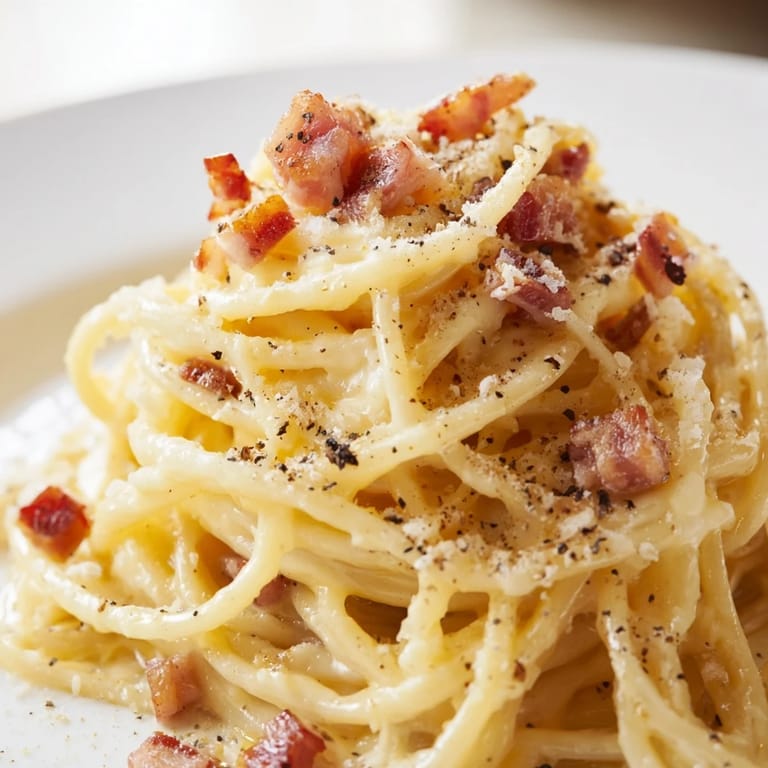 Save to Pinterest
 This is comfort food for people who don't have time to fuss, which somehow makes it taste even better. Make it tonight.
Recipe Questions & Answers
- → How do I prevent eggs from scrambling in the sauce?
Remove the skillet from the heat before adding the egg mixture and toss quickly while gradually adding reserved pasta water to create a smooth, creamy sauce.
- → Can I use pancetta instead of bacon?
Yes, pancetta provides an authentic flavor and a similar crispy texture when cooked properly.
- → What pasta is best for this dish?
Traditional dried spaghetti works well, cooked al dente for the perfect bite and sauce cling.
- → Is it important to reserve pasta water?
Yes, adding reserved pasta water helps loosen the sauce, giving it a silky smooth consistency.
- → Can I add garlic to enhance the flavor?
Adding a clove of minced garlic while frying bacon enhances flavor, but remove it before tossing pasta to keep the sauce smooth.