 Save to Pinterest
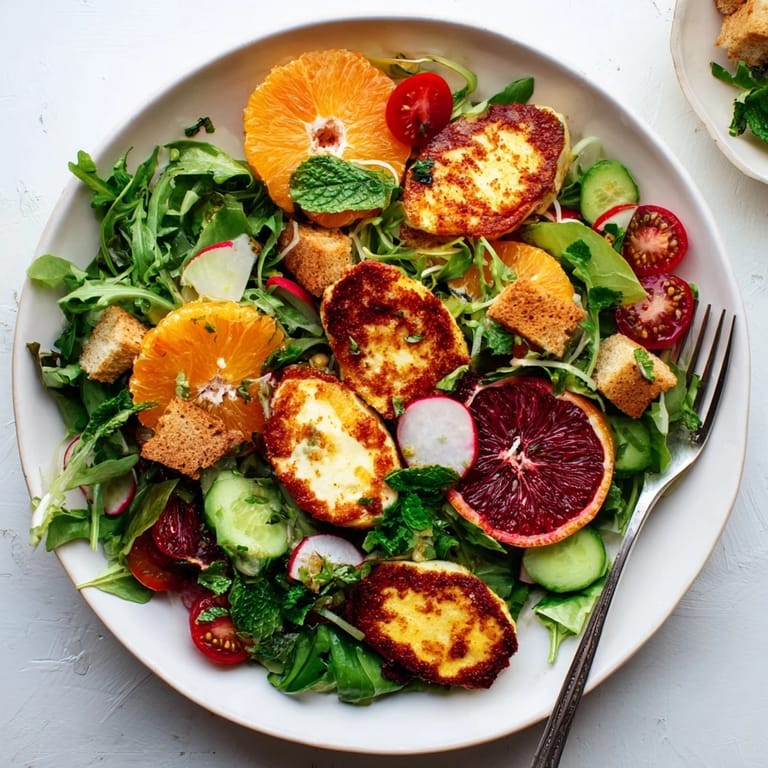
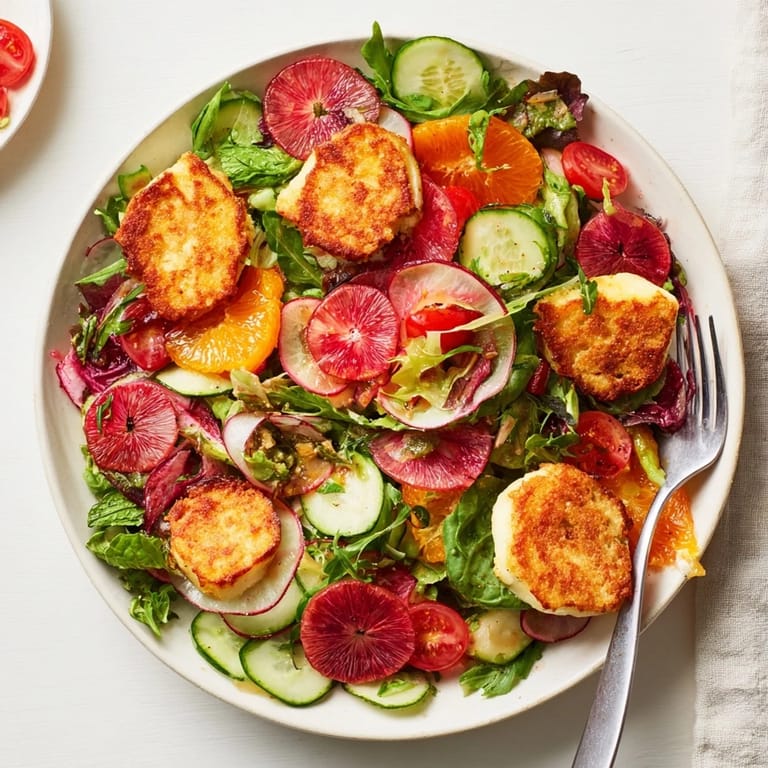
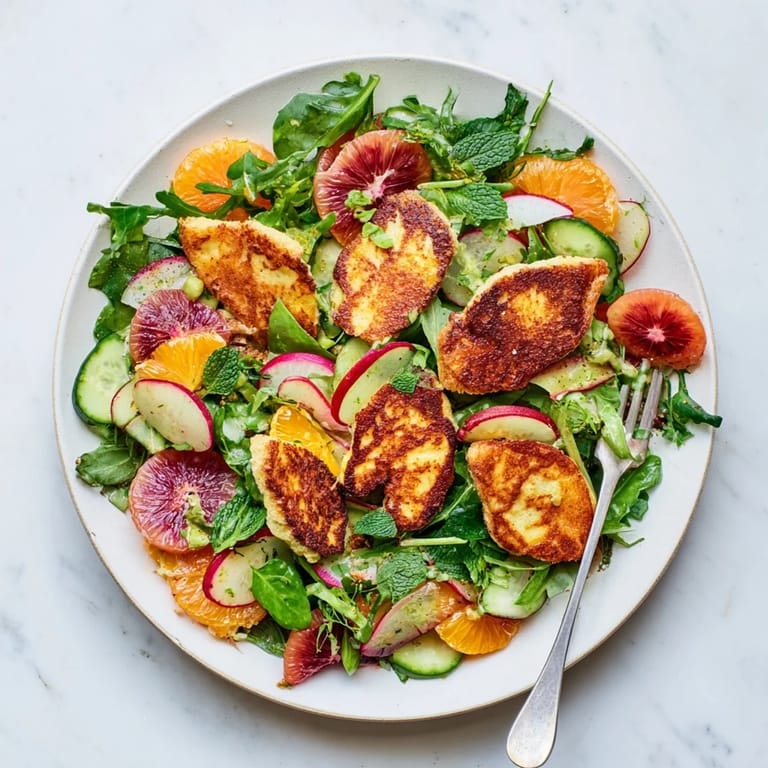
 The first time blood oranges appeared in my winter market basket, I almost regretted buying them, their crimson flesh staining everything they touched. Then that evening, I pan-fried some halloumi and threw together whatever vegetables I had, and suddenly those staining juices became the most gorgeous dressing I had ever seen. Now this salad is what I make when I need something that looks like sunshine but eats like comfort. The way the warm, salty cheese mingles with citrus still feels like magic every single time.
Last winter my sister came over during that bleak stretch where everyone forgets what vegetables taste like. I made this while she watched, and she actually stopped mid-sentence when I placed the bowl on the table, those ruby orange rounds catching the light. We ate standing up in the kitchen, warm halloumi in our mouths, and she asked for the recipe before she even finished her first bite.
Ingredients
- 200 g halloumi cheese, sliced: This Cypriot cheese holds its shape when fried and develops the most incredible golden crust, plus its saltiness balances perfectly with sweet citrus
- 2 blood oranges, peeled and sliced into rounds: Their stunning ruby color and berry-like sweetness make regular oranges feel boring once you have tasted the difference
- 200 g mixed salad greens: I grab whatever looks fresh, usually romaine for crunch, arugula for pepper, and generous handfuls of flat-leaf parsley and mint
- 1/2 cucumber, sliced: Adds refreshing crunch and cool moisture to balance the warm fried cheese elements
- 200 g cherry tomatoes, halved: Little bursts of sweetness and acidity that pop in your mouth alongside the salty halloumi
- 4 radishes, thinly sliced: Their peppery bite cuts through the rich cheese and adds another layer of crisp texture
- 1 small red onion, thinly sliced: Soak these in cold water for 10 minutes if you want to tame their sharpness
- 2 thick slices sourdough bread, cut into cubes: Day-old sourdough transforms into the most satisfying croutons, with a tangy flavor and sturdy crunch
- 2 tbsp olive oil: Coats the bread cubes for even toasting and helps achieve that perfect golden color
- Pinch of sea salt: Just enough to enhance the breads natural flavors without overwhelming the final salad
- 3 tbsp extra virgin olive oil: The base of your dressing, so use something you really like the taste of
- 1 tbsp fresh lemon juice: Bright acidity that wakes up all the other flavors
- 1 tbsp red wine vinegar: Adds depth and tang that lemon alone cannot provide
- 1 tsp ground sumac: This tart, berry-based spice is essential for authentic Levantine flavor and a gorgeous pink hue
- 1 tsp pomegranate molasses: My secret ingredient that adds fruity complexity and a beautiful subtle sweetness
- 1/2 tsp salt: Brings everything together, though you can adjust depending on how salty your halloumi is
- 1/4 tsp black pepper: Freshly cracked adds a gentle warmth that lingers
- 1 tbsp olive oil for frying: A slick amount in the pan helps the halloumi achieve that gorgeous golden crust without sticking
Tired of Takeout? 🥡
Get 10 meals you can make faster than delivery arrives. Seriously.
One email. No spam. Unsubscribe anytime.
Instructions
- Toast the sourdough croutons:
- Preheat your oven to 180°C (350°F) and toss those sourdough cubes with 2 tablespoons olive oil and a pinch of salt until every piece is lightly coated. Spread them on a baking sheet in a single layer and bake for 8 to 10 minutes, turning once halfway through, until they are golden and audibly crisp.
- Whisk together the zesty sumac dressing:
- In a small bowl, combine the olive oil, lemon juice, red wine vinegar, ground sumac, pomegranate molasses, salt, and pepper. Whisk enthusiastically until the mixture emulsifies into a beautifully pinkish dressing, then set aside to let the flavors meld.
- Fry the halloumi until golden:
- Heat 1 tablespoon olive oil in a nonstick skillet over medium heat until it shimmers slightly. Add your halloumi slices in a single layer and fry for 1 to 2 minutes per side until deeply golden, then transfer to a plate lined with paper towels.
- Build your vibrant salad base:
- In a large salad bowl, toss together the mixed greens, cucumber slices, cherry tomato halves, thinly sliced radishes, and red onion until they are evenly distributed.
- Assemble the gorgeous finished salad:
- Arrange those stunning blood orange rounds on top of the greens, then add the warm fried halloumi and your freshly toasted sourdough croutons. Drizzle the dressing generously over everything and toss gently to combine.
 Save to Pinterest
 What started as a way to use up beautiful blood oranges has become the salad I make for birthday dinners and impromptu Tuesday night celebrations alike. Something about those ruby wheels against the golden cheese makes people feel like they are eating at a restaurant, even though it comes together in under half an hour.
Making This Your Own
Once you have the base down, this salad welcomes all sorts of creative variations. I have added toasted pistachios for extra crunch, swapped in ruby grapefruit when blood oranges were nowhere to be found, and even thrown in pomegranate arils for double the jewel-like beauty. The halloumi is non-negotiable in my house, but grilled tofu works beautifully if you need dairy-free.
Timing The Perfect Batch
The key to this salad is serving it while the halloumi is still warm and the croutons are at their crispest. I always fry the cheese last and toss everything together right at the last moment, because that temperature contrast is part of what makes it so extraordinary. The dressing can be made hours ahead and kept at room temperature, which helps the flavors develop beautifully.
Leftovers And Storage
If you have leftovers, keep the undressed salad components separate and store them in the refrigerator. The croutons will lose their crunch overnight, but you can refresh them in a warm oven for a few minutes. The dressing keeps beautifully in a sealed jar for up to a week, and actually tastes even better after the flavors have had time to mingle.
- Toast extra croutons while the oven is hot and store them in an airtight container for quick salads all week
- Slice extra blood oranges and keep them in their own container, as their juices can make other ingredients soggy
- Halloumi can be fried ahead and gently reheated in a pan, though fresh is always superior
 Save to Pinterest
 There is something deeply satisfying about a salad that feels this special yet comes together so effortlessly. I hope this recipe brings as much joy to your table as it has to mine.
Recipe Questions & Answers
- → What makes fattoush different from other salads?
Fattoush is a Levantine bread salad distinguished by its use of fried or toasted bread pieces that add satisfying crunch. This version elevates the traditional concept with protein-rich halloumi and seasonal blood oranges.
- → Can I prepare the components ahead of time?
Yes, you can prepare the dressing and croutons up to 24 hours in advance. Store them separately in airtight containers. Assemble the salad just before serving to maintain the crisp texture of the croutons and freshness of the greens.
- → What can I substitute for halloumi?
Paneer, feta, or firm tofu work well as alternatives. For a similar salty bite, try sliced paneer or extra-firm tofu marinated in olive oil and lemon. If using feta, skip the frying step and crumble it over the salad.
- → Why use sumac in the dressing?
Sumac adds a tangy, slightly fruity flavor that's essential to authentic Middle Eastern cuisine. Its deep red color and citrus-like brightness perfectly complement the sweetness of blood oranges and richness of fried halloumi.
- → How do I prevent the croutons from getting soggy?
Ensure your croutons are completely cooled before adding them to the salad. Toss everything together just before serving rather than letting it sit. The dressing should coat the ingredients evenly without soaking through the bread.
- → Is blood orange essential or can I use regular oranges?
Regular oranges work perfectly fine if blood oranges aren't available. You'll lose the stunning red color, but the sweetness and citrus balance remain similar. Navel or cara cara oranges make excellent substitutes.