 Save to Pinterest
 There's something about a rice bowl that feels both humble and intentional, like you're composing a small edible landscape. I discovered this particular combination on a quiet weeknight when I had salmon and chicken in the fridge but couldn't decide between them—so I didn't. The marinade came together almost by accident, the kind of thing you throw together when you're not overthinking it, and somehow it turned into this vibrant, balanced bowl that my family asked for again the next day.
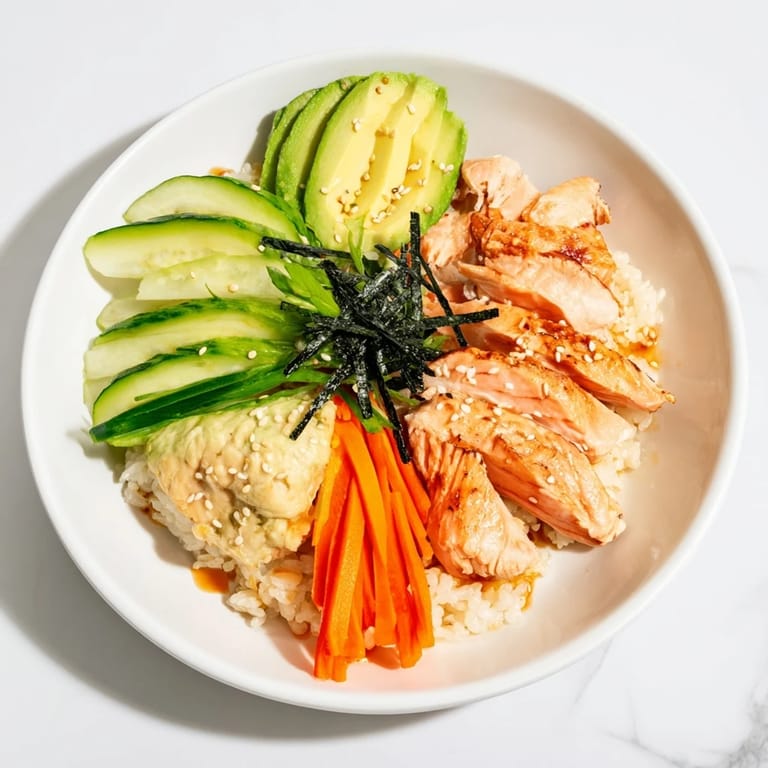
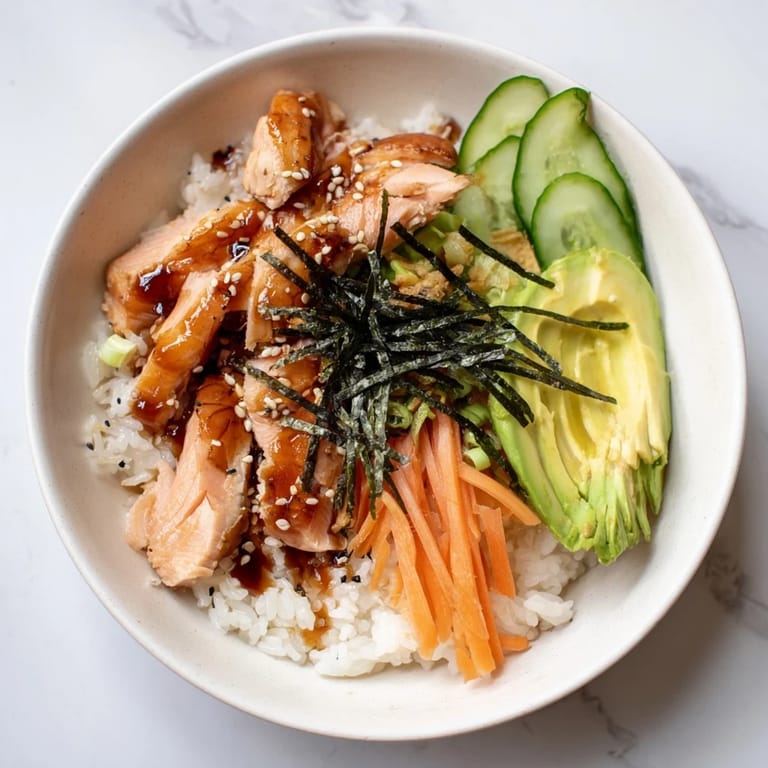
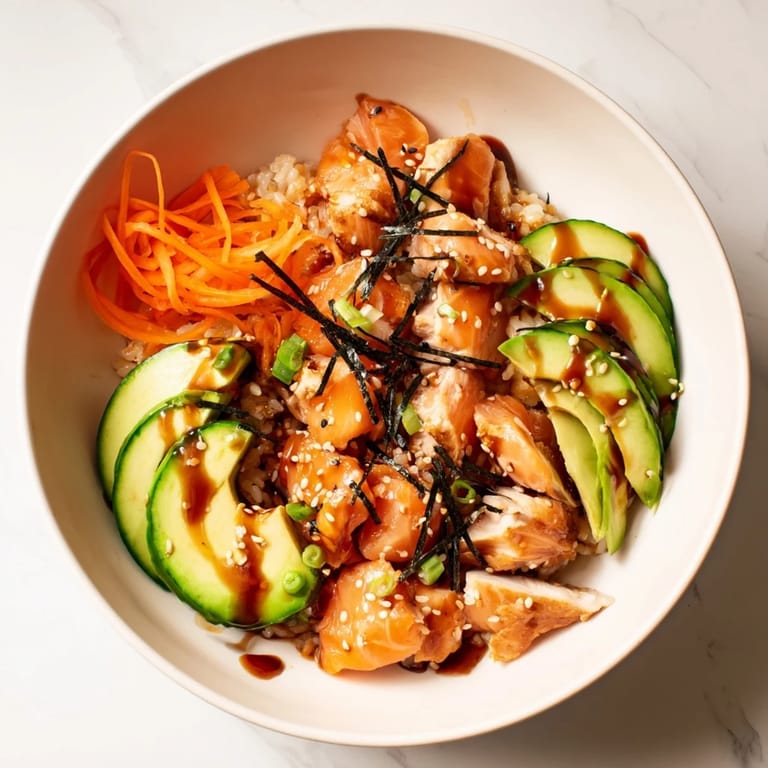
I remember bringing bowls of this to a friend who'd just moved into a new place, and watching her face light up when she saw the colors—the golden salmon, the pale pink chicken, the bright green avocado all arranged like they belonged together. She took photos before eating, which made me realize how satisfying it is to make something that looks as good as it tastes.
Ingredients
- Skinless salmon fillets (about 300 g total): Salmon brings richness and those omega-3s your body will thank you for; choosing fillets over steaks means easier portioning and less waste.
- Boneless, skinless chicken thighs (about 250 g total): Thighs stay juicier than breasts when cooked quickly, and they absorb the marinade beautifully.
- Soy sauce, mirin, sake, sesame oil, and honey: These five ingredients create a marinade that tastes like someone who actually knows Japanese cooking made it, even though you just whisked them together.
- Japanese short-grain rice (2 cups): Short-grain rice has a slight stickiness that makes it perfect for bowls; regular long-grain rice will feel wrong by comparison.
- Avocado, cucumber, carrot, and scallions: These fresh toppings are your texture and crunch—don't skip them or the bowl loses its magic.
- Toasted sesame seeds and nori: These add a toasted, slightly nutty finish that makes the whole thing feel complete.
- Ice cubes (for reheating): This is the hack that changed how I think about leftover rice; the ice steams it gently instead of turning it hard.
Tired of Takeout? 🥡
Get 10 meals you can make faster than delivery arrives. Seriously.
One email. No spam. Unsubscribe anytime.
Instructions
- Start with the rice:
- Rinse the rice under cold water until the water runs clear—this removes the starch and prevents gumminess. Cook it in a rice cooker or pot with 2 1/2 cups water, let it steam, then fluff gently with a fork.
- Prepare the marinade:
- Whisk together soy sauce, mirin, sake, sesame oil, and honey until the honey dissolves. Divide it between two shallow dishes and add salmon to one and chicken to the other, letting them sit for at least 10 minutes.
- Cook the chicken:
- Heat a nonstick skillet over medium heat and lay the chicken thighs skin-side down first, cooking for 4–5 minutes until golden and crispy-looking. Flip and cook another 4–5 minutes until cooked through, then remove and let rest before slicing.
- Cook the salmon:
- In the same pan, add the salmon fillets and cook for 2–3 minutes per side until just cooked through—it should still have a touch of translucence in the center if you like it tender. Remove and flake gently with a fork.
- Prep your toppings:
- Slice the avocado lengthwise, scoop it out, and fan the slices; thinly slice the cucumber; julienne the carrot into thin matchsticks; and finely slice the scallions so they're almost confetti-like.
- Make the sauce:
- Whisk soy sauce, rice vinegar, sesame oil, and sugar together in a small bowl until the sugar dissolves completely.
- Assemble the bowls:
- Divide the warm rice among four bowls and arrange the chicken, salmon, avocado, cucumber, carrot, and scallions in sections over the rice. Drizzle with the sauce and sprinkle with toasted sesame seeds and nori strips.
- The ice cube hack (if reheating):
- If you're reheating pre-assembled bowls, place an ice cube right in the center of the rice, cover with a microwave-safe lid, and microwave on high for 1–2 minutes. The ice melts slowly and steams the rice from the inside out, keeping it moist instead of hard.
 Save to Pinterest
 One evening I made extra bowls and my teenage niece, who eats nothing but pizza and cereal, actually finished hers and asked for seconds. That's when I knew this recipe wasn't just good—it was the kind of food that brings people together without them even realizing they're eating something that's also genuinely good for them.
The Magic of Simplicity
What makes this bowl work isn't complexity—it's balance. The cool, creamy avocado plays against the warm, slightly sweet protein; the crisp vegetables give texture to the soft rice; the sauce ties everything together without overwhelming it. I've learned that the best Japanese home cooking is about respecting each ingredient enough to let it shine instead of drowning it in sauce.
Timing and Prep
You can prep the vegetables hours ahead and keep them in separate containers—the only thing you can't rush is cooking the proteins and rice, which is why this still feels manageable on a busy night. I usually chop everything during my lunch break, so when I get home, it's just a matter of heating the pan and assembling. That small act of planning ahead makes the whole evening feel less frantic.
Endless Variations
I've made this bowl with shrimp instead of salmon, with edamame instead of avocado, even with crispy tofu for vegetarian nights. The structure stays the same, but the bowl becomes whatever you need it to be. The beauty of a rice bowl is that it's a framework, not a rigid rule.
- Swap proteins based on what you have—shrimp, tofu, or thinly sliced beef all work beautifully.
- Seasonal vegetables like cucumber in summer or roasted squash in winter keep the bowl feeling fresh year-round.
- Add a fried egg on top if you want richness, or drizzle with sriracha if you like heat.
 Save to Pinterest
 This bowl is the kind of meal that nourishes without feeling like a chore, the kind of food you make for yourself on a regular Tuesday and also wouldn't hesitate to serve to someone you want to impress. That's the sweet spot I'm always reaching for in the kitchen.
Recipe Questions & Answers
- → How does the ice cube hack improve reheating?
Placing an ice cube on the rice while microwaving creates steam that keeps the rice moist and prevents drying out during reheating.
- → Can I substitute the proteins in this bowl?
Yes, tofu works well as a vegetarian substitute for both salmon and chicken, maintaining the bowl's nutritious balance.
- → What type of rice is best for this dish?
Japanese short-grain rice is ideal as its sticky, fluffy texture complements the bowl's layered ingredients.
- → How long should I marinate the proteins?
Marinate the salmon and chicken for at least 10 minutes to allow the soy and mirin flavors to infuse properly.
- → Are any optional toppings recommended?
Nori strips and toasted sesame seeds add bold flavor and crunch, while sliced avocado balances richness with creaminess.