 Save to Pinterest
 There's something about standing over a bubbling pot of tomato sauce that makes you feel like you're in a Roman kitchen, even if you're a thousand miles away. The first time I made arrabbiata, I was intimidated by its simplicity—just tomatoes, garlic, and chili—but that's exactly what makes it brilliant. No cream to hide behind, no fancy technique to master; the magic is in respecting each ingredient and letting them sing together. I've made it dozens of times since, and it never disappoints when you need something bold and honest on the table fast.
I remember making this for my neighbor who'd just returned from Rome with stories about eating arrabbiata at a tiny trattoria near the Colosseum. She was skeptical when I said I could recreate it at home, but the moment she tasted it, her eyes lit up—she'd found that same memory in the sauce. Since then, it's become the dish I make when I want to transport someone somewhere warm and lively without leaving the kitchen.
Ingredients
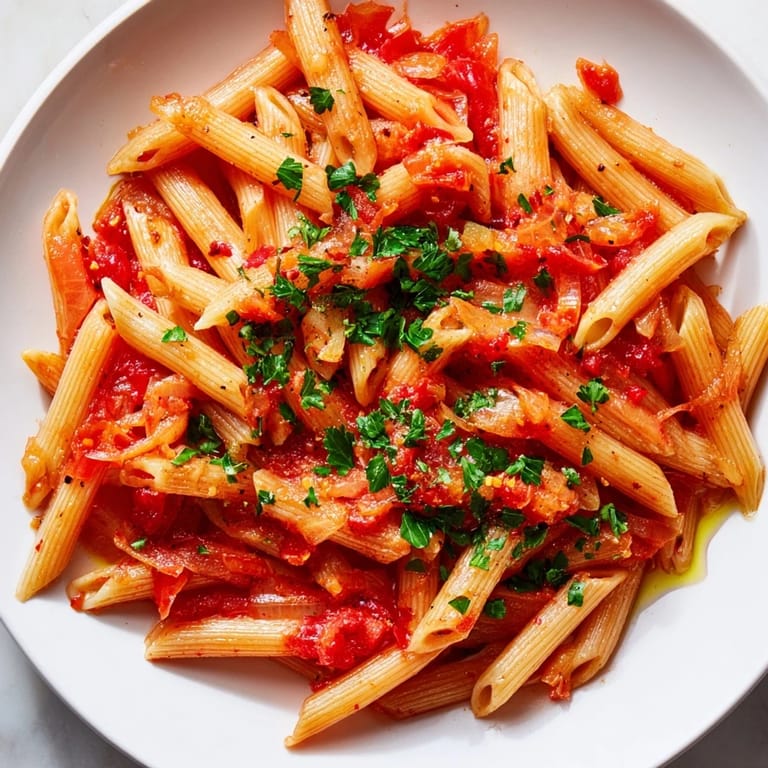
- Penne rigate (400 g): The ridges catch every drop of sauce, so the pasta becomes more than just a vehicle—it's part of the experience, holding onto that fiery tomato coating.
- Extra virgin olive oil (3 tbsp): This is your base for everything, so choose one you actually enjoy tasting; cheap oil tastes cheap here where it can't hide.
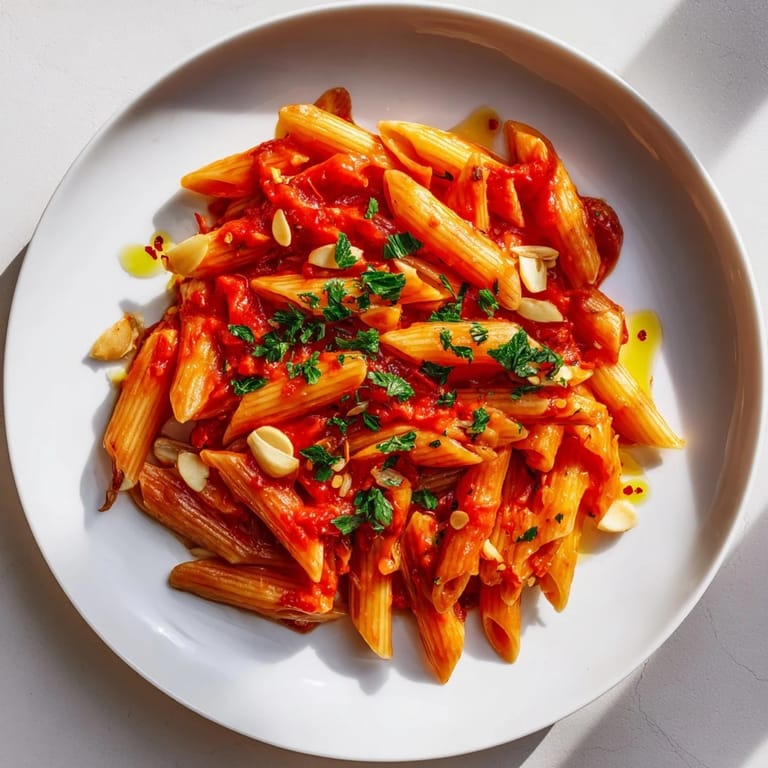
- Garlic cloves (4 large, thinly sliced): Slice them yourself rather than using minced; whole slices stay tender and sweet instead of turning bitter and hard.
- Red chili flakes (1–2 tsp): Start with 1 tsp if you're unsure, because you can always add more heat but you can't take it back once it's in.
- Peeled whole tomatoes (800 g): Crush them by hand or fork—that rough texture matters, giving you little bursts of tomato sweetness rather than a uniform paste.
- Sea salt and black pepper: Taste as you go; the salt brings out the tomato's natural brightness, and fresh pepper adds a whisper of warmth.
- Fresh flat-leaf parsley (2 tbsp, finely chopped): Don't skip this; it's the final green note that keeps the dish from feeling heavy despite its bold spice.
Tired of Takeout? 🥡
Get 10 meals you can make faster than delivery arrives. Seriously.
One email. No spam. Unsubscribe anytime.
Instructions
- Bring your pasta water to a rolling boil:
- Use a large pot so the pasta has room to move freely, and salt the water generously—it should taste like the sea. This is your only chance to season the pasta itself.
- Get the sauce started while pasta cooks:
- Warm your olive oil over medium heat and let it get to know the sliced garlic slowly; you're looking for fragrance and a slight golden edge, not brown (that turns bitter). The chili flakes bloom in the warm oil, releasing their heat into every drop.
- Build the sauce with tomatoes:
- Pour in your crushed tomatoes and let them simmer uncovered for 12–15 minutes, stirring occasionally so nothing sticks to the bottom. The sauce should thicken slightly and the raw tomato taste mellows into something deeper.
- Marry the pasta and sauce:
- Drain the pasta but save that starchy water—it's liquid gold for loosening the sauce. Toss the hot penne right into the skillet, using a splash of pasta water to help the sauce coat every ridge evenly.
- Finish with freshness:
- Remove from heat, scatter the parsley across the top, and drizzle with a little more olive oil to add shine and richness. This last touch of oil smooths out the heat and makes the whole dish feel luxurious.
 Save to Pinterest
 The first time someone told me they loved arrabbiata more than any other pasta, I understood why—there's no room for error, no cream to soften mistakes, just your ingredients and your attention. It taught me that sometimes the most elegant food isn't complicated; it's honest.
The Heat Philosophy
Arrabbiata means "angry" in Italian, and that heat is a feature, not a bug. The chili flakes build gradually as you eat, creating a warm glow rather than a painful blast. If you're new to spice, start with 1 teaspoon and taste halfway through simmering; you can always stir in another pinch, but you're working with heat that's meant to enhance, not overwhelm. The beauty of this dish is that the tomatoes and garlic balance the fire, so it never feels aggressive—just awake and alive.
Wine and Timing
This is a dish that drinks well—a crisp Verdicchio or light Chianti feels like the natural partner. The acidity in the wine cuts through the richness of the olive oil and echoes the brightness of the tomatoes. I've found that arrabbiata tastes best when you eat it without distractions, fully present with each bite, so set the table nicely and give this simple dish the attention it deserves.
Variations and Honest Additions
Purists will tell you that arrabbiata is never made with cream, cheese, or meat, and they're right—the beauty is in that clarity. That said, if you want to bend the rules in your own kitchen, a sprinkle of Parmesan at the table is traditional in some parts of Rome, and nobody's going to arrest you. Fresh anchovies or a tin of good sardines stirred in just before serving add a savory depth that some people swear by, though traditionalists might raise their eyebrows.
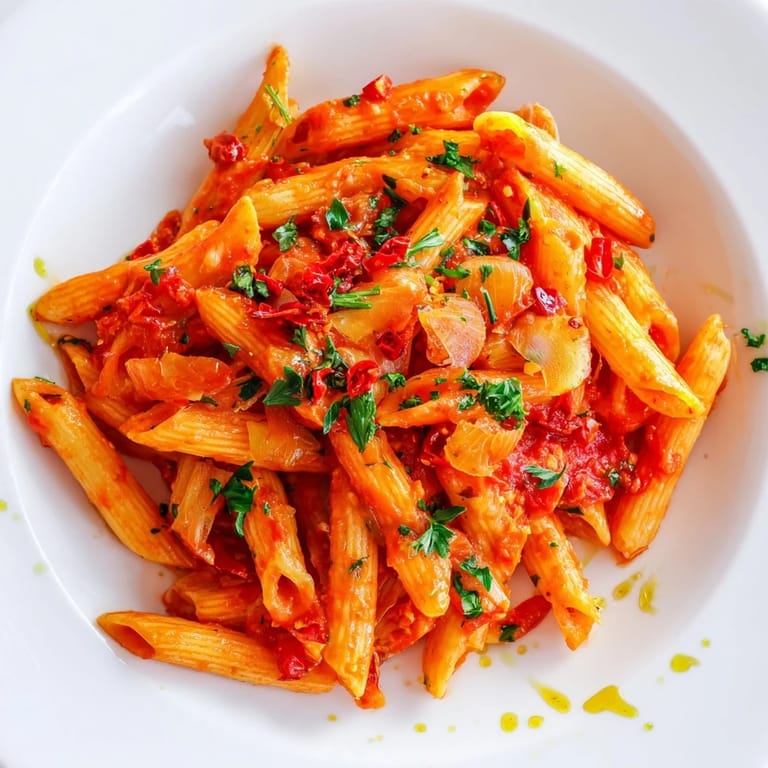
- A small red onion, thinly sliced and cooked with the garlic, adds sweetness that balances heat beautifully.
- Fresh red chili peppers, sliced thin, can replace flakes if you prefer a slightly milder, fresher heat.
- A tiny splash of red wine vinegar at the end brightens everything and adds complexity that keeps people guessing.
 Save to Pinterest
 There's freedom in a dish this simple, and power too. Make it when you want to remember why you love cooking in the first place.
Recipe Questions & Answers
- → How do I adjust the spiciness level?
Modify the amount of red chili flakes to your preferred heat, adding less for mild or more for extra spice.
- → What type of pasta works best?
Penne rigate is ideal for holding the sauce well, but other tubular pastas can be used as substitutes.
- → Can I prepare the sauce in advance?
Yes, the tomato-based sauce can be made ahead and gently reheated before combining with pasta.
- → What garnishes complement the dish?
Fresh parsley adds color and brightness, and a drizzle of extra virgin olive oil enhances richness.
- → How should I cook the pasta for best texture?
Cook pasta to al dente in salted boiling water, reserving some pasta water to adjust sauce consistency.