 Save to Pinterest
 The first time I made a poke bowl at home, I was chasing that feeling of sitting by a beach somewhere, chopsticks in hand, with the ocean smell still in my hair. I'd eaten poke in a small shop in Honolulu years ago and never quite forgotten it, so one Tuesday evening I decided to stop ordering takeout and just build one myself. The magic, I realized, wasn't in fancy equipment or hard-to-find ingredients, but in respecting the fish, trusting the simple marinade, and letting everything taste like itself.
I made this for friends who were skeptical about eating raw fish, and I still laugh remembering their faces after the first bite. One of them asked if I'd secretly trained as a sushi chef, and I almost didn't tell her it took me fifteen minutes. That's when I understood that good food doesn't need to announce how simple it is.
Ingredients
- Sushi-grade salmon or tuna (400 g): This matters more than anything else in the bowl, so buy from a fishmonger you trust and ask them to cube it fresh or do it yourself with a sharp knife within an hour of eating. The quality of the fish is everything.
- Soy sauce (2 tbsp): Use tamari or certified gluten-free soy sauce if you need it, but don't skip the salt it brings to the marinade.
- Sesame oil (1 tbsp): A small amount goes a long way, warming the whole bowl with a toasted, nutty depth.
- Rice vinegar (1 tbsp): This adds brightness without harshness, cutting through the richness of the fish and avocado.
- Freshly grated ginger (1 tsp): Freshly grated makes a difference; bottled will taste flat and tired by comparison.
- Honey or maple syrup (1 tsp): Just enough to balance the salt and vinegar with a whisper of sweetness.
- Garlic clove (1 small, minced): One clove is all you need; more will overpower everything else.
- Mixed salad greens (120 g): Whatever is crisp and fresh at your market, though peppery arugula or tender baby spinach add real character.
- Cucumber (1 medium, thinly sliced): The cool crunch that keeps the bowl from feeling heavy.
- Avocado (1 large, sliced): Add this right before serving or it will brown, and use a ripe but not mushy one.
- Carrots (2 small, julienned): Sweet and raw, they add both color and texture contrast.
- Cooked sushi rice or brown rice (120 g optional): Rice makes it more substantial if you want lunch rather than a side dish.
- Toasted sesame seeds (2 tbsp): The final nutty crunch that ties everything together.
- Scallions (2 tbsp sliced): Fresh and bright, they remind you that this is alive and vibrant.
- Nori (1 sheet, cut into strips): The ocean flavor in a bite, something you can't replicate any other way.
- Pickled ginger (to serve): A palate cleanser between bites and a nod to sushi tradition.
- Red chili (1 small, sliced, optional): For heat and color if that's your style.
Tired of Takeout? 🥡
Get 10 meals you can make faster than delivery arrives. Seriously.
One email. No spam. Unsubscribe anytime.
Instructions
- Whisk the marinade:
- In a small bowl, combine the soy sauce, sesame oil, rice vinegar, ginger, honey, and garlic. Stir until the honey dissolves and everything smells like something you want to eat immediately. Taste it; you should get salt, tang, and warmth all at once.
- Marinate the fish:
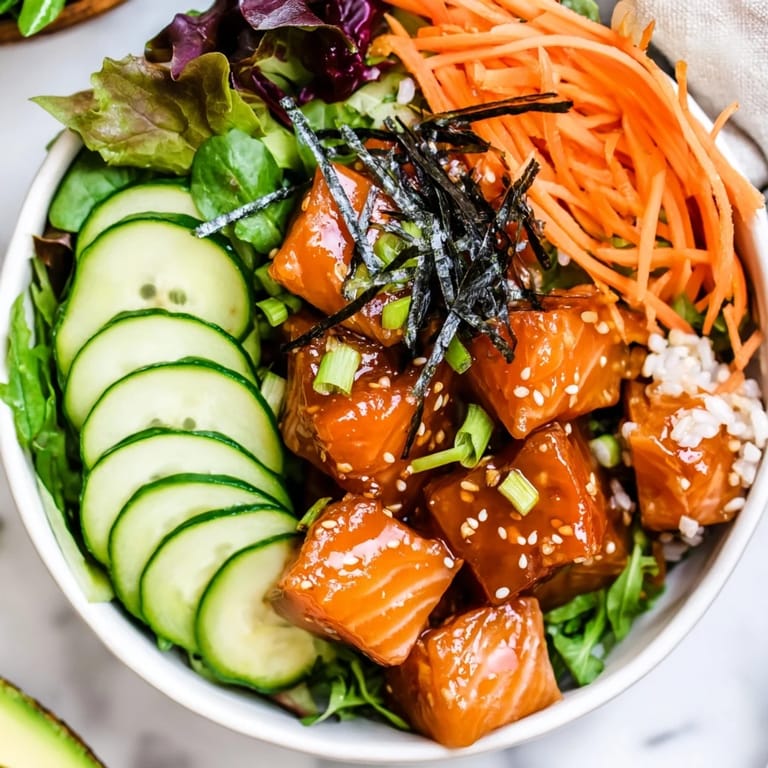
- Add your cubed fish to the bowl and gently toss it in the marinade, being careful not to break the delicate pieces. Cover and refrigerate for at least 10 minutes, which gives the flavors time to settle into the fish while you prep everything else.
- Arrange the base:
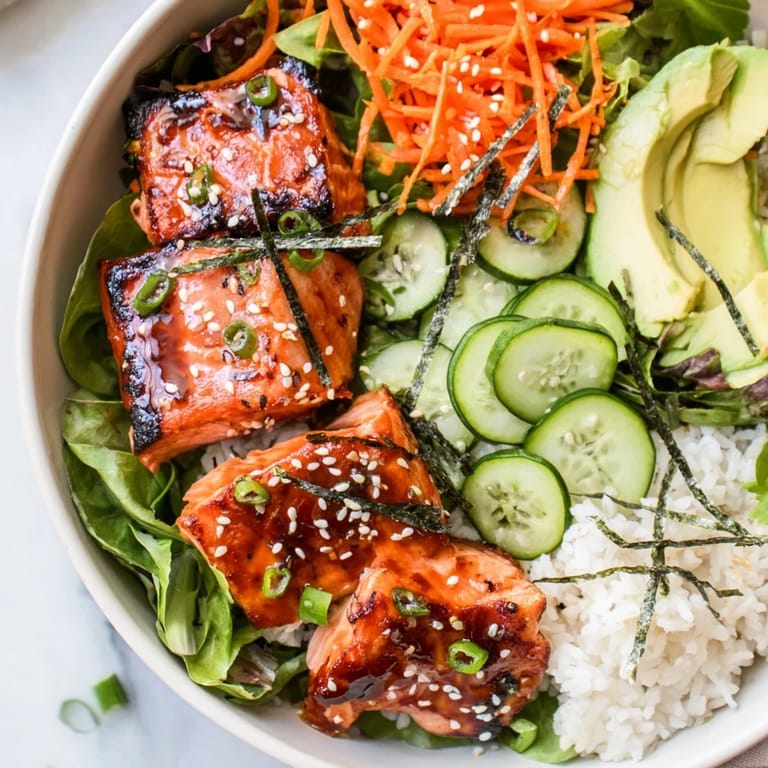
- Divide your greens, cucumber, avocado, and carrots among four bowls or plates, creating an appealing landscape of colors and textures. If you're using rice, add it now as a foundation for the other ingredients.
- Add the marinated fish:
- Spoon the fish directly onto each salad base, and don't waste the extra marinade, which has become a dressing; drizzle it right over the top. This is where the bowl comes alive.
- Garnish generously:
- Scatter sesame seeds, scallions, and nori strips over the top, then add a small pile of pickled ginger and a few slices of chili if you like heat. The toppings aren't decoration; they're the final flavor moment.
- Serve right away:
- Eat it immediately while everything is still cold and crisp and the fish is at its best. This bowl doesn't improve with waiting.
 Save to Pinterest
 There's a moment between assembling the bowl and eating it, right when you see all those colors and textures you've carefully chosen come together, that feels almost meditative. That's when I know I made the right choice not to order it.
Building a Better Bowl
The base of your bowl matters as much as the fish. I used to pile everything into one greens, carrots, cucumber, the works and it never felt quite balanced until I started thinking about texture and temperature. Now I use sturdy romaine or spinach as my foundation because they hold up without wilting, and I add the delicate avocado last so it doesn't bruise against other vegetables. A restaurant trick I borrowed: keep everything cold, even the plates if you have time to chill them.
Marinade Mastery
The marinade is deceptively simple, but balance is everything. I learned this the hard way by making one that was too salty, then too sweet, then too gingery. Now I always taste it before the fish goes in, and I adjust with a tiny splash of vinegar or a touch more honey until it tastes bright and alive. The soy sauce brings umami, the sesame oil adds warmth, the ginger brings heat, and the honey is there to smooth all the edges.
Serving and Variations
This bowl loves company and flexibility. You can serve it over warm rice if you want something more filling, or skip the rice entirely for a lighter meal. The vegetables are suggestions, not laws; use what looks good at your market. Some days I add edamame for protein, other times I throw in shredded radish for extra crunch. The marinade stays the same, and it always works.
- For vegetarian, substitute the fish with cubed marinated tofu or tempeh, using the same marinade for the same amount of time.
- Pair with a crisp Sauvignon Blanc or a light Japanese beer to complement the fish and ginger.
- Make it gluten-free by using tamari instead of regular soy sauce, and double-check all labels.
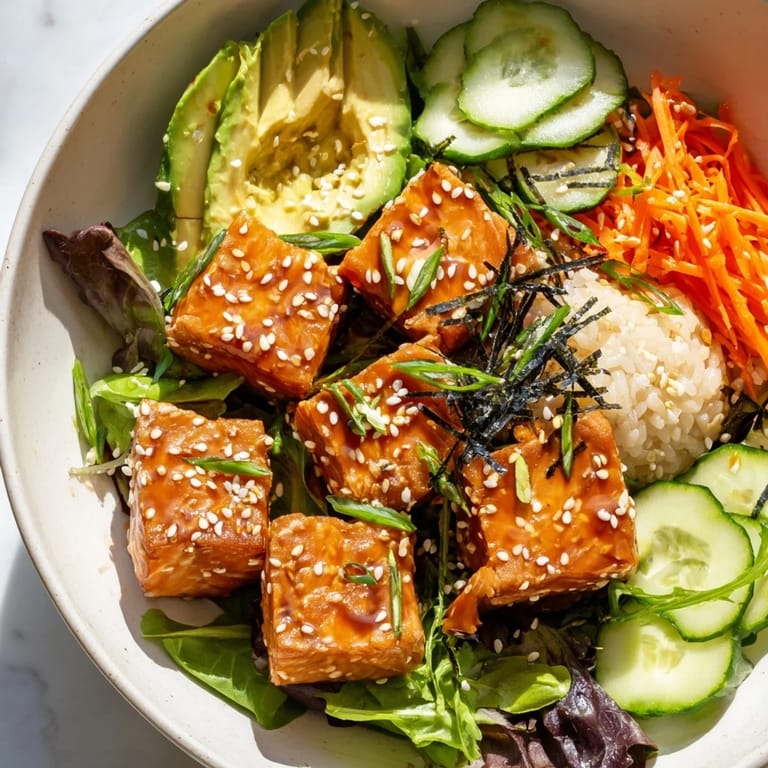 Save to Pinterest
 Making a poke bowl at home is a small act of self-care that tastes like vacation. Once you've made it once, you'll find yourself making it again and again.
Recipe Questions & Answers
- → What type of fish is best for this bowl?
Sushi-grade salmon or tuna cubes work best for their fresh texture and flavor. They marinate well and provide a rich taste.
- → Can I substitute the fish for a vegetarian option?
Yes, diced marinated tofu or tempeh can replace the fish for a satisfying vegetarian alternative.
- → Is sushi rice necessary for this dish?
Sushi rice adds a traditional base, but you can also use brown rice or omit the rice altogether for a lighter version.
- → How long should the fish marinate?
Marinate the fish for at least 10 minutes to absorb the tangy soy-ginger flavors without overpowering its freshness.
- → What are good complementary toppings?
Toasted sesame seeds, sliced scallions, nori strips, pickled ginger, and a hint of chili add texture and enhance flavors.