 Save to Pinterest
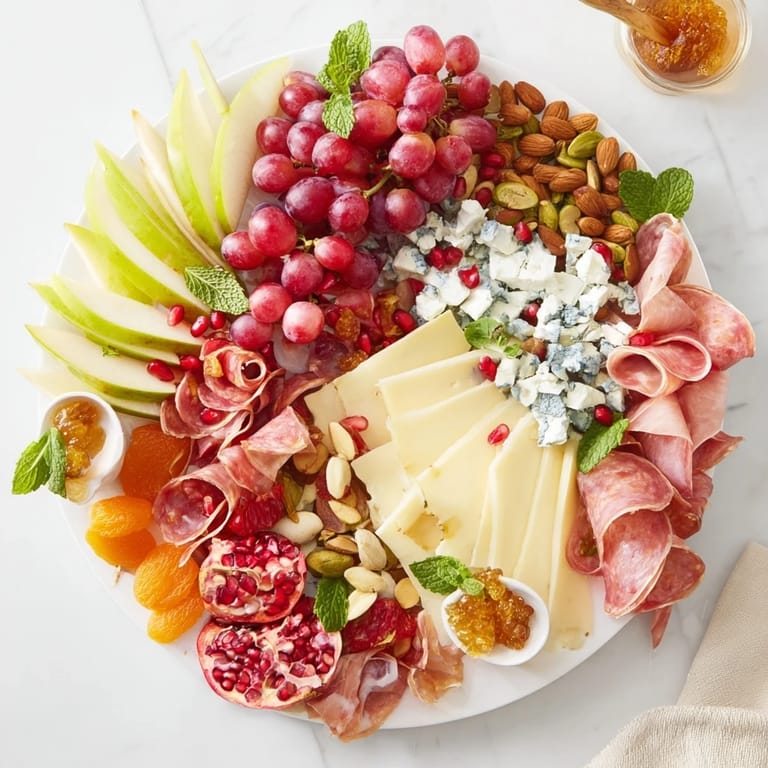
 I'll never forget the afternoon when my friend Sarah brought over a pomegranate she'd been saving, insisting we needed to make something 'absolutely show-stopping' for our dinner party. I'd always thought cheese boards were just functional, until she showed me how to arrange them like a work of art. That's when I discovered that the magic wasn't in having fancy ingredients—it was in the choreography of how you placed them. The pomegranate arils became jewels in a cascade, and suddenly everyone at the table paused before eating, phone cameras out, marveling at something I'd created with my own hands.
The moment that really changed things was when I served this at my sister's engagement party. She pulled me aside afterward and said, 'This board made people linger at the appetizer station for forty minutes.' That's when I realized a beautiful presentation isn't just about aesthetics—it's about creating an experience, a reason for people to gather and talk.
Ingredients
- Creamy goat cheese, 100 g sliced: This one brings a tangy, rich foundation that plays beautifully against the sweetness of fruit. I've learned to slice it just before serving so it stays creamy rather than drying out.
- Aged Manchego, 100 g sliced: This Spanish treasure has a subtle nuttiness that anchors the whole board. Look for it at good cheese shops—it's worth seeking out and makes all the difference in flavor complexity.
- Blue cheese, 100 g crumbled: The bold character here is essential. It wakes up your palate and creates contrast. Don't be shy with it, even if some guests are hesitant—one taste usually converts them.
- Prosciutto, 80 g thinly sliced: The silky drape of this meat is half the visual appeal. Ask your deli counter to slice it paper-thin, and lay it out just before serving to keep it from drying.
- Spicy salami, 80 g thinly sliced: This adds heat and complexity. Choose one with good marbling—it's more flavorful and looks more interesting on the board.
- Pomegranate arils from 1 large pomegranate: These are your jewels, your showstopper. The secret I learned? Cut the pomegranate in half, hold it cut-side down over a bowl of water, and tap the back with a spoon. The arils release easily without bitter pith, and the water prevents staining.
- Red grapes, 1 small bunch halved: Halving them creates more surface area and makes them feel intentional, not just tossed on.
- Pear, 1 ripe one thinly sliced: Choose one that's just ripe, not mushy. Slice it last and use a light touch—pears bruise easily but they're worth the care.
- Apple, 1 small one thinly sliced: I prefer a crisp variety like Honeycrisp. The crunch provides textural contrast and the slight tartness balances the sweetness.
- Dried apricots, 50 g halved: These bring concentrated sweetness and chewy texture. Buy the good kind—they shouldn't look like orange plastic.
- Dried figs, 40 g sliced: These are earthy and sophisticated. They pair gorgeously with blue cheese, creating a flavor moment people remember.
- Toasted pistachios, 40 g: The green color is stunning against the other elements, and the flavor is bright. Toast them yourself if you can—the difference is remarkable.
- Roasted almonds, 40 g: These add gentle crunch and help balance all the softer elements. They're the quiet supporting player that makes everything work.
- Honeycomb piece, 1 small: This is liquid gold for your board. It catches light, adds sweetness, and feels luxurious. Serve it in a small bowl so guests can use a honey knife to spread it.
- Fig jam, 1 small jar: Keep it in its own small bowl. The color is beautiful and it becomes a condiment people come back to repeatedly.
- Crusty baguette, sliced: Choose one baked that morning if possible. The crust should crackle when you cut it. Slice it last.
- Artisan crackers, 80 g: Pick a variety—some seeded, some plain, some with herbs. This mix keeps things interesting.
- Fresh mint leaves for garnish: These finish everything with color and fragrance. Tuck them in last, right before serving.
Tired of Takeout? 🥡
Get 10 meals you can make faster than delivery arrives. Seriously.
One email. No spam. Unsubscribe anytime.
Instructions
- Visualize Your Flow:
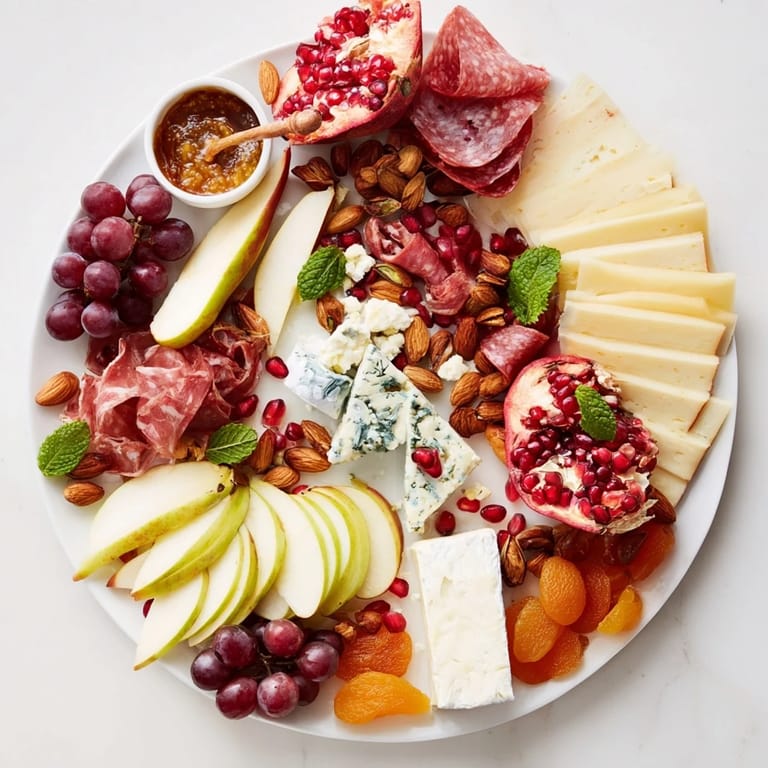
- Before you place anything, imagine a diagonal line flowing from the top left to bottom right of your board or platter. This is your compass. Everything will follow this invisible river of beauty, creating movement and intention rather than randomness.
- Begin the Cheese Foundation:
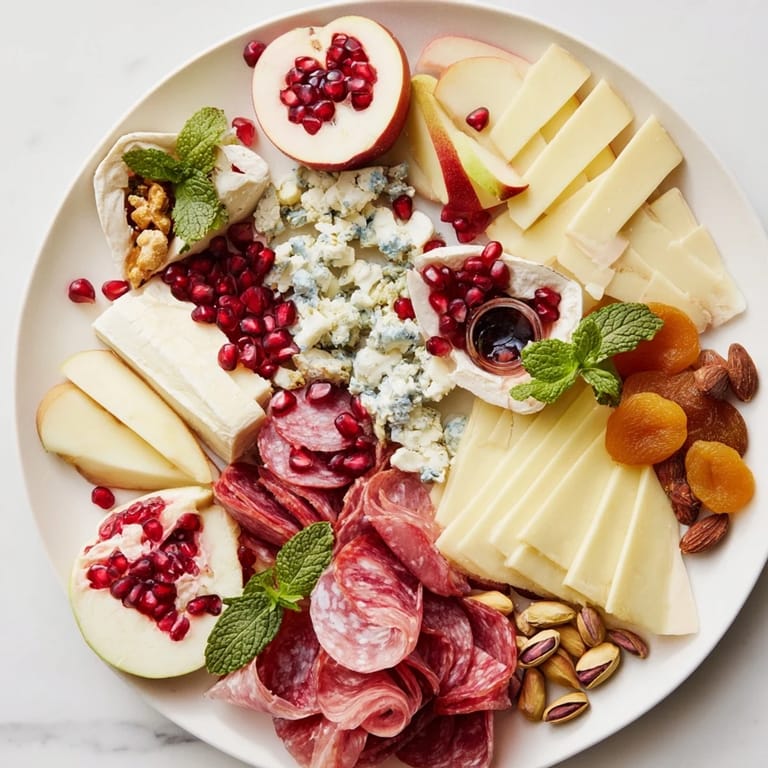
- Start laying down your cheese slices along that diagonal, alternating between the creamy goat cheese, aged Manchego, and crumbled blue cheese. Leave small gaps between each section—these gaps are where the magic will happen. Step back frequently to check your spacing.
- Weave in the Cured Meats:
- Take your prosciutto and spicy salami and lay them in gentle folds between the cheese sections. Let the edges overlap slightly, like fabric draping. The meats should follow your diagonal line, but with a bit more freedom and movement than the cheese—they're the dancers among the architecture.
- Layer Your Fruits:
- This is where your eye guides you more than any rule. Place pear slices and apple slices, halved grapes, dried apricots, and sliced figs along the cascade. Keep them loose and organic, but maintain that diagonal flow. Fresh fruits should be nearest to the cheese so the flavors can mingle.
- Create Your Jeweled Cascade:
- Now for the moment that transforms everything—generously sprinkle those pomegranate arils across the entire diagonal. The key is to create clusters and patterns, not scatter them randomly. Focus the deepest concentration of arils where the line feels most important to you. They should look like rubies catching the light.
- Add Crunch and Texture:
- Tuck in your toasted pistachios and roasted almonds throughout the board, filling empty spaces and creating pockets of texture. Let them spill a bit naturally—perfection feels stiff, but abundance feels generous.
- Position Your Condiments:
- Place your honeycomb in a small bowl at one end of the cascade and fig jam in another small bowl at the other end. These anchor the design and give people a sense of where to begin and end.
- Frame with Bread and Crackers:
- Fan out your baguette slices and arrange your crackers along both sides of the cascade, creating a supporting frame. They should look abundant and accessible, not sparse.
- The Final Flourish:
- Tuck fresh mint leaves throughout the board, paying special attention to any gaps or spaces that feel empty. The green adds life and the scent adds an aromatic greeting.
- Serve with Intention:
- Place the finished board on your table at room temperature. Wait a moment before guests dive in—let them see what you've created, let them appreciate the craft before they taste it.
 Save to Pinterest
 There was one particular evening when my usually reserved father picked up a piece of prosciutto draped over blue cheese, added a pomegranate aril and a fig, took one bite, and got this look on his face like he'd discovered something profound. He didn't say anything for a moment, just went back for another. That's when I understood that a beautiful board isn't about impressing people with effort—it's about creating moments of genuine pleasure.
The Art of Arrangement
Over time, I've realized that arranging a cheese board is less about rules and more about developing an instinct. The diagonal cascade works because it moves your eye across the board like a storyteller weaving a narrative. Each ingredient should feel like it belongs to the story, not like it was just placed there to fill space. Think about how you're inviting people to travel through flavors and textures as they move along the line. The warm oranges of dried apricots might sit next to the cool blue of the cheese, creating visual and flavor conversations. The key is rhythm and pacing, just like in music.
Pairing and Serving Wisdom
I've hosted enough of these boards to know that the serving vessel matters more than you'd think. A long, narrow platter creates a more dramatic cascade than a square board. Look for something with depth—both literal depth for layering and visual depth from the color and finish. A slate board creates sophisticated contrast, while a wooden board feels warm and welcoming. The board itself becomes part of the story you're telling. And remember that this is meant to be served at the beginning of a gathering, when people are transitioning from hellos to settling in. The board becomes the bridge, the reason people gather and linger together.
Making It Your Own
Here's what I love most about this recipe—it's a framework, not a formula. If you can't find Manchego, use aged Cheddar or Comté. If pomegranates aren't in season, use fresh cranberries or pomegranate molasses drizzled artfully. The beauty is in the diagonal flow and the jewel-like clusters of color, not in hitting exact ingredient marks. I once made this board with stone fruit instead of pomegranate arils when they weren't in season, and it was just as stunning. Make it with what your market offers, what your guests love, what makes your heart happy. The arrangement and the care you put into presentation is what transforms it from ingredients into art.
- Don't stress about having everything perfectly lined up—organic and slightly imperfect actually looks more sophisticated and intentional
- Taste as you arrange so you understand the flavor journey your guests will experience, then you can guide them through it
- This board keeps beautifully for about 2 hours at room temperature, so assemble it up to an hour before guests arrive if you're feeling stressed about timing
 Save to Pinterest
 Every time I make this board, I'm reminded that feeding people beautifully doesn't require complicated technique—it requires intention and care. This cascade of flavors and colors has become my love language in food.
Recipe Questions & Answers
- → How should the ingredients be arranged?
Arrange cheeses, meats, fruits, and nuts in a diagonal cascade, layering alternating textures and colors for visual appeal.
- → Can this board be made vegetarian-friendly?
Yes, omit the cured meats and add extra nuts or roasted vegetables to maintain variety and flavor.
- → What are good beverage pairings for this platter?
Crisp rosé, sparkling wine, or a pomegranate spritzer complement the flavors well.
- → How should the platter be served?
Serve immediately at room temperature to highlight the creamy textures and fresh fruit flavors.
- → Are there allergen concerns to consider?
This platter contains dairy, tree nuts, gluten, and possible sulfites, so check ingredient labels for dietary restrictions.
- → Can the cheeses be substituted?
Yes, explore options like Brie, aged Cheddar, or Camembert to suit personal taste preferences.