 Save to Pinterest
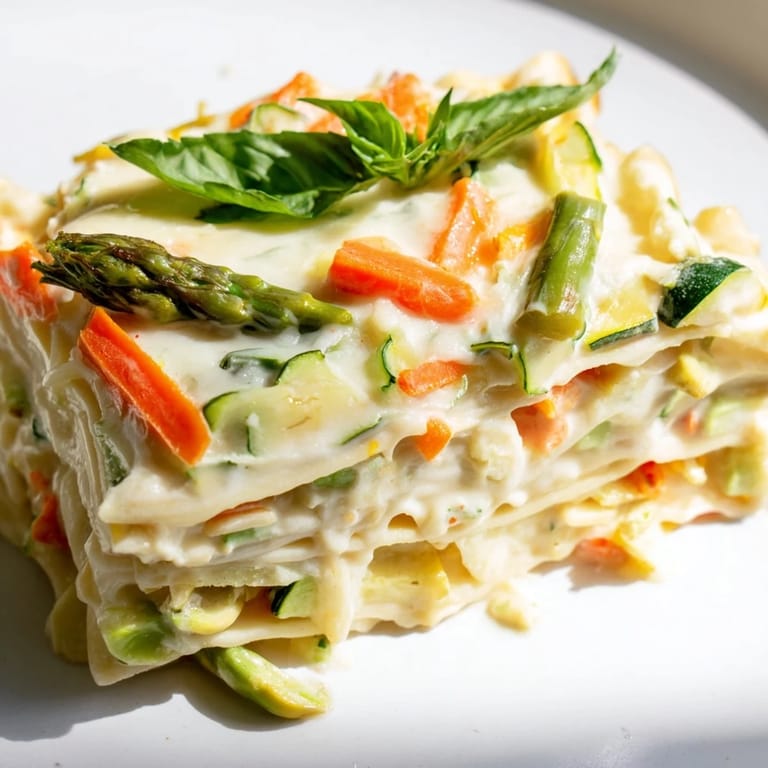
 The first time I made this lasagna, it was a rainy April Sunday and I was craving something that felt like comfort food but still celebrated all the bright green things appearing at the farmers market. I ended up throwing in whatever looked fresh, and my husband actually asked if we could have it every week instead of the heavy meat version wed been making for years. Now its become the official welcome to spring dinner in our house, the kind of meal that makes everyone linger at the table longer than usual.
Last spring my sister came over to help me plant our garden boxes, and we were absolutely starving after wrestling with tomato stakes and herb seedlings all afternoon. I threw this together with whatever wed just harvested snap peas from the trellis, some baby spinach that was bolting, and the first asparagus spears. She took three servings and kept saying how she couldnt believe vegetables could taste this good in lasagna. Now whenever she visits, she texts ahead asking if this is on the menu.
Ingredients
- 2 cups asparagus trimmed and cut into 1 inch pieces: Choose spears that are firm with tight tips, and avoid the woody bottom inches that never quite get tender no matter how long you cook them
- 1 cup sugar snap peas trimmed and halved: These add a delightful crunch and sweetness that balances the rich sauce, plus they cook quickly so they keep their bright green color
- 1 cup baby spinach roughly chopped: Baby spinach is more tender than mature leaves, and wilting it into the warm vegetables right before assembling helps it shrink down without becoming slimy
- 1 cup zucchini diced: Smaller dice prevents watery patches in your lasagna, and I like to salt it for 10 minutes then pat it dry if I have extra time
- 1 cup carrots julienned or shredded: Matchstick cuts look beautiful and cook at the same rate as the other vegetables, plus they add natural sweetness that balances the ricotta
- 3/4 cup frozen peas thawed: Frozen peas are actually sweeter and more tender than fresh, and they pop with little bursts of brightness in every bite
- 2 cups part skim ricotta cheese: Whole milk ricotta is creamier, but part skim actually holds up better in lasagna layers without becoming watery
- 1 cup shredded mozzarella cheese: Low moisture mozzarella melts beautifully without making your lasagna soupy, which is why I prefer it over fresh mozzarella here
- 1/2 cup grated Parmesan cheese: Aged Parmesan adds a salty, nutty depth that cuts through the creaminess, and its worth buying a wedge and grating it yourself
- 3 cups light Alfredo sauce: Homemade is wonderful, but a good quality jarred sauce works perfectly here, and look for one with visible black pepper for extra flavor
- 9 no boil lasagna noodles: These absorb excess moisture from the vegetables while baking, and I always buy an extra box in case some break during handling
- 2 cloves garlic minced: Fresh garlic is essential here, and mincing it finely prevents any harsh raw bites in the finished dish
- 2 tablespoons fresh basil chopped plus extra for garnish: Basil loses potency quickly once cut, so add it at the very end and save some whole leaves for the prettiest presentation
- 1 tablespoon olive oil: A good quality extra virgin olive oil adds a fruity backbone that complements the spring vegetables beautifully
- 1/2 teaspoon salt: Taste your vegetables after sautéing, since some Alfredo sauces are saltier than others and you might need less
- 1/4 teaspoon freshly ground black pepper: Freshly cracked pepper has a more complex, spicy heat that preground simply cannot match
- 1/4 teaspoon crushed red pepper flakes optional: Even if you do not like spicy food, just a pinch adds warmth that makes all the flavors pop without actual heat
Tired of Takeout? 🥡
Get 10 meals you can make faster than delivery arrives. Seriously.
One email. No spam. Unsubscribe anytime.
Instructions
- Preheat your oven and prepare the baking dish:
- Preheat oven to 375°F (190°C). Lightly grease a 9x13 inch baking dish with olive oil or cooking spray, paying special attention to the corners where noodles tend to stick.
- Sauté the vegetables until just tender:
- Heat olive oil in a large skillet over medium heat. Add garlic and sauté for 30 seconds until fragrant but not brown. Add asparagus, snap peas, zucchini, and carrots. Cook for 4 to 5 minutes until slightly tender but still crisp. Stir in spinach and peas, cooking for 1 minute until spinach just wilts. Season with salt, black pepper, and red pepper flakes. Remove from heat and stir in fresh basil.
- Mix the ricotta filling:
- In a small bowl, combine ricotta cheese with half of the Parmesan cheese until smooth. I like to add a pinch of garlic powder here too for extra depth.
- Start building your layers:
- Spread 1/2 cup of Alfredo sauce on the bottom of the prepared baking dish. This prevents noodles from sticking and helps them cook evenly.
- Layer the first level:
- Arrange 3 no boil noodles over the sauce, breaking them as needed to fit. Top with 1/3 of the ricotta mixture, 1/3 of the vegetable mixture, 1/3 cup mozzarella, and 2/3 cup Alfredo sauce, spreading each layer evenly to the edges.
- Repeat and finish with the final layer:
- Repeat layers twice more. For the top layer, finish with remaining noodles, Alfredo sauce, mozzarella, and Parmesan cheese for a golden, bubbling crust.
- Bake covered then uncovered for perfect texture:
- Cover tightly with foil and bake for 30 minutes. Remove foil and bake for an additional 15 minutes, or until golden and bubbly. The cheese should be lightly browned in spots.
- Let it rest before serving:
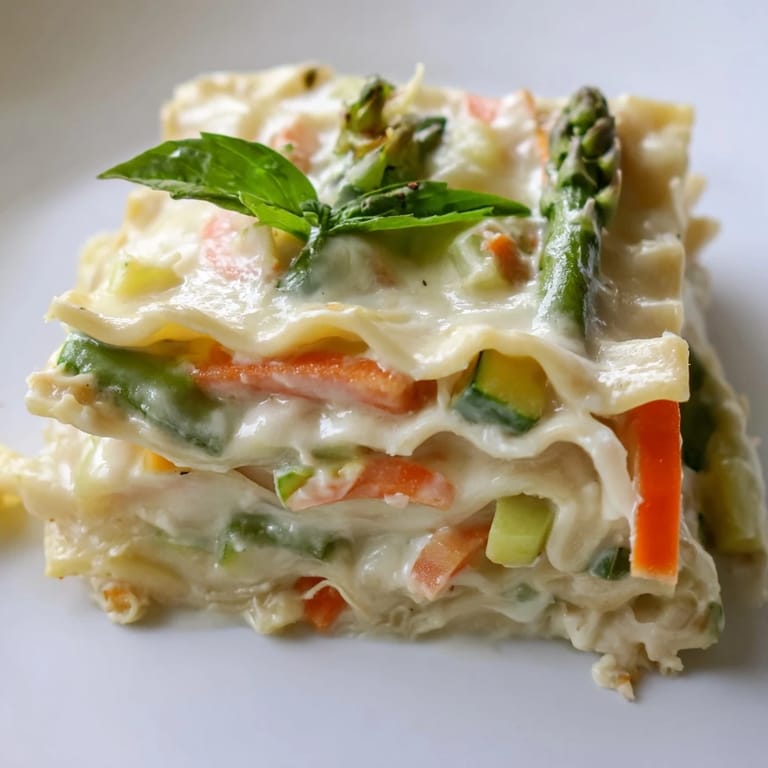
- Let rest for 10 minutes before slicing. This is the hardest part but essential for clean portions. Garnish with extra basil and serve while still steaming hot.
 Save to Pinterest
 This lasagna has become my go to for bringing to friends who just had babies or need a little comfort, because it feels special without being heavy like traditional meat versions. Last month I brought it to my neighbor who had knee surgery, and she texted me the next day saying it was the best thing she had eaten in weeks and asked if I could teach her how to make it when she was back on her feet. There is something about layers of creamy sauce and bright vegetables that feels like being wrapped in a warm blanket.
Choosing Your Spring Vegetables
The beauty of this recipe is how adaptable it is to whatever looks best at the market or in your CSA box. Early in the season, I lean heavily on asparagus and snap peas, but as spring progresses, I will swap in fresh peas from the pod, diced fennel, or even ribbons of Swiss chard. The key is cutting everything into similar sized pieces so they cook evenly and distribute throughout the layers. I have also used roasted vegetables from a previous nights dinner, which adds lovely caramelized notes to the final dish.
Making It Ahead
This lasagna actually improves with a little time in the refrigerator, as the flavors have a chance to meld and the sauce soaks into the noodles more completely. I often assemble it the night before, cover it tightly, and store it in the refrigerator, then let it come to room temperature for about 30 minutes while the oven preheats. If baking from cold, add about 10 minutes to the covered baking time. You can also freeze the assembled, unbaked lasagna for up to a month, just wrap it incredibly well and thaw completely before baking.
Pairing Suggestions
A crisp white wine like Pinot Grigio or Sauvignon Blanc cuts through the creaminess while complementing the spring vegetables, and I love how the acidity balances the rich Alfredo sauce. For a nonalcoholic option, sparkling water with a squeeze of lemon and fresh basil leaves refreshes the palate between bites. A simple green salad with a lemon vinaigrette and some crusty garlic bread rounds out the meal without competing with the lasagna itself.
- A light arugula salad with shaved Parmesan and lemon dressing adds a peppery contrast
- Roasted broccoli or garlic green beans work well if you want more cooked vegetables alongside
- If serving guests, a small appetizer of bruschetta with fresh tomatoes keeps with the Italian inspired theme
 Save to Pinterest
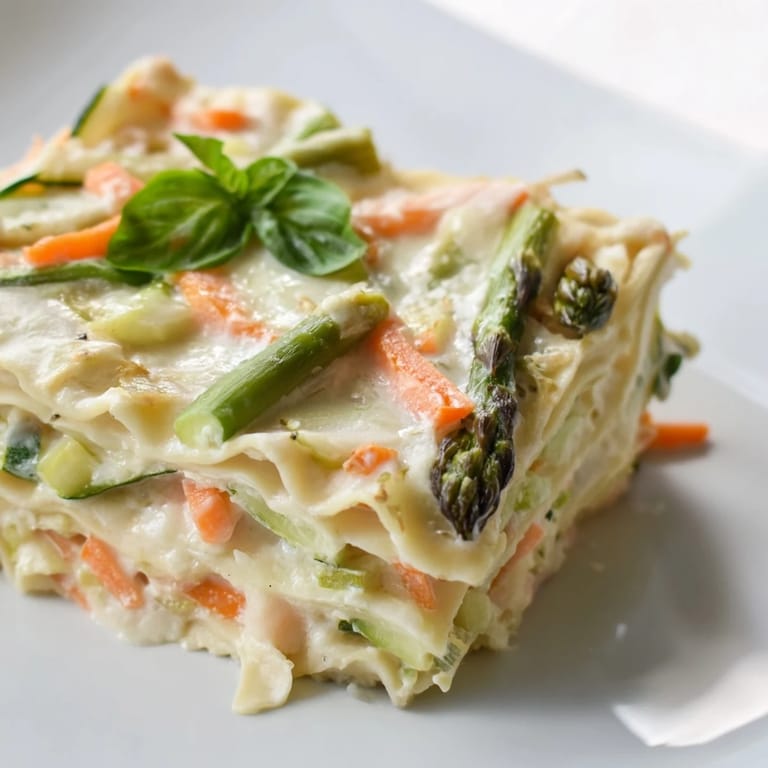
 There is something deeply satisfying about taking the first bite and tasting the contrast between the creamy sauce, tender noodles, and those bright vegetables that still have a little crunch. This lasagna has become the dish I make when I want to celebrate the season without spending hours in the kitchen, and I hope it brings that same joy to your table too.
Recipe Questions & Answers
- → Can I use fresh lasagna noodles instead of no-boil?
Yes, you can use fresh lasagna noodles. However, you'll need to boil them according to package directions until al dente before layering. This will add approximately 10-15 minutes to your total preparation time. Drain and lay them flat on parchment paper to prevent sticking.
- → What other spring vegetables work well in this dish?
Excellent substitutions include leeks, artichoke hearts, fresh peas, or green beans. You can also add mushrooms, broccoli, or fresh herbs like tarragon. Keep the total vegetable quantity around 5-6 cups to maintain proper layering and moisture balance.
- → Can I make this dish ahead and refrigerate it?
Absolutely. Assemble the lasagna completely, cover it tightly with plastic wrap and foil, and refrigerate for up to 24 hours. Bake from cold, adding 15-20 minutes to the cooking time. You can also freeze it for up to 3 months; thaw overnight in the refrigerator before baking.
- → How do I prevent a watery lasagna?
The key is not overcooking the vegetables during the sauté step—cook them until just tender, not soft. If using frozen peas or spinach, ensure they're well-drained and squeezed dry. Avoid adding extra sauce, and let the lasagna rest for the full 10 minutes after baking to allow proper setting.
- → Can I make this gluten-free?
Yes. Simply substitute gluten-free lasagna noodles, which are widely available at most grocery stores. Many brands make no-boil gluten-free versions. Verify that your store-bought Alfredo sauce is gluten-free, or make your own with cornstarch or a gluten-free flour blend as the thickening agent.
- → What wine pairs best with this dish?
A crisp white wine like Pinot Grigio is ideal, as suggested. Alternatives include Sauvignon Blanc, Vermentino, or a light Italian white such as Gavi. The acidity and freshness of these wines complement the creamy sauce and spring vegetables beautifully.