 Save to Pinterest
 My grandmother's kitchen always smelled like simmering tomatoes and cabbage on Sunday afternoons, and it wasn't until I was old enough to notice the rhythm of her hands that I understood these cabbage rolls weren't just food—they were how she showed up for her family. The first time I made them myself, I burned the garlic and nearly gave up, but something about the ritual of rolling each leaf kept me going. Now, decades later, I can roll them in my sleep, though I still take my time, because rushing this dish feels like missing the whole point.
I served these to my partner's parents on our second dinner together, terrified I'd mess up this Eastern European classic they grew up with. Instead, his mother asked for the recipe, which I took as a quiet blessing, and now they're part of our regular rotation when family visits. There's something about watching people close their eyes after that first bite that makes you feel like you've done something right.
Ingredients
- 1 large head of green cabbage: Choose one that feels dense and heavy for its size; looser heads will give you fewer usable leaves, and you'll waste time picking through damaged ones.
- 500 g ground beef (or pork, or a mix): I've learned that a meat blend actually tastes better than beef alone, giving you more depth and preventing the filling from becoming too dense.
- 120 g uncooked long-grain white rice: Don't skip the par-cooking step; it ensures the rice finishes at the exact same time as the meat, so nothing is raw or mushy.
- 1 medium onion, finely chopped: This goes into the filling, and the finer you chop it, the more evenly it distributes and keeps the rolls from falling apart.
- 2 cloves garlic, minced: Fresh garlic makes a noticeable difference here; don't reach for the jarred version if you can help it.
- 1 large egg: This is your binder; it holds everything together without making the filling taste eggy if you use just one.
- 2 tbsp fresh parsley, chopped: This small amount brings brightness to an otherwise hearty filling and reminds you that comfort food doesn't have to be heavy.
- Salt and black pepper to taste: Season generously but taste as you go; the rice will absorb flavors as it cooks.
- 700 ml tomato passata or crushed tomatoes: Passata makes a smoother sauce, but crushed tomatoes work beautifully if that's what you have on hand.
- 2 tbsp tomato paste: This concentrates the tomato flavor and deepens the sauce without adding extra liquid.
- 1 tbsp sugar: A small pinch of sugar balances the acidity of the tomatoes; trust this even if you don't usually cook this way.
- 1 tsp dried thyme: Thyme is the quiet backbone of this sauce, connecting every element with subtle earthiness.
- 1 tbsp vegetable oil: Use a neutral oil so nothing competes with the tomato and thyme.
Tired of Takeout? 🥡
Get 10 meals you can make faster than delivery arrives. Seriously.
One email. No spam. Unsubscribe anytime.
Instructions
- Prepare your oven and get the cabbage leaves ready:
- Heat your oven to 180°C (350°F) so it's ready when you need it. Bring a large pot of salted water to a boil, then carefully cut out the core of your cabbage and slowly lower the whole head into the hot water. You'll watch the leaves begin to soften and loosen within minutes; gently peel them away as they become tender, and set aside 12 to 14 leaves that look large and unblemished.
- Build your tomato sauce:
- Heat oil in a pan over medium heat and let your onion and garlic soften for about 3 minutes until they're fragrant and turning golden at the edges. Add the tomato paste and let it cook for just a minute so it caramelizes slightly, then pour in the tomato passata, sugar, thyme, salt, and pepper, stirring until everything is smooth. Let this simmer gently for 10 minutes so the flavors marry and deepen.
- Par-cook the rice:
- While your sauce simmers, bring a small pot of water to a boil and add the uncooked rice, cooking it for exactly 5 minutes so it's just starting to soften but still has a bite to it. Drain it well and let it cool for a minute or two; this half-cooked rice will finish perfectly inside the rolls during baking.
- Mix your filling:
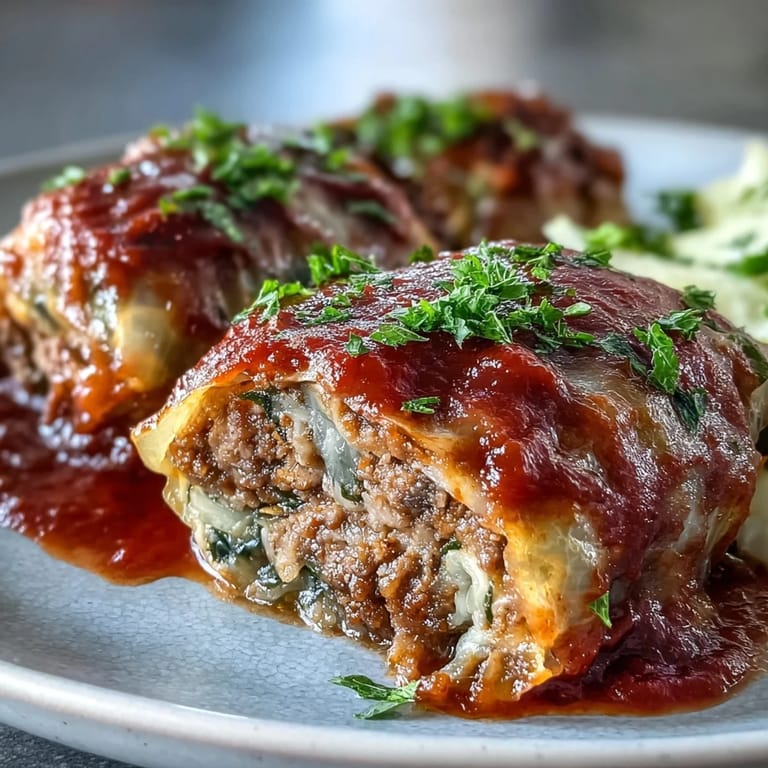
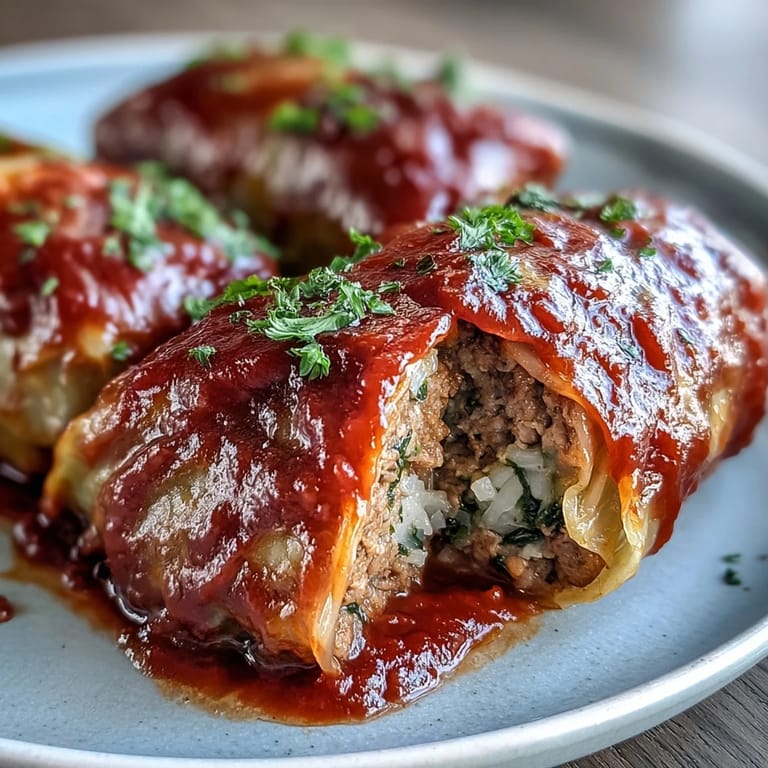
- In a large bowl, combine the ground meat, par-cooked rice, chopped onion, minced garlic, egg, parsley, salt, and pepper, mixing gently with your hands until everything is just combined and holds together. Don't overmix or you'll end up with dense, tough rolls instead of ones that are tender and slightly yielding.
- Roll each cabbage leaf with care:
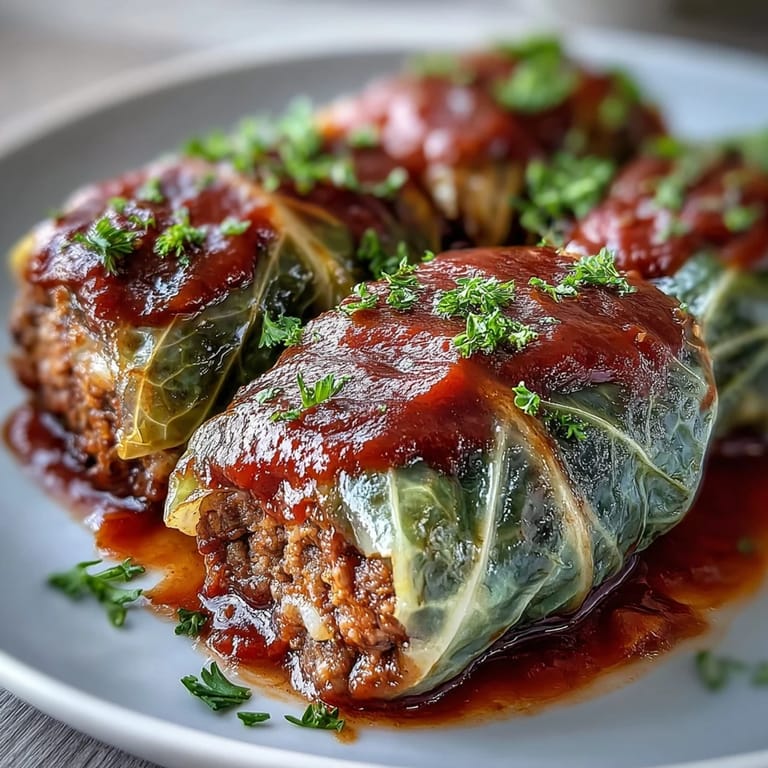
- Lay a cabbage leaf flat on your work surface and place 2 to 3 tablespoons of filling near the stem end, leaving some space on either side. Fold the left and right sides over the filling first, then roll tightly away from you, tucking everything snugly so nothing unravels during cooking.
- Arrange your rolls for baking:
- Spread a thin layer of tomato sauce on the bottom of your ovenproof dish, then arrange your cabbage rolls seam side down in a single layer, nestling them close together so they support each other. Pour the remaining sauce over the top, making sure each roll is partially submerged.
- Bake until everything is tender and golden:
- Cover the dish tightly with foil or a lid and bake for 1 hour; in the last 15 minutes, remove the covering if you prefer a thicker, more concentrated sauce. Let everything cool for a few minutes before serving so the rolls hold their shape and the sauce settles.
 Save to Pinterest
 There was a winter evening when a friend showed up unannounced, heartbroken over an ending that felt permanent at the time, and I pulled these cabbage rolls from my freezer without asking if she wanted to eat. We sat together in near silence except for the sound of forks and that quiet relief that comes from warm food, and I realized that sometimes the most important recipes are the ones you make without being asked.
The Art of Rolling Without Frustration
Rolling cabbage leaves feels intimidating until you do it a few times and realize there's no such thing as a perfect roll. The seam doesn't have to be invisible, the leaf doesn't have to be pristine, and if one tears, you can patch it with a scrap and it will still cook beautifully. I used to redo rolls that looked uneven until my grandmother told me that imperfect rolls are the ones that taste like they were made with actual hands instead of a factory, and that stuck with me.
Why This Sauce Matters More Than You Think
The tomato sauce isn't just something to pour over the rolls and call it done; it's what keeps everything moist, carries flavor deep into the cabbage leaves, and transforms the rice from a neutral starch into something that tastes like it belongs in this dish. I've learned that using good tomato products matters here because the sauce is so simple that every ingredient shines through, so take a moment to choose passata or crushed tomatoes that you'd actually want to eat on their own. The sauce also freezes beautifully, so if you make extra, you've got the foundation for a quick dinner weeks from now.
Serving and Storing Your Cabbage Rolls
These rolls are best served warm with a spoonful of sour cream on top, which cuts through the richness and adds a tang that feels essential, though you'll find this isn't traditional in every family. Crusty bread is your secret weapon here; it soaks up the sauce and turns a good meal into a memorable one. Leftovers actually improve overnight as the flavors settle and the cabbage becomes even more tender, so don't feel pressured to eat them all in one sitting.
- Refrigerate leftovers in an airtight container for up to 4 days, and reheat gently in the oven at low temperature so nothing dries out.
- These freeze exceptionally well either before or after baking, giving you a head start on those nights when cooking feels impossible.
- Serve with fresh dill or extra parsley if you have it, because that small green garnish reminds everyone that this is a dish worth savoring.
 Save to Pinterest
 These cabbage rolls have become my answer to the question of what to cook when someone needs feeding and comforting at the same time. There's no shortcut that makes them taste better than patience and a willingness to show up in the kitchen with your whole attention, so give yourself permission to take your time with them.
Recipe Questions & Answers
- → How do I soften cabbage leaves without tearing them?
Boil the whole cabbage head in salted water and gently peel off leaves as they soften after 8-10 minutes. This gradual method prevents tearing and makes rolling easier.
- → Can I make cabbage rolls ahead of time?
Yes, assemble the rolls and refrigerate them covered for up to 24 hours before baking. You can also freeze unbaked rolls for up to 3 months and bake directly from frozen, adding 20-30 minutes to cooking time.
- → Why do I need to par-cook the rice first?
Partially cooking the rice for 5 minutes ensures it finishes cooking perfectly inside the cabbage rolls during baking, absorbing flavors while achieving the right texture without becoming mushy.
- → What meat works best for cabbage rolls?
Ground beef, pork, or a combination of both work excellently. The mix provides the best flavor and texture balance, though you can use turkey or make a vegetarian version with lentils or mushrooms.
- → How do I prevent cabbage rolls from falling apart?
Roll them tightly with the seam side down in the baking dish. The tomato sauce and tight packing help hold everything together during cooking, creating perfectly formed rolls.
- → What should I serve with cabbage rolls?
Traditional accompaniments include sour cream, crusty bread, and roasted potatoes. A simple green salad or pickled vegetables also complement the rich, savory flavors beautifully.