 Save to Pinterest
 My first encounter with tom yum wasn't in a fancy restaurant but in a cramped Bangkok street stall at sunset, where a vendor worked with the speed and precision of someone who'd made this soup ten thousand times. The steam rising from her massive pot carried notes I'd never smelled together before, and I spent the next week trying to recreate that exact balance of heat and brightness in my own kitchen. What started as trial and error eventually became my go-to soup when I want to feel transported without leaving home, and now my friends text asking if I'm making it because apparently my apartment smells unmistakable on tom yum nights.
I'll never forget the time I made this for my sister's boyfriend who claimed he couldn't eat spicy food, and I spent the entire meal watching him sneak another spoonful despite his flushed face. By the end, he was asking for the recipe, and I realized tom yum has this sneaky power to make people braver about flavors they thought they didn't like. Sometimes the best compliment is watching someone discover they're bolder in the kitchen than they believed.
Ingredients
- Chicken thighs or breasts (400g, thinly sliced): Thighs stay juicier and more forgiving than breast meat, but slice everything uniformly so it cooks at the same pace without overcooking.
- Chicken stock (1.2 liters): Use homemade or quality stock because this soup has nowhere to hide weak flavors, and the broth is honestly the foundation of everything that comes next.
- Lemongrass (2 stalks, trimmed and smashed): Buy it fresh if possible, discard the tough outer layers, and smash it hard with the side of your knife to release those essential oils that make the whole pot sing.
- Galangal (4 slices fresh or 2 tsp dried): This root looks like ginger but tastes distinctly different, more floral and peppery, and it's non-negotiable for authentic tom yum flavor.
- Makrut lime leaves (5 leaves, torn): These fragrant leaves add citrus complexity that regular lime juice can't replicate, so source them from an Asian market or order online because they truly matter.
- Birds eye chilies (4, lightly crushed): These small peppers pack serious heat, so taste as you go and remember you can always add more but can't take it back.
- Mushrooms (150g, sliced): Oyster mushrooms absorb the broth beautifully, but button or cremini work fine and add earthiness that grounds all the bright, spicy elements.
- Tomatoes (2 medium, wedged): Fresh tomatoes add acidity and sweetness, creating textural contrast in the finished soup.
- Onion and garlic (1 small onion, 3 cloves): These are your aromatic base, softening slightly and lending subtle sweetness to balance the aggressive flavors.
- Fish sauce (3 tbsp): I know it smells terrifying, but trust this ingredient completely because it adds savory depth that makes every other flavor pop without tasting fishy.
- Fresh lime juice (2 tbsp plus more): Squeeze it fresh just before adding because bottled lime juice tastes flat and sad compared to the real thing.
- Sugar and salt (1 tsp and ½ tsp): These balance the sourness and heat, but add them gradually and taste as you season because everyone's palate reads these flavors differently.
- Cilantro and spring onions (for garnish): Fresh herbs at the end brighten everything and add a crisp finish that makes the whole bowl feel alive.
Tired of Takeout? 🥡
Get 10 meals you can make faster than delivery arrives. Seriously.
One email. No spam. Unsubscribe anytime.
Instructions
- Release the aromatics:
- Take your lemongrass, galangal, and makrut lime leaves and smash them hard with the flat of your knife, listening for that crack that means the essential oils are breaking free. You'll smell the difference immediately, and that's your signal everything is working.
- Build the infused broth:
- Bring your chicken stock to a rolling boil in a large pot, then add all your bruised aromatics plus the crushed chilies and smashed garlic. Let this bubble gently uncovered for five minutes, and your kitchen will smell so good that anyone nearby will start asking what you're making.
- Cook the protein and aromatics:
- Slide in your thinly sliced chicken and onion, keeping the heat steady and medium so the chicken poaches gently rather than becoming tough. Skim away any foam or impurities that float to the surface for the next eight to ten minutes, which feels tedious but creates a cleaner, clearer broth.
- Add the vegetables and finish cooking:
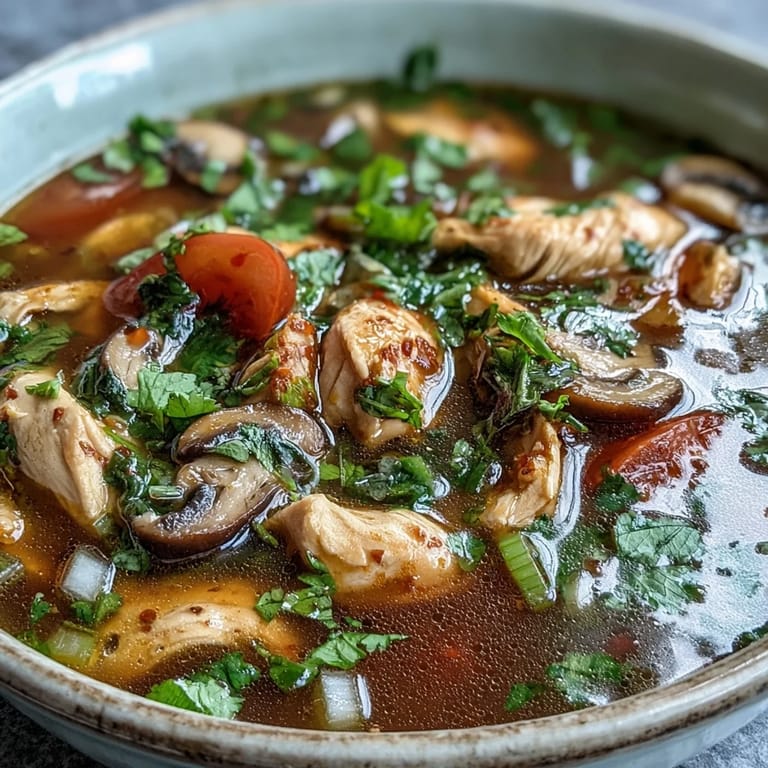
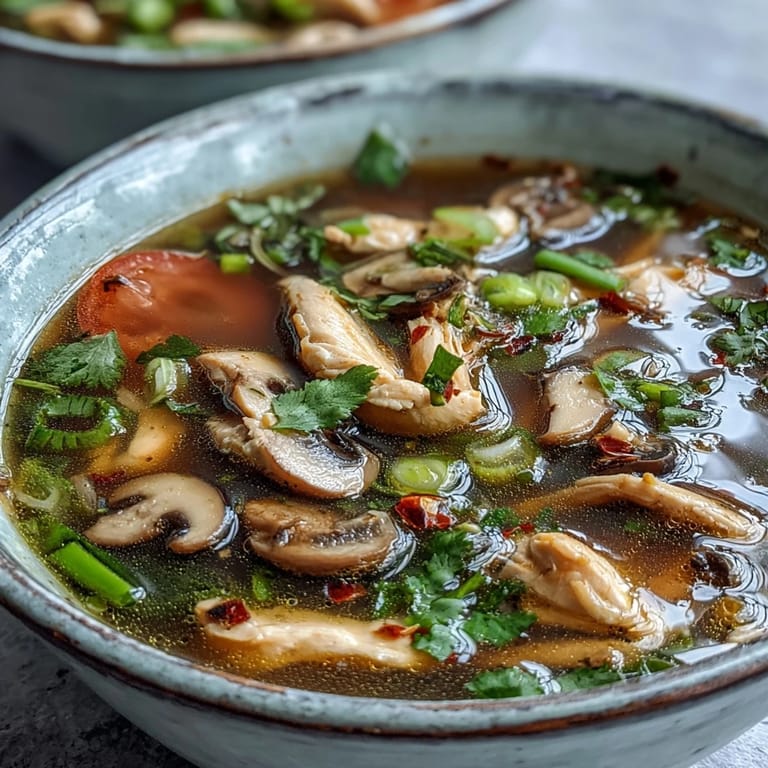
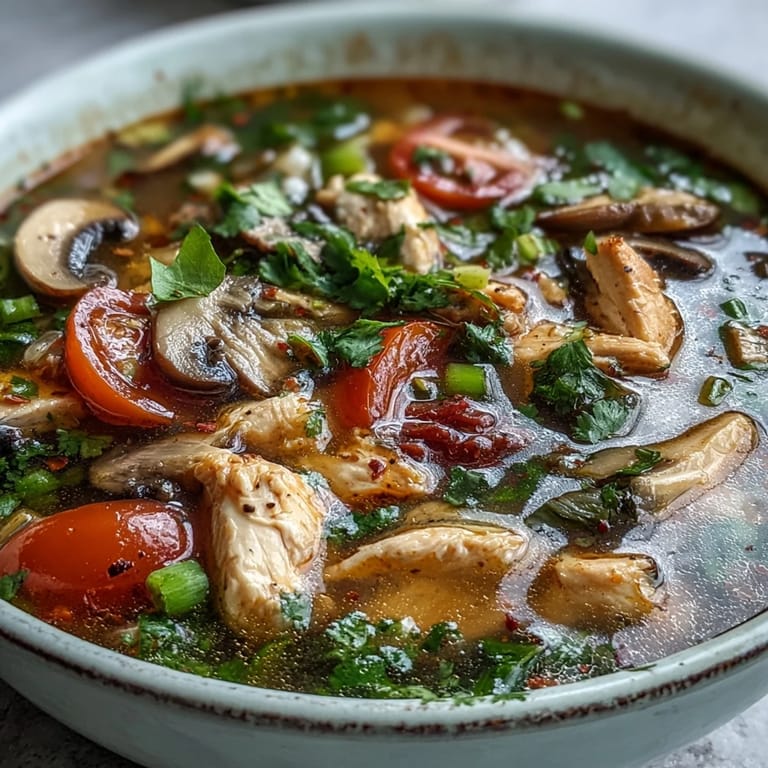
- Drop in your mushroom slices and tomato wedges, letting them soften for another five to seven minutes until the chicken is fully cooked through and the tomatoes start to break down slightly. The mushrooms should be tender and have absorbed some of that aromatic broth.
- Season and taste:
- Stir in the fish sauce, lime juice, sugar, and salt, then taste and keep adjusting until you hit that sweet spot where the sour, salty, and spicy elements are all singing together without one overpowering the others. This is where the magic happens, and it might take a few adjustments to match your personal taste.
- Finish and serve:
- Remove from heat and decide whether you want to fish out the lemongrass, galangal, and lime leaf pieces or leave them for texture and continued flavor release. Ladle into bowls and crown each serving with fresh cilantro, sliced spring onions, and a lime wedge on the side.
 Save to Pinterest
 There's a moment near the end of cooking this soup where you taste it for the first time and everything suddenly clicks into place, and I live for that split second of recognition. It reminds me why I cook at all, not for Instagram or applause, but for that private joy of watching separate ingredients become something greater than themselves.
The Magic of Aromatic Infusion
What makes tom yum distinctive isn't a secret ingredient but rather the patience to let aromatic infusion happen properly at the beginning. When you add lemongrass, galangal, and makrut lime leaves to simmering broth and give them even five minutes to bloom, they transform plain stock into something intensely fragrant and complex. This technique teaches you something valuable about cooking in general: sometimes the best results come from slowing down and letting ingredients do their work rather than rushing to the finish line.
Adjusting Heat and Sourness
One of the most liberating things about tom yum is that it's almost impossible to make it wrong because the fundamental balance of sour, salty, and spicy can be dialed to your exact preference. I've made it fiery enough to make my eyes water and gentle enough for friends who prefer warmth over pain, and both versions tasted authentic. The key is tasting multiple times throughout seasoning and remembering that lime juice is your secret weapon if you want to brighten the flavor without adding more heat.
Variations and Next Steps
Once you master the basic tom yum, you realize you're not learning just one recipe but rather a flavor template that works with whatever protein or vegetable you have on hand. Shrimp makes it tom yum goong and cooks in half the time, adding coconut milk makes it luxurious for nights when you need something gentler, and doubling the vegetables turns it into a light but satisfying vegetarian bowl. Save extra batches in the freezer because tom yum holds its flavors beautifully and actually tastes even better the next day when everything has settled into friendship.
- Add extra chilies or serve alongside chili oil if you want to push the heat further for brave eaters.
- Coconut milk transforms this into a creamier version that's perfect for balancing extreme spice levels.
- Serve alongside jasmine rice to make it a complete meal rather than just a soup course.
 Save to Pinterest
 This soup has become my answer to almost every kitchen question, from what to cook when I'm tired to what impresses people who think they know food already. Make it once and it becomes part of your permanent rotation.
Recipe Questions & Answers
- → What makes Tom Yum different from other Thai soups?
Tom Yum is characterized by its distinctive hot and sour flavor profile, achieved through the combination of fresh lime juice, fish sauce, and aromatic ingredients like lemongrass, galangal, and makrut lime leaves. Unlike creamy coconut-based soups like Tom Kha, Tom Yum has a clear, intensely flavored broth.
- → Can I make Tom Yum less spicy?
Absolutely. Start with fewer birds eye chilies or remove them entirely after infusing the broth. You can also deseed the chilies before adding them. The heat level is easily adjustable to your preference.
- → What's the best way to bruise lemongrass and galangal?
Use the back of your knife or a pestle to gently smash the lemongrass stalks and galangal slices. This technique breaks down the fibers and releases the aromatic oils without completely pulverizing the ingredients, allowing easy removal before serving.
- → Can I substitute galangal with ginger?
While ginger can work in a pinch, galangal has a unique piney, citrusy flavor that's essential to authentic Tom Yum. If unavailable, use half the amount of fresh ginger and add a pinch of coriander or extra lime leaves to compensate.
- → How do I store and reheat leftovers?
Store cooled soup in an airtight container in the refrigerator for up to 3 days. Reheat gently over medium heat, adding a splash of water if the broth has reduced. Avoid boiling, as this can toughen the chicken. Fresh garnishes should be added just before serving.
- → What protein alternatives work well in Tom Yum?
Shrimp is the traditional choice for Tom Yum Goong, but you can also use tofu, pork slices, or a mix of seafood. Adjust cooking times accordingly—shrimp needs only 2-3 minutes, while tofu requires about 5 minutes to absorb the flavors.