 Save to Pinterest
 My first bowl of Tom Yum arrived at a tiny Bangkok street stall where I was completely lost, and the vendor—seeing my confused face—simply handed me a steaming cup without asking questions. The aroma hit before the spoon touched my lips: bright, slightly floral lemongrass mixing with the sharp bite of lime and a heat that built rather than exploded. Years later, I learned that what made me fall for that soup wasn't just the bold flavors, but the way they moved across my palate like a conversation, each element announcing itself in turn.
I made this for my partner on the first cold evening of October, when both of us were burnt out and needed something that felt like care without effort. Watching them take that first spoonful and then immediately go back for more—no comments, just pure focus—reminded me why I love cooking. That bowl became shorthand for our version of comfort, nothing fancy, just paying attention to what actually tastes good.
Ingredients
- Chicken or vegetable stock (4 cups): The foundation that carries every other flavor, so use something you'd actually drink on its own—the soup will only be as good as your broth.
- Lemongrass (2 stalks, trimmed and smashed): Smashing it matters because you're breaking down the cell walls to release those volatile oils that make the soup smell like a Thai market.
- Kaffir lime leaves (4, torn): These add an almost perfumy depth that regular lime juice can't match, but if you can't find them, an extra squeeze of lime and a pinch of lime zest work.
- Galangal (3 slices): It's spicier and more peppery than ginger, with an almost pine-like undertone that grounds the brightness, but ginger is an honest substitute if you're in a pinch.
- Thai bird's eye chiles (2, sliced): These are small and mean, so start with one if you're heat-sensitive and add the second only if you're brave.
- Mushrooms (200 g, sliced): I use a mix of cremini and oyster because the oyster ones get delicate and the cremini hold their shape, but whatever you have will work.
- Tomatoes (2 medium, cut into wedges): Cherry tomatoes burst into the broth like little flavor bombs, but Roma tomatoes give you more body.
- Onion (1 small, sliced): The brief cooking time means it stays with some texture, which I like, but slice it thin enough to distribute evenly.
- Garlic (3 cloves, smashed): Smashing over mincing creates larger pieces that soften into the broth without disappearing completely.
- Shrimp (300 g, peeled and deveined): Buy them frozen if fresh isn't available—they thaw quickly and cook in the hot broth, and honestly, the frozen ones are often fresher.
- Fish sauce (3 tbsp): This is the umami anchor, and yes, it smells like low tide initially, but it transforms into savory depth as it heats.
- Fresh lime juice (2 tbsp): Squeeze it fresh because bottled tastes flat and the point of this soup is brightness.
- Sugar (1 tsp): A small amount rounds out the sharp edges without making the soup sweet, balancing the heat and sourness.
- Chili paste (1 tsp nam prik pao, optional): If you use it, add a deeper chile complexity and slight smokiness that makes the soup feel more complete.
- Fresh cilantro and green onions: The green onions add a mild onion finish, and cilantro brings that fresh, almost citrusy note that keeps the soup from feeling heavy.
- Lime wedges: For serving, because each person should be able to adjust their sourness level to match their mood.
Tired of Takeout? 🥡
Get 10 meals you can make faster than delivery arrives. Seriously.
One email. No spam. Unsubscribe anytime.
Instructions
- Build Your Aromatic Base:
- Bring your stock to a gentle boil in a medium pot, then add the lemongrass, kaffir lime leaves, galangal, chiles, garlic, and onion all at once. The pot will smell instantly Thai—let it simmer for 10 minutes so all those woody, spicy, citrus notes have time to dissolve into the broth.
- Add Vegetables with Care:
- Stir in the mushrooms and tomatoes and let them cook for about 5 minutes until the mushrooms soften and the tomatoes begin to release their juice into the broth. The liquid will take on a slightly golden color, and you'll notice the aroma shift to become more round and savory.
- Cook Your Protein:
- Add the shrimp (or tofu) and simmer for just 2–3 minutes until the shrimp turn opaque pink and firm to the touch. Don't walk away during this step because overcooked shrimp become rubbery, and you want that tender bite.
- Season to Your Preference:
- Remove from heat and stir in the fish sauce, lime juice, sugar, and chili paste if you're using it. Taste a spoonful and adjust: if it's too salty, add more lime; if it's not sour enough, another squeeze of lime; if you want more heat, add a tiny pinch of red chile flakes.
- Finish and Serve:
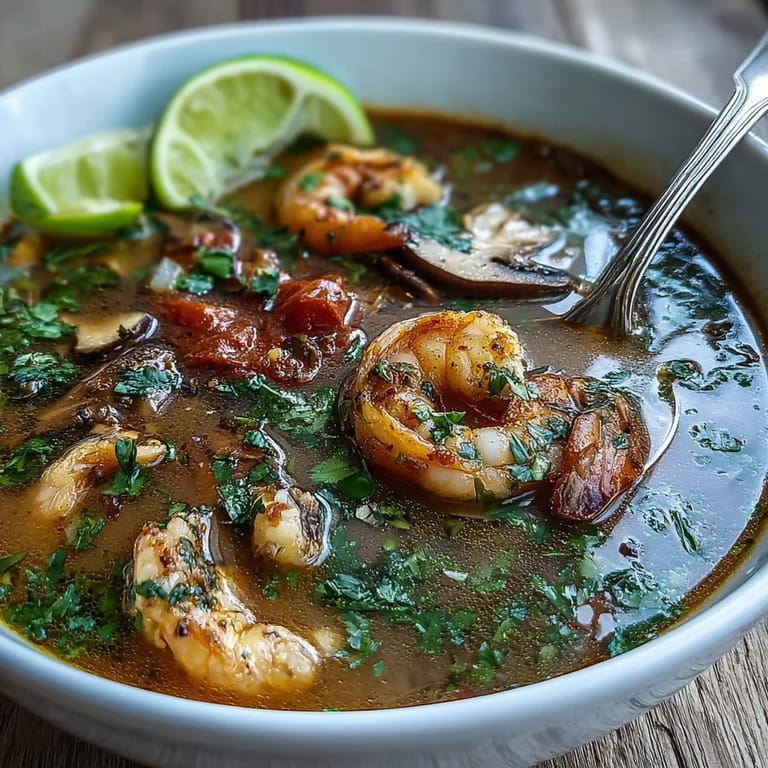
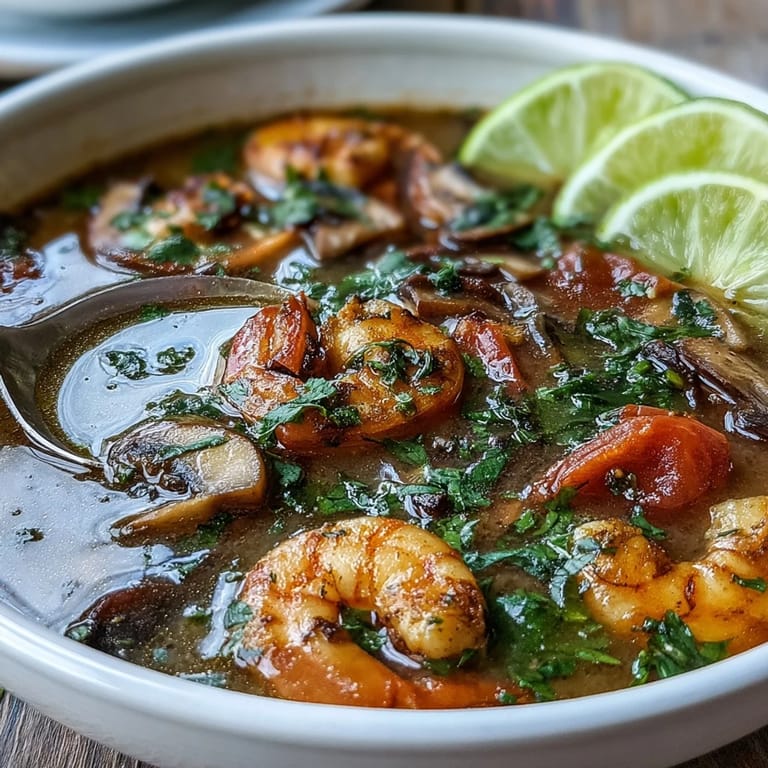
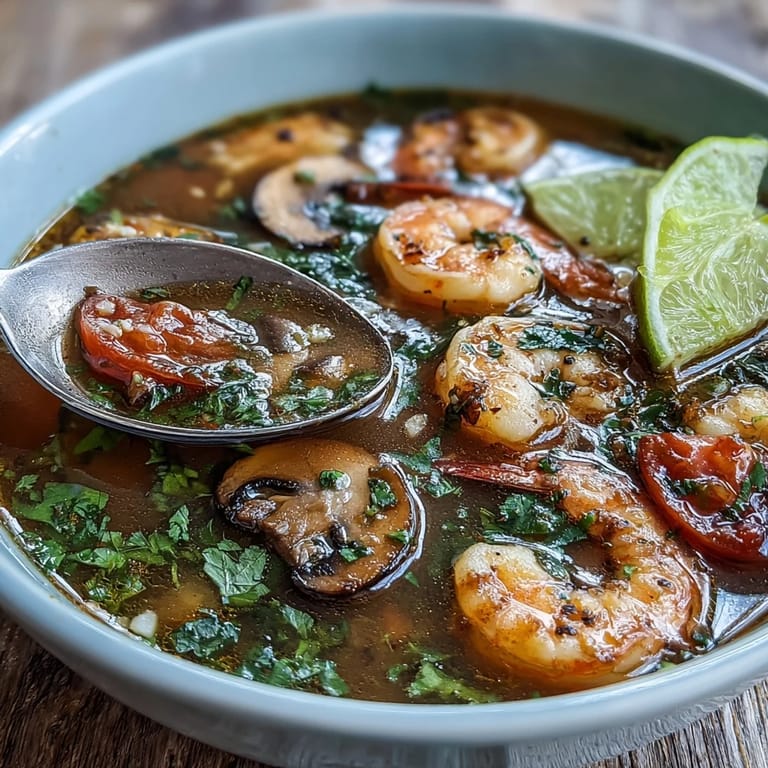
- Ladle the soup into bowls while it's still steaming, garnish generously with cilantro and green onions, and set a lime wedge on the rim so people can adjust the sourness as they eat. The whole thing should be fragrant and golden, with visible herbs and steam rising.
 Save to Pinterest
 There's a moment in cooking when you realize a dish has become more than just technique—it's become a signal, a way of saying I'm thinking of you or I understand what you need right now. This soup does that for me, every single time.
Adapting Tom Yum to What You Have
I've made this soup with cremini mushrooms when I couldn't find oyster varieties, with ginger when galangal wasn't available at my local market, and even with frozen shrimp that I thawed quickly in hot water. Every version tasted recognizably like Tom Yum because the lemongrass, lime, and chiles are non-negotiable, but the vegetables and proteins are more flexible than you'd think. The only real rule is that your broth should be something you'd drink straight—that's what carries everything else.
The Temperature and Timing Game
Tom Yum is one of those rare soups that tastes better when served immediately, while the aromatics are still defined and the vegetables haven't lost their individual character. I learned this the hard way by trying to make it ahead, and the second day it had flattened into something that tasted more generic. If you need to meal-prep, make the broth base with the aromatics and store it separately, then add the vegetables and shrimp fresh when you're ready to eat.
Building Layers of Heat and Sourness
The beauty of Tom Yum is that no two bowls have to be identical—the heat comes from the fresh chiles in the pot and the sourness from lime juice you add yourself. I've learned to taste as I go, building the flavors gradually so I can actually taste each note rather than trying to adjust at the end when everything is already mixed together. Some people like their soup so sour it makes their face scrunch, and others want just a whisper of heat; lime wedges on the side mean everyone gets what they want.
- Start with less lime juice and let people adjust their own bowl with wedges on the side.
- If your chiles are small Thai bird's eyes, remember they're hotter than jalapeños, so one might be enough unless you genuinely love fire.
- The chili paste is optional but adds a subtle smokiness that ties the soup together when you're not sure what's missing.
 Save to Pinterest
 This soup arrives at your table as bright as it smells, bold without being aggressive, and genuinely easy once you understand that infusing the broth is the whole story. Make it when you want someone to feel noticed.
Recipe Questions & Answers
- → What makes Tom Yum authentic?
Authentic Tom Yum relies on the holy trinity of Thai aromatics: lemongrass, galangal, and kaffir lime leaves. These ingredients, combined with fish sauce and fresh lime juice, create the distinctive sour-savory-spicy profile that defines this classic soup.
- → Can I make this vegetarian?
Absolutely. Swap chicken stock for vegetable stock, replace shrimp with firm tofu, and use soy sauce instead of fish sauce. The aromatic base remains the same, delivering all those bold Thai flavors in a plant-based version.
- → How spicy is this soup?
The heat level depends on the Thai birds eye chiles you use. Two sliced chiles provide a medium spice level that's warming but not overwhelming. Adjust the quantity to suit your preference, or remove the seeds for a milder version.
- → What's the difference between Tom Yum and Tom Kha?
Tom Yum is a clear, sour-spicy soup while Tom Kha includes coconut milk for a creamy, richer version. Both share the same aromatic base of lemongrass, galangal, and kaffir lime leaves, but the coconut milk changes Tom Kha's texture and flavor profile significantly.
- → Can I prepare this in advance?
The broth base can be made ahead and stored for up to 3 days, but add the shrimp and fresh vegetables just before serving. The aromatics continue infusing the broth, actually improving the flavor. Reheat gently and finish with lime juice and garnishes.
- → What substitutes work for galangal?
Galangal has a unique piney, citrusy flavor that differs from common ginger. If unavailable, use fresh ginger as a substitute, though the flavor profile will shift slightly. Increase the lemongrass slightly to help maintain those aromatic notes.