 Save to Pinterest
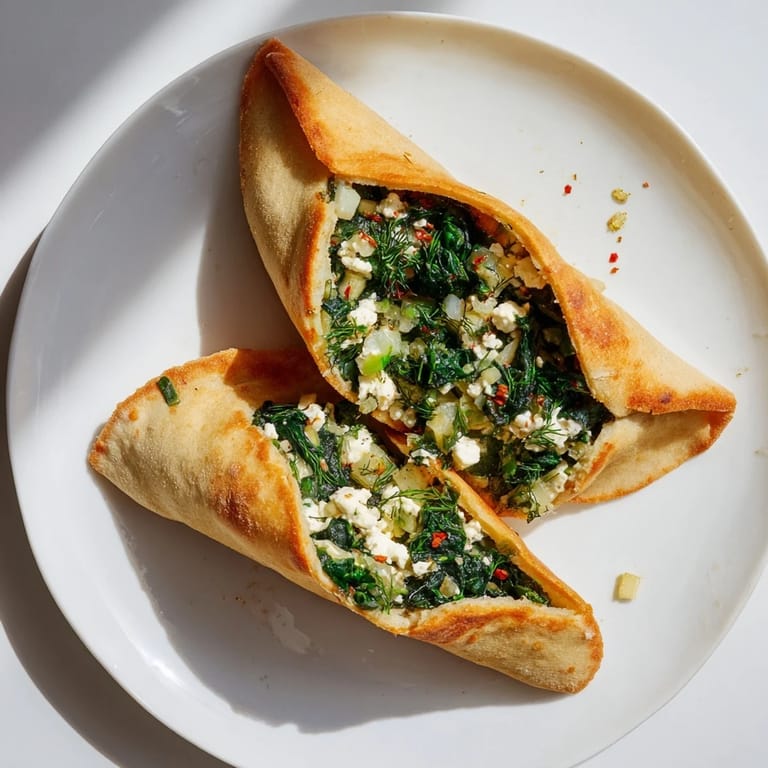
 There's something about the smell of spinach wilting in a hot pan that takes me back to a small kitchen in Istanbul, even though I've never been there. My neighbor Diane came back from a trip raving about these golden half-moon flatbreads she'd eaten from a street vendor, and one afternoon she walked me through making them at her kitchen table. Within twenty minutes, I had crispy, warm pockets of dough giving way to creamy feta and fresh herbs, and I understood exactly why she couldn't stop talking about them.
I made these for a small potluck last spring, bringing them in a cloth-lined basket, and watched people's faces as they bit into that soft dough and hit the warm feta inside. Someone asked if I'd bought them from a bakery, which felt like the highest compliment. By the time I got home, the basket was empty and I had three requests for the recipe.
Ingredients
- All-purpose flour (2 cups): The foundation of your dough; it needs to be soft enough to tear easily when cooked but sturdy enough to hold the filling without breaking.
- Warm water (2/3 cup): Temperature matters more than you'd think—too hot kills the yeast, too cold and the dough stays shaggy and stubborn.
- Olive oil (3 tablespoons total): Gives the dough richness and helps these flatbreads stay tender even after they've cooled.
- Fresh spinach (8 oz): The real star of the filling, and honestly, fresh tastes noticeably better than frozen, though either works in a pinch.
- Feta cheese (5 oz): Crumble it by hand rather than buying pre-crumbled—it melts more evenly into the filling.
- Fresh dill and parsley: These herbs make the difference between ordinary and memorable; dried simply won't capture that bright, living flavor.
- Garlic and onion: Cooked until soft and mellow, they anchor the filling without overpowering the delicate herbs.
Tired of Takeout? 🥡
Get 10 meals you can make faster than delivery arrives. Seriously.
One email. No spam. Unsubscribe anytime.
Instructions
- Make a tender dough:
- Combine your flour and salt, then add olive oil and warm water. Knead for 5 to 6 minutes—your hands will feel when the dough shifts from sticky and rough to smooth and cooperative. Cover it with a kitchen towel and let it rest for 20 minutes while you prep the filling.
- Cook the filling until it's dry:
- Sauté your onion until it turns translucent and soft, add the garlic just long enough to smell it, then add all your spinach at once. Keep cooking and stirring until you stop seeing liquid in the pan—this step prevents soggy flatbreads. Let it cool while you finish the dough.
- Build the flavor:
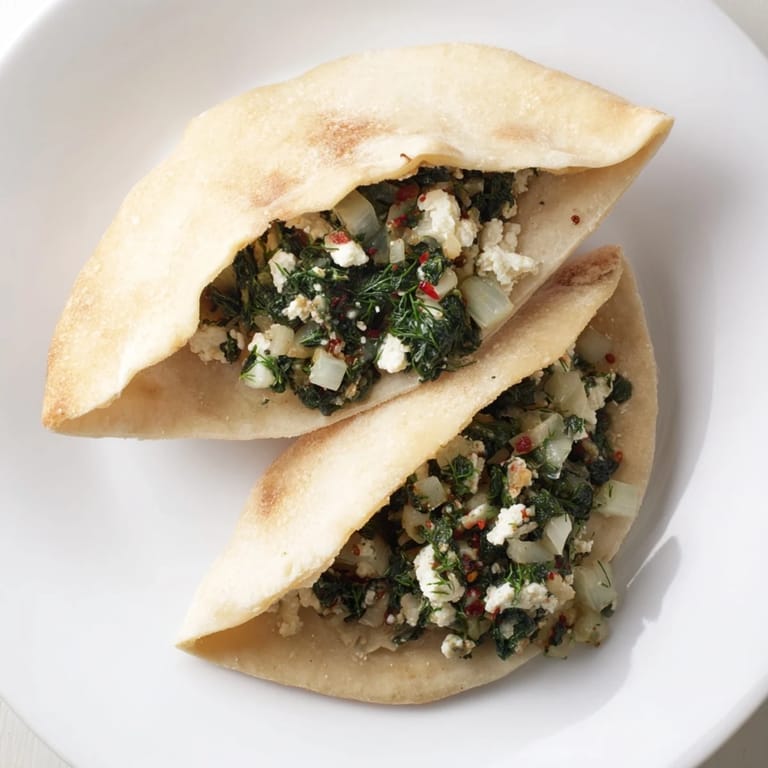
- Toss together the cooled spinach mixture with crumbled feta, fresh dill, parsley, black pepper, and red pepper flakes if you like heat. The mixture should smell herbaceous and salty, like a Greek salad come to life.
- Shape your flatbreads:
- Divide the dough into four equal pieces and roll each into a thin oval, about the size of a small plate. You want it thin enough to cook through quickly but thick enough not to tear when you fold it.
- Fill and fold:
- Spoon your filling onto one half of each oval, leaving a border so the edges can seal properly. Fold the dough over like a book and pinch the edges firmly—press your fork around the seam if you like, though your fingers work just as well.
- Pan-cook until golden:
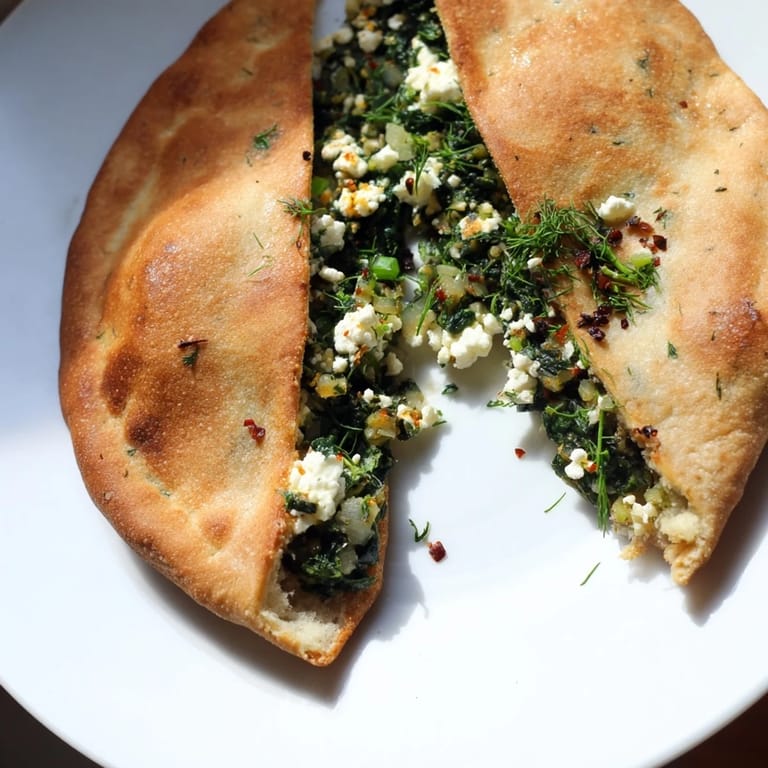
- Heat your skillet over medium heat without oil—the dough has enough fat in it. When each flatbread hits the hot surface it should sizzle slightly and smell toasted. Cook 3 to 4 minutes per side, until the outside is golden and spotted and the inside feels set when you press it.
- Rest and serve:
- Slice each flatbread in half if you like, and serve them warm. They're best eaten right away, though they're still good at room temperature if anyone is hungry later.
 Save to Pinterest
 What I love most about these flatbreads is how they blur the line between homemade and special. They feel impressive to serve, but honest when you make them—no fuss, no fancy equipment, just the simple pleasure of filling dough with good ingredients and watching them transform in a hot pan.
Why Fresh Herbs Really Matter Here
The first time I made these with dried parsley instead of fresh, my family was polite but distant about them. The second time, with a generous handful of fresh dill from my neighbor's garden, they disappeared before I could sit down. It's not just about intensity; fresh herbs add a living brightness that makes the feta taste creamier and the spinach taste less like an obligation and more like a choice. I started growing dill in a pot by my kitchen window specifically for these flatbreads.
The Secret of the Right Dough Texture
A lot of people overthink flatbread dough, but really it just needs to be soft and cooperative, not stiff or dry. If you watch the transformation during kneading, you'll feel the exact moment it stops being a shaggy mess and becomes something smooth and pleasant to work with. That's when you know you're done. The resting period is crucial too—it relaxes the gluten so rolling becomes easy rather than frustrating, and your flatbreads end up tender instead of tough.
Make Them Your Own
These flatbreads are wonderfully adaptable once you understand the basic technique. I've made them with different greens, added crumbled white cheese instead of feta, even tried a version with sun-dried tomatoes that my sister still asks me to make. The filling-to-dough ratio stays the same, and the cooking method never changes, so you have real freedom to experiment without guessing.
- Serve them with a bowl of thick yogurt mixed with garlic and a drizzle of olive oil for dipping.
- Brush the cooked flatbreads with melted butter and sprinkle za'atar for an extra layer of flavor.
- Make them ahead and warm them gently in the oven just before serving if you're cooking for guests.
 Save to Pinterest
 Make these when you want something that tastes like travel without the plane ticket, and like homemade without the stress. They're the kind of recipe that makes you feel like a real cook.
Recipe Questions & Answers
- → What type of flour is best for the flatbread dough?
All-purpose flour works best to create a soft yet sturdy dough suitable for pan-baking.
- → Can the fresh spinach be substituted?
Yes, baby spinach or well-drained frozen spinach can be used without compromising flavor.
- → How is the filling prepared before stuffing the flatbread?
The spinach is sautéed with onion and garlic until wilted and liquid evaporates, then mixed with feta and fresh herbs.
- → What cooking method is used for the flatbreads?
The flatbreads are cooked in a dry skillet or griddle over medium heat until golden on both sides.
- → Are there seasoning options to enhance the flavor?
Adding a pinch of black pepper and optional red pepper flakes brings subtle heat and depth to the filling.
- → How should the flatbreads be served?
They are best enjoyed warm and can be complemented with yogurt or a fresh tomato salad.